Rights Groups Urge UN Members to Reject Emirati Diplomat Lana Nusseibeh's Bid for Secretary General
Human rights advocates and Sudan experts say the UAE's nominee is too closely tied to her government's alleged support for the Rapid Support Forces to lead the United Nations.
By Amit Ricci ·
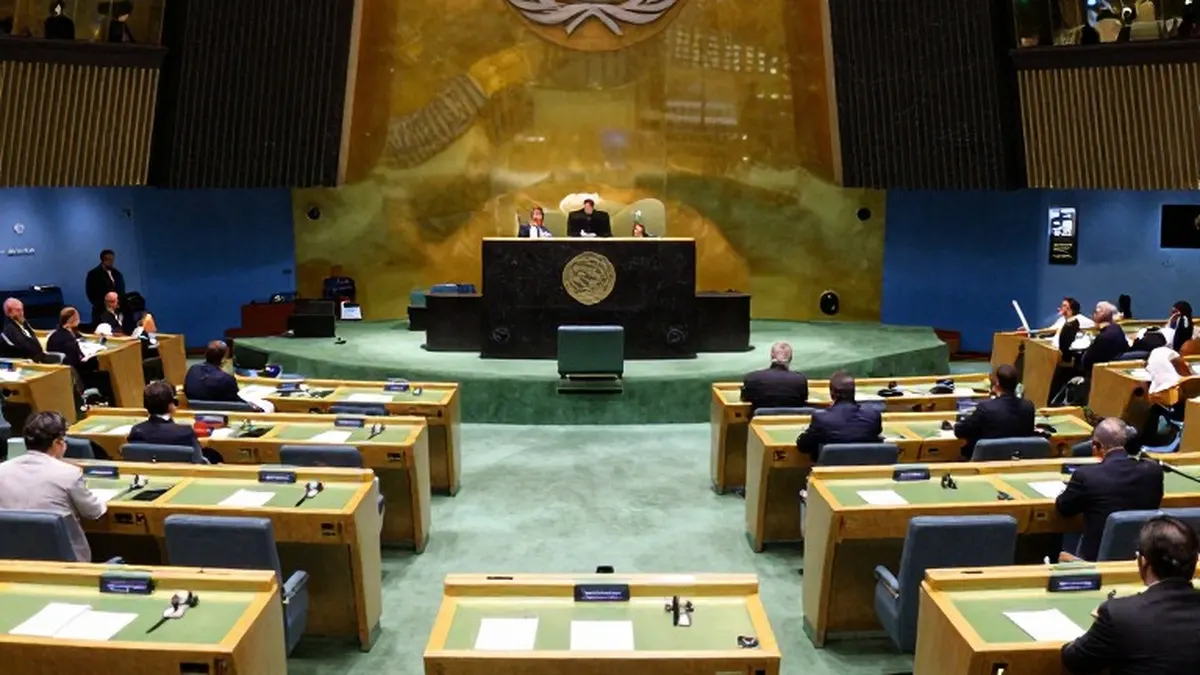
Rights groups called on United Nations member states on Tuesday to oppose the candidacy of Lana Nusseibeh, the Emirati diplomat nominated to succeed Antonio Guterres as secretary general. They argued that she has consistently denied her country's role in backing the Rapid Support Forces (RSF) in Sudan, a conflict that has been described as genocide, and is therefore unfit to lead the organisation.
The United Arab Emirates formally put forward Nusseibeh last week. She is a former UAE ambassador to the UN and currently serves as minister of state at the Ministry of Foreign Affairs. Her nomination added a late contender to a race that has been deadlocked. Critics responded quickly, pointing to the UAE's support for the RSF and for Israel, whose actions in Gaza have continued despite a ceasefire that has lasted a year.
Some former members of the Biden administration and other former US diplomats praised her on social media, and Abu Dhabi's close relationship with Washington could help her cause. Middle East Eye also learned this week that the UK is leaning towards supporting her nomination. No woman has ever led the UN, and Nusseibeh would also be the first with Palestinian roots, coming from a well-known Jerusalem family.
Speaking on a joint virtual panel calling for her disqualification, Kenneth Roth, the former executive director of Human Rights Watch, said the UN cannot be led by "somebody who is a genocide denier." He accused the UAE government of aiding and abetting genocide and said Nusseibeh is a lead person in covering that up. Kate Ferguson, co-executive director of the UK non-profit Protection Approaches, called the bid "autocratic capture of our most significant multilateral institution."
Ibrahim Alduma, an El Fasher native and co-founder of Sudan Action Hub, said the US government determined in February 2025 that the RSF committed genocide and sanctioned seven companies backing the group, all based in or directly linked to the UAE. He said Washington then agreed to $6.4bn in trade with the UAE. According to the Center for International Policy, the UAE has received well over $2bn in US military deliveries since January 2025. Alduma also noted that the UAE depends on US chips for its AI ambitions. He said Anthropic reported last month that it had disrupted a UAE-directed influence operation designed to change perceptions of Abu Dhabi regarding the Sudan war.
The panel took place in the week marking one year since the RSF took the city of El Fasher in North Darfur. Only 70,000 people remain there, out of what humanitarian groups and the Sudanese government said were upwards of a million displaced people who had sought safety in the city. Amnesty International, citing new survivor testimonies, said unlawful killings, detention, torture and surveillance are rife.
Nathaniel Raymond, executive director of the Humanitarian Research Lab at the Yale School of Public Health, said his team tracked how technical military support from the UAE enabled the RSF to take El Fasher. He said the RSF used reconnaissance drones to locate hiding civilians and blocked phone communications, including a full blackout in the final 72 hours as people tried to flee. He also said the RSF's AH4 howitzers could only have come from the UAE, and noted that a group that once relied on horses, pickup trucks and rifles now has an air force and electronic jamming capability. The conflict has killed more than 150,000 Sudanese and displaced 12 million since April 2023, according to Raymond.
Last week, Amnesty International repeated its call for an immediate ceasefire and the urgent deployment of an international force to protect civilians. It urged all countries to stop supplying arms to parties to the conflict, and to halt arms transfers to the UAE until it stops arming the RSF in violation of the UN embargo on Darfur. The UAE continues to deny involvement in the war. Meanwhile, there has been little known progress on the diplomatic effort that Trump administration envoy Massad Boulos appeared to prioritise earlier this year.
Source: Middle East Eye