Israel Votes as Right-Wing Blocs Define Ballot Options
The first election since the 2023 Hamas attack features a contest between right-wing factions, with little debate on Palestinian rights or the war in Gaza.
By Olga Menon ·
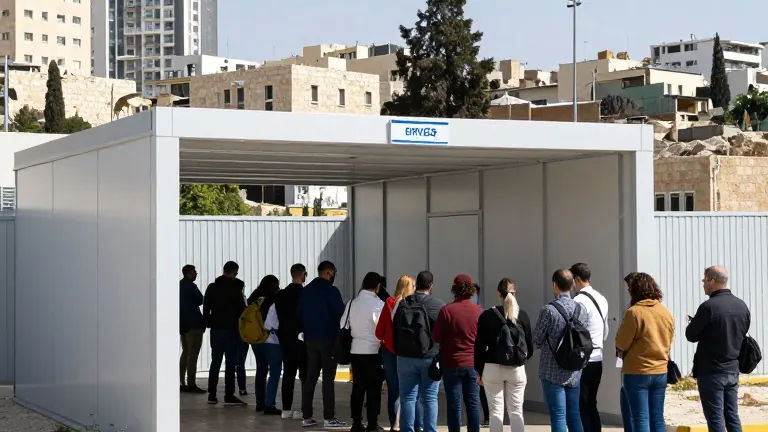
The central conflict in Israel’s election on Tuesday is not between left and right, but between competing versions of the right. This vote, the first since the Hamas-led attack of October 7, 2023, determines which coalition will govern a country whose political center has largely collapsed. Both major blocs embrace right-wing approaches, leaving voters to choose between different intensities of the same ideological direction rather than opposing visions for the state.
Prime Minister Benjamin Netanyahu seeks a fourth term while facing charges of war crimes from the International Criminal Court and a domestic corruption trial. He leads a coalition that includes far-right ultranationalists and ultra-Orthodox parties. His challengers form a self-styled Zionist opposition that has adopted a similar right-wing stance. The campaign focused on accountability for security failures preceding the 2023 attack and disputes over conscripting ultra-Orthodox soldiers, rather than the fundamental treatment of Palestinians.
The political shift has accelerated under the current government. Analysts point to attempts to strip the Supreme Court of its review powers and the flouting of rulings on military service for the ultra-Orthodox minority. Ministers Itamar Ben-Gvir and Bezalel Smotrich provided crucial support for the judicial overhaul that Netanyahu launched in early 2023. They have also backed the surge in violence in the West Bank, deflecting calls for the coalition to explain the security lapses that allowed the 2023 attack to succeed.
Yehouda Shenhav-Shahrabani, an Israeli sociologist, argues that the entire political system operates within a framework of Jewish supremacy. He states that none of the leaders presenting themselves as alternatives to Netanyahu can be described as left-wing. According to Shenhav-Shahrabani, the current situation is rooted in Zionist political thought structured around the principle of Jewish supremacy, a fact that remains unchanged regardless of who holds office.
Ahron Bregman, a senior teaching fellow at King’s College London, suggests that a change in leadership would alter the atmosphere more than the policy direction. He notes that Netanyahu is a deeply divisive figure, viewed as divine by some supporters and hated by many opponents. Bregman expects a new prime minister to calm domestic emotions but cautions that any government will mirror the sharp rightward turn Israel experienced after October 2023.
The election does not offer voters a chance to challenge the foreign policy that has led to the death of more than 74,000 people in Gaza. Despite a yearlong ceasefire, deadly attacks continue almost daily in Gaza, while settler violence and military raids have intensified in the West Bank. No mainstream candidate has discussed including Arab-led parties in a potential coalition. References to leaders of Ra’am or the Joint List are often used by rivals to denounce each other for considering past or future coalitions with Palestinian politicians.
Daniel Levy, a former Israeli government adviser, notes that the treatment of Palestinians is a consensus among Zionist parties. He argues that no referendum on the war in Gaza is possible because one side would have to argue it was a good thing and the other that it was a bad thing. Levy says the differences between parties rest on whether the state or settler militias should play the primary role in oppressing Palestinians.
Yossi Mekelberg, a senior fellow at Chatham House, describes the vote as a decision between a functioning democracy and one that exists in name only. He links this choice to whether Israel will maintain the occupation of the West Bank or annex it entirely, a move some government figures have suggested could involve the voluntary migration of the Palestinian population there.
The election takes place against a backdrop of a wider conflict that has seen Israel attack Iran, Lebanon, Yemen, Syria, and Qatar. The war in Iran has choked key energy routes and left global markets reeling. For analysts, the stakes extend beyond the names on the ballot to the fundamental character and future structure of the Israeli state.
Source: Al Jazeera