Israeli Exit Polls Indicate Stalemate After Wartime Vote
High turnout and fragmented results leave both major blocs without a majority, forcing a complex coalition process.
By Amit Ricci ·
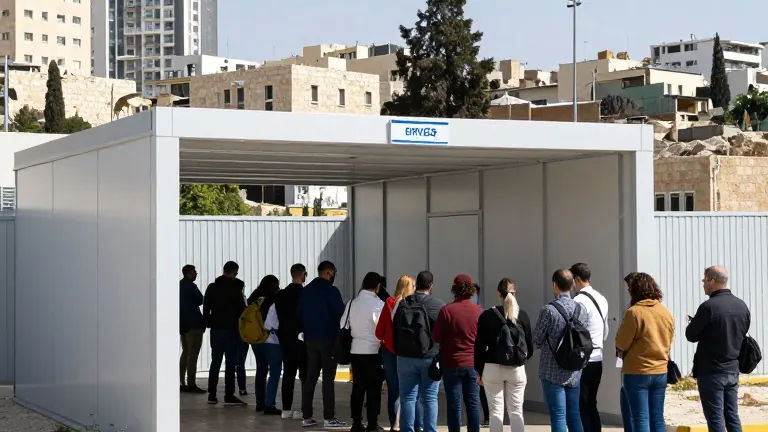
Exit polls released on Tuesday night indicated a deadlock in Israel’s national election, with two major television networks showing a slight advantage for Prime Minister Benjamin Netanyahu’s opponents and one network reporting the camps as tied. The results suggest neither side secured the 61 seats required for a majority in the 120-seat Knesset, leaving the path to power unclear for both Gadi Eisenkot’s opposition bloc and Netanyahu’s Likud-led alliance.
Turnout reached 77.7 percent according to the Central Elections Committee, marking the highest participation rate in over two decades. This figure is approximately seven percentage points higher than the 2022 election. The high engagement reflects the stakes of the first vote since the Hamas-led attacks of October 7, 2023, and the subsequent wars in Gaza, Lebanon, and Iran.
Projections show a major drop for Netanyahu’s coalition, which held 68 seats in the outgoing Knesset. Far-right religious parties led by Itamar Ben-Gvir and Bezalel Smotrich are projected to take a combined 13 seats within his bloc. The opposition, led by Yashar party leader Gadi Eisenkot, failed to break past the 61-seat threshold needed to form a government independently.
The political fragmentation places Arab parties outside the two main blocs in a potential kingmaker position. Eisenkot, a former military chief who entered politics four years ago, has largely ruled out forming a government with these parties. This stance complicates his path to power even in scenarios where his bloc finishes ahead, as no single party has ever won a majority outright in the Knesset.
Yair Lapid, the opposition leader, declared in a statement that the Netanyahu bloc suffered a crushing defeat. He described the result as a total collapse, arguing the public has told the incumbent government to go home. Eisenkot, who lost a son and two nephews in the Gaza war, campaigned on his security credentials while positioning himself as a centrist domestically.
Eisenkot maintains that Israel’s war response failed because Hamas remains in charge, despite the conflict killing more than 74,000 Palestinians according to Gaza health authorities. He opposes Palestinian statehood and insists Hamas’ military wing must be destroyed. His platform offers a break from Netanyahu’s far-right allies but retains a hardline approach to security that has become entrenched since 2023.
Netanyahu, 77, has served as prime minister for nearly 19 of the past 30 years. He entered the election facing longstanding corruption charges and criticism over intelligence failures. His campaign relied on an endorsement from US President Donald Trump, his ally in the war against Iran. The prime minister argued he had made Israel safer by assassinating top leaders of Hamas, Hezbollah, and Iran, while critics pointed to his country’s biggest security failure.
Final results could take days to count, given the fragmented political system. Smaller parties are expected to play decisive roles in coalition negotiations. The headquarters of the Joint List, an alliance of Arab parties, celebrated the high turnout, with candidates hoping their participation would prevent the most far-right coalition in Israel’s history from returning to power.
Source: HuffPost