King Charles III faces reparations demands in Bahamas
The monarch's nine-day Caribbean tour begins amid legal challenges to slavery compensation and urgent climate concerns.
By Ricardo Brooks ·
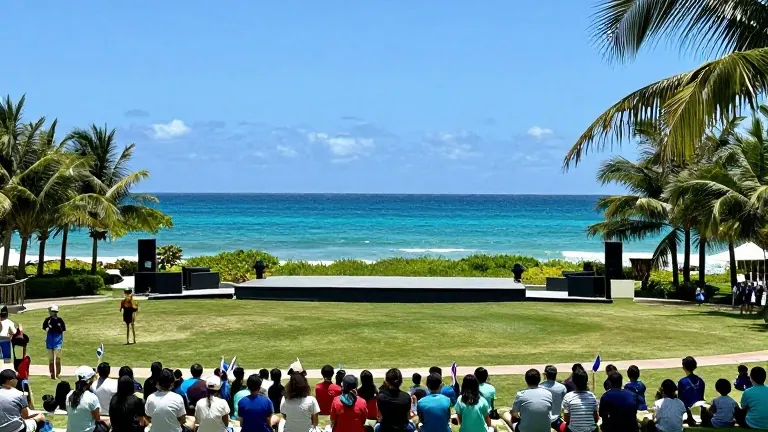
King Charles III arrived in the Bahamas on Tuesday, commencing a nine-day diplomatic tour across the Caribbean region. His presence in the archipelago coincides with intensifying demands from local leaders and communities for a formal apology and financial reparations for the transatlantic slave trade. The visit marks his first official trip to the nation since assuming the throne, prompting the government to close all public schools on New Providence Island to facilitate the welcome.
The arrival was attended by Bahamian police and armed forces, who greeted the monarch in formation. Charles, dressed in a light gray suit, met with Governor-General Dame Cynthia A. Pratt and Prime Minister Philip Davis before proceeding to Clifford Park. This site holds historical weight for Charles, who last visited in 1973 as Prince of Wales to grant the Bahamas independence after three centuries of British rule. Protesters from the Rastafarian community gathered along nearby roads, chanting for the acknowledgment of past atrocities and the settlement of outstanding debts to Black people.
In his first public address at Clifford Park, Charles acknowledged the complex history of the islands. He stated that the most joyful aspects of Bahamian culture were born out of darkness and that it was right to acknowledge the suffering of the past while celebrating present successes. The monarch also highlighted the severe environmental risks facing the nation, noting that 90% of the land sits below two meters in elevation. He described the climate challenges as treacherous shoals on the journey ahead, identifying the Bahamas as a prime location to understand the reality of climate change.
The visit occurs as Jamaica has referred its case for reparations to the United Kingdom’s highest court of appeal for the Caribbean. The British government has traditionally rejected demands for an apology or financial compensation. In the Bahamas, environmental advocates are also leveraging the royal visit to draw attention to a development dispute on Sampson Cay, part of the Exuma cays. Eric Carey, former executive director of the Bahamas National Trust, criticized the proposed construction as ill-advised and out of scale. He argued that the project requires a massive sea wall and the dredging of sea grass and coral reefs, tasks better suited for larger islands in the tourism-based economy.
Carey expressed hope that Charles would raise awareness of the issue, citing the monarch's long history of defending the environment. The legal case is currently with the Bahamas Supreme Court. Charles is scheduled to spend three days in the Bahamas before traveling to Guyana on October 29. He will then move to Antigua and Barbuda on October 30 for the Commonwealth Heads of Government Meeting, where Queen Camilla will join him. Discussions are expected to cover climate, trade, and development, with several Caribbean leaders advocating that slavery reparations take precedence.
The itinerary includes meetings with the Royal Bahamas Defense Force and civil society leaders. The trip serves as a diplomatic test for the monarchy in the region, balancing historical legacy with contemporary political and environmental pressures.
Source: KSAT-TV