Yemen's civil war: Who is fighting and why it matters for the region
With Houthi forces advancing on multiple fronts and threatening the government's seat in Aden, the renewed fighting in Yemen is rippling across the Red Sea and beyond.
By Olga Menon ·
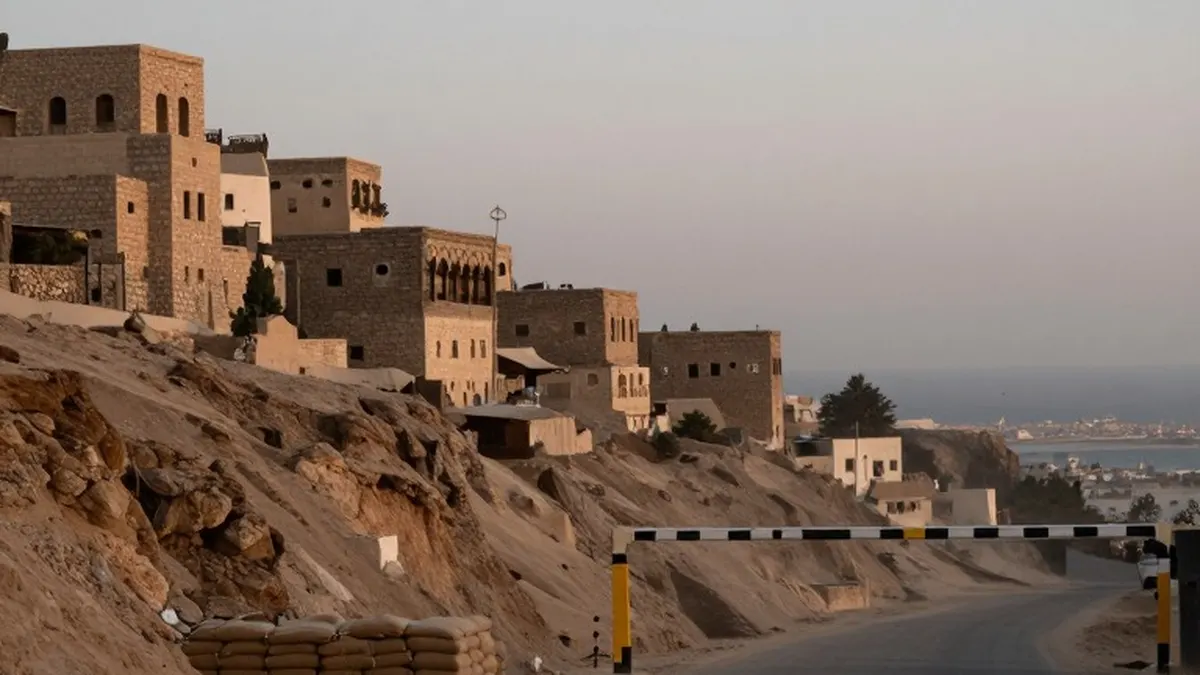
Houthi forces in Yemen have pushed forward in recent days against the internationally recognized government, fueling fears that the group could mount an assault on Aden, the southern port city where the government has been based since the war erupted in 2015.
The country's long-frozen civil war reignited this summer as a spillover from the conflict between the United States and Iran. Since then, the Tehran-aligned Houthis have seized significant territory, opened fire on shipping in the Red Sea and struck targets inside Saudi Arabia.
The group's advances have handed it control of the Bab al-Mandab Strait at the southern entrance to the Red Sea, a vital corridor for global energy supplies and trade, and have placed Taiz, Yemen's third-largest city, under siege. The government in Aden survives with support from a loose coalition of local forces and regional heavyweight Saudi Arabia.
Houthi drone and missile attacks on Saudi territory, along with strikes on some vessels passing through Bab al-Mandab, have put Riyadh in a strategic bind and driven up oil prices that were already under pressure from Iran's disruption of the Strait of Hormuz. The escalation has strengthened Tehran's hand in its broader confrontation with Washington, while deepening a humanitarian catastrophe in what was already the Arab world's poorest nation, with hundreds of thousands of civilians displaced.
The roots of the war stretch back decades. North and South Yemen unified in 1990, but internal divisions festered. Arab Spring protests in 2011 fractured the army and toppled President Ali Abdullah Saleh, leading to a Gulf-backed transition under interim President Abd-Rabbu Mansour Hadi, who was widely seen as weak. The Houthis pushed south in 2014 and entered the capital, Sanaa, with Saleh's connivance. In early 2015 they arrested Hadi and forced his resignation. He escaped to Aden, declared Houthi rule illegitimate, and Saudi Arabia assembled an Arab coalition and launched an air campaign to restore him. Front lines hardened by 2016, and a 2022 truce largely held until this summer.
The Houthis began in the late 1990s as a revival movement of the Zaydi school of Shi'ite Islam in northern Yemen and repeatedly battled the state. As central authority crumbled in 2011, they expanded their territory and built ties with Iran and its Lebanese ally Hezbollah. After taking Sanaa, they imposed a system of rule that a Reuters investigation found silences critics, diverts international aid and forces children into military service. The Houthis say they are returning Yemen to the values of the Koran.
Since the United States and Israel launched attacks on Iran on February 28 this year, the Houthis have resumed firing on Red Sea shipping and on airports and energy facilities inside Saudi Arabia. The group appears militarily stronger than before, with a lightning advance on the Red Sea in September and steady gains around Taiz. Senior Iranian sources say its forces benefit from advisers from Hezbollah and Iran's Revolutionary Guards, and its locally assembled drones and missiles can now strike distant targets with precision.
On the government side, divisions run deep. Hadi was pushed aside in 2022 in favor of a Presidential Council led by Rashad al-Alimi, an attempt to paper over rivalries within an anti-Houthi camp of competing factions. On the northern front line of Marib and al-Jawf, pro-government forces backed by Riyadh are aligned with the Islah party, Yemen's Muslim Brotherhood affiliate, which puts them at odds with the United Arab Emirates. In the south, where fighting has been fiercest since the war resumed, the military coalition is split among southern separatists, conservative Sunni Salafis and other factions.
A violent rupture last December between Saudi Arabia and the UAE, which had previously worked together to organize, fund, arm and train the anti-Houthi forces, has fragmented the coalition further. Saudi efforts to draw in additional allies have faltered: the United States has refused to intervene directly, while Turkey, Pakistan and Egypt have pledged defensive support but stopped short of committing troops on the ground.