Xi pledges deeper market reforms at APEC
The Chinese president outlined plans to adjust rules and standards while leaders in Shenzhen debated the future of Pacific Rim trade.
By Amit Ricci ·
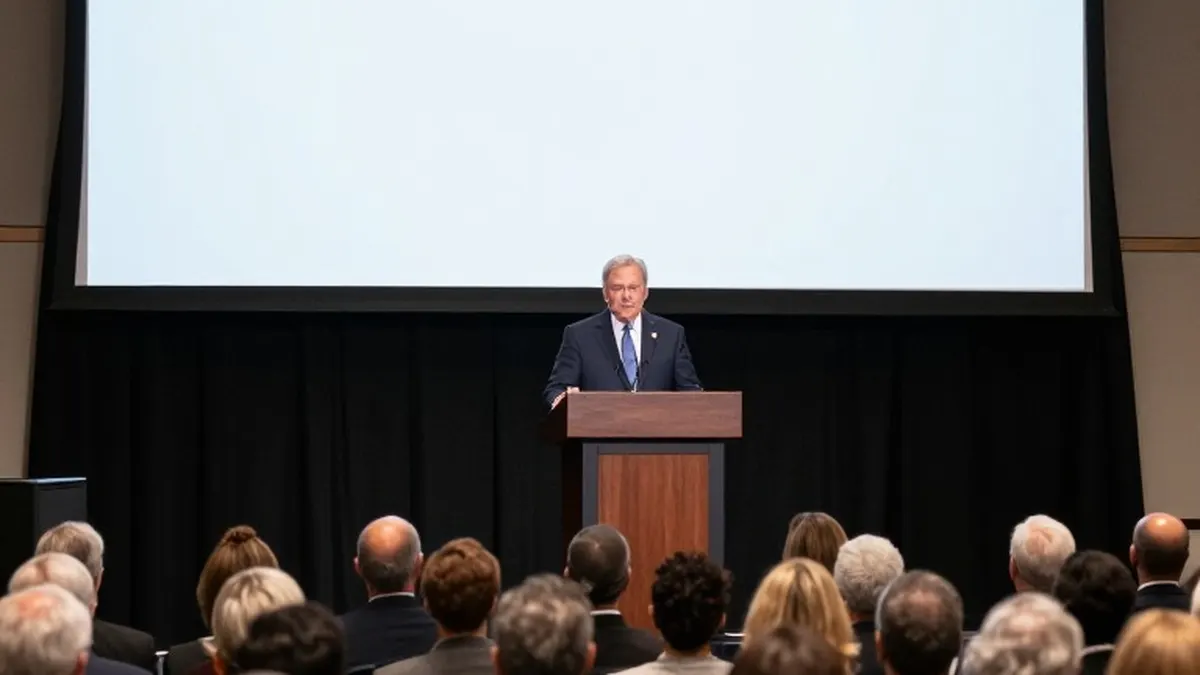
Chinese President Xi Jinping told business leaders in Shenzhen on Wednesday that the nation would deepen market reforms to stabilize the Asia-Pacific region.
Speaking at the annual Asia-Pacific Economic Cooperation summit, Xi addressed a group of executives and announced that China would move beyond simple tariff cuts. He stated the country would tackle difficult areas including rules, regulation, and standards to improve conditions for global investors.
Shenzhen serves as the host city for this year's event, a location that has shifted from a fishing village to a major hub for export manufacturing and technology over the past four decades. The city represents the second-largest economy in the world, which relies on global access to maintain its growth.
U.S. President Donald Trump was scheduled to join the gathering later in the day after attending the Association of Southeast Asian Nations summit in the Philippines. Trump's trade strategy of raising tariffs contrasts with the APEC goal of creating a free trade zone across the Pacific Rim. Tensions remain high due to American limits on Chinese access to advanced technology, including Nvidia computer chips used for artificial intelligence.
George Chen, partner and chair of Digital Practice at The Asia Group, noted that Xi did not name the United States or export controls directly. Chen said the message was that China wants to be viewed as a partner in global technology development rather than a restrictive force.
Domestic economic pressures influence the tone of the summit. China's retail spending and investment have slowed due to a long property slump, though the economy still grows at more than 4 percent. This growth is driven largely by surging exports, a factor that is straining relations with trading partners. China's trade surplus is expected to top one trillion dollars for the second consecutive year.
Other leaders used the platform to address trade barriers. Canadian Prime Minister Mark Carney met with Xi on Tuesday and the two agreed to lower tariffs on each other's goods. Carney has moved to strengthen economic ties with China and the European Union as relations with the United States have become more strained. Malaysian Prime Minister Anwar Ibrahim told executives that larger economies cannot impose their specific circumstances on smaller nations.
Russian President Vladimir Putin, making his first in-person appearance at an APEC meeting since 2017, criticized sanctions as instruments of economic dominance that have lost their intimidating effect. He stated that trade with the Asia-Pacific accounts for more than half of Russia's total trade and announced that Russia has bid to chair APEC in 2035. The 21 APEC economies represent 60 percent of global economic activity. The leaders will hold a closed-door session on Thursday, which includes the first trilateral meeting between Trump, Putin, and Xi.