Washington Puts $20 Million Price on Iran Nuclear Secrets
State Department reward program seeks details on facilities and personnel despite claims that key sites were destroyed.
By Olga Menon ·
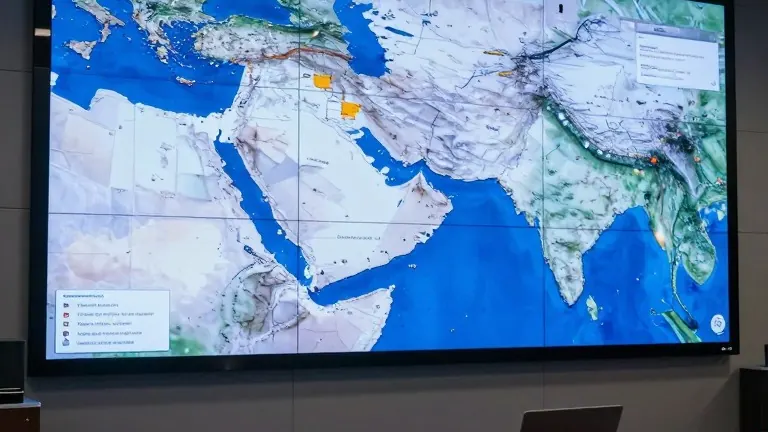
The United States has placed a $20 million bounty on information regarding the status of Iran’s nuclear program. This financial offer comes as the State Department seeks to verify the extent of Tehran’s capabilities after two years of conflict and competing claims about the destruction of key infrastructure.
The Rewards for Justice program announced the incentive on Friday via social media. The initiative specifically requests tips on nuclear facilities, equipment, and associated personnel. Officials noted that the program may offer relocation assistance to informants who provide actionable intelligence.
The timing of the reward underscores a divergence between public rhetoric and operational reality. President Donald Trump has repeatedly asserted that Iran’s key enrichment facilities were obliterated. In 2025, following a 12-day conflict, he described the sites as completely destroyed. He reiterated this view this year, telling reporters on Friday that if the United States had not struck Iran, the country would not exist today.
Despite these declarations, independent assessments and the new reward structure suggest persistent concerns. The International Atomic Energy Agency reported last year that Iran enriched uranium to 60% purity. The Rewards for Justice statement described this level as a short technical step from the 90% concentration required for a nuclear weapon.
Experts estimate that the quantity of highly enriched uranium Iran possesses could be sufficient for several nuclear weapons if further enriched. The statement also cited a loss of continuity in knowledge regarding Iran’s production of key components, such as centrifuges, due to the regime’s lack of compliance with international monitoring bodies.
The United States and Israel struck Iranian nuclear sites again during this year’s conflict. Washington has stated that preventing a nuclear weapon is a primary objective of the war. This week, Trump indicated that the U.S. might target Pickaxe Mountain, a suspected underground site. Israel believes Tehran stores part of its enriched uranium stockpile and advanced centrifuges at that location.
Iran has warned that any U.S. attack on nuclear facilities would be treated as an expansion of the regional war. Tehran maintains that it has the right to develop nuclear energy for peaceful purposes, including the enrichment of uranium. Mediators are currently attempting to broker an agreement, though both sides appear unwilling to compromise on key red lines.
Tensions escalated overnight with new U.S. strikes on Iran. Trump described the attacks as minor. Reuters reported explosions on Qeshm Island and in the southern port of Jask, citing Iranian media on Saturday. Iran has not officially confirmed the source of the blasts.
Iran’s semi-official Tasnim news agency initially reported that two missiles struck Qeshm Island. Later that evening, Tasnim cited an Iranian source stating that the explosions were not related to missile strikes. No official information on potential damage has been released.
In a separate development, the U.S. Central Command launched a task force to prevent Iran from accessing land routes that could facilitate the transport of advanced weapons. A naval blockade remains in place as part of U.S. efforts to restrict Iran’s oil industry. The Rewards for Justice program has also offered rewards for information on senior Iranian regime figures since the war began in February.