Europe Joins Fourth Round of Ukraine Peace Talks in Abu Dhabi
French and other European officials will attend Tuesday and Wednesday negotiations in the UAE, a shift from the original three-way format that excluded the continent.
By Ricardo Brooks ·
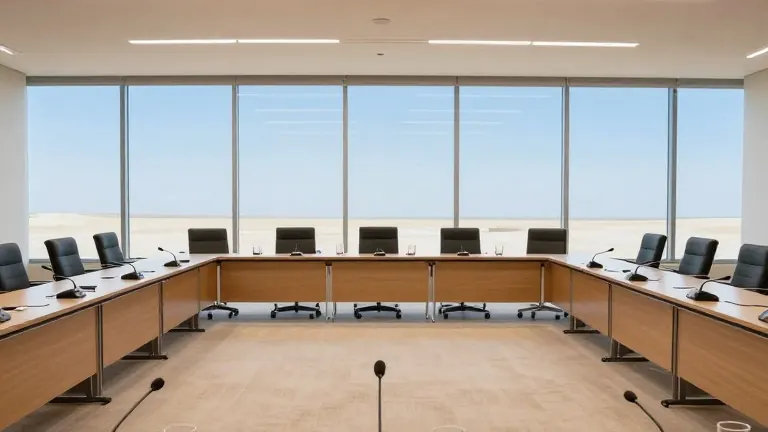
European diplomats are set to attend the next round of Ukraine peace negotiations in Abu Dhabi this week, a change from the previous format that limited participation to the United States, Russia, and Ukraine. French Foreign Minister Jean-Noel Barrot confirmed on Sunday that France would send a representative to the meetings scheduled for Tuesday and Wednesday. This move contradicts recent statements from the Kremlin, which had insisted that European powers had no role in the specific trilateral dialogue. Barrot stated on French radio that Paris would ensure Europe’s voice was heard, though he did not clarify if the European team would negotiate actively or observe.
The shift follows a meeting between U.S. President Donald Trump and Russian envoy Kirill Dmitriev on Thursday. Trump suggested that any resulting agreement might extend beyond Ukraine to cover all of Europe. Ukrainian President Volodymyr Zelenskyy responded to reports on Friday, noting that he had not received specific details about the proposed deal. He compared the situation to the 1945 Yalta conference, where Allied leaders determined the post-war division of Europe without consulting all affected nations. Zelenskyy described the current dynamic as potentially dangerous for Kyiv.
These sessions mark the fourth round of talks brokered by the Trump administration since a meeting in Geneva in February. Progress had been slow due to the administration’s focus on its conflict with Iran. Moscow returned to the table after U.S. envoy Steve Witkoff met with President Vladimir Putin in St. Petersburg in October. During that visit, Putin announced the release of an American prisoner, a gesture that followed Trump’s decision to lift sanctions on Russian diesel exports, a move Ukraine had opposed as a source of war funding.
Witkoff said the agenda for the current talks will include postwar security arrangements, de-escalation measures, and humanitarian issues. Russia’s delegation will be led by Vladimir Medinsky, a hardline aide to Putin who has attended most negotiations since 2022. For the first time, the Russian team will also include Deputy Foreign Ministers Sergei Ryabkov and Mikhail Galuzin, along with Yury Zhigarlovsky from the General Staff and military intelligence chief Igor Kostyukov. The Institute for the Study of War noted that some of these officials have previously worked to slow negotiations or push for stronger Russian demands.
The fundamental gaps between the sides remain large. Russia demands that Ukraine cede territory and renounce NATO membership, while Zelenskyy insists that any security commitments must define specific actions if Russia attacks again. John Herbst, a former U.S. ambassador to Ukraine, argued in an op-ed for the Atlantic Council that Putin prefers the process of peace talks to actual peace. He suggested the likely outcome is merely agreement on another round of discussions. The timing also coincides with recent Democratic midterm victories, which Zelenskyy believes could improve Ukraine’s chances of receiving more U.S. aid.
Diplomatic activity continues elsewhere, with discussions underway for a trilateral meeting between Trump, Chinese President Xi, and Putin at the Asia-Pacific Economic Cooperation summit in Shenzhen later this month. On the ground, the war continues. Zelenskyy reported that Russia fired 36 ballistic missiles at the Kyiv area overnight on Saturday, with only four being intercepted. In southern Ukraine, the death toll from a guided-bomb strike on an aid distribution site in Komyshuvakha on Monday rose to at least 55.
More World · National news · Report a business · Got a Story?