Space Force Rejects SpaceX for Three Contracts as Spanish Rocket Nears Integration
The U.S. military has bypassed SpaceX for upcoming launch contracts, while a European small-lift vehicle approaches its final testing phase.
By Camila Rodriguez ·
The United States Space Force has decided against selecting SpaceX for three recently offered military launch contracts, marking a notable shift in the company’s commercial and governmental portfolio.
In a development that surprised industry observers on Thursday, the agency indicated it would look elsewhere for these specific missions. This decision stands in contrast to the company's dominant position in the commercial launch sector, suggesting a diversification of providers for national security payloads.
While the military contract news dominated the headlines, civil space concerns regarding SpaceX’s Starship vehicle also emerged. A NASA safety panel reported that the vehicle may require as many as 22 in-orbit refueling operations to support a lunar landing mission. This high number highlights the complex engineering challenges still facing the development of the heavy-lift system.
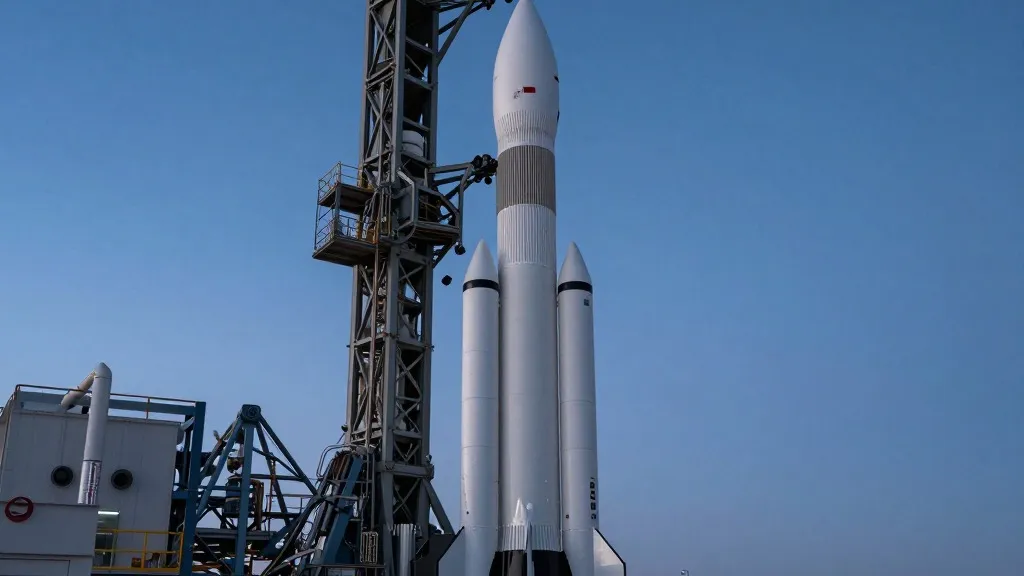
Attention in the small-lift sector has turned to Spain, where PLD Space reports that its Miura 5 rocket is nearing final integration. The company, which is preparing for the vehicle’s inaugural flight scheduled for next year, confirmed that the rocket is in its final stages of assembly.
PLD Space has already manufactured three Miura 5 vehicles. According to CEO Raúl Torres, the other two units were designed to qualify key system elements. Torres stated in an October 19 update that the company now targets a first flight for the small-lift vehicle before mid-2027.
The production of these three vehicles has allowed PLD Space’s teams to work continuously across different production and integration stages, applying lessons learned from previous qualification campaigns directly to the launch vehicle, Torres noted. One Miura 5 second stage is now fully integrated to begin system-level testing under representative operating conditions.
This specific second stage is currently located at PLD’s test facility in Teruel, where it is undergoing its qualification campaign. The testing protocol includes a wet dress rehearsal and a static hot-fire test to ensure the vehicle meets safety and performance standards before its maiden voyage.
Meanwhile, in Canada, Reaction Dynamics is seeking to raise $350 million to expand its workforce. The company aims to grow its staff from 68 to more than 350 people to support the development of its Aurora small-lift rocket, which is targeted to reach orbit in 2028.
Reaction Dynamics has also announced plans to build a medium-lift rocket named Borealis, with a debut planned by 2031. These funding and expansion efforts position the Canadian firm as one of three prominent launch startups in the country, competing for a share of the growing global launch market.
Source: Ars Technica