Terafab Targets 1 Terawatt of Annual AI Compute Capacity by 2028
Tesla and SpaceX aim to manufacture one terawatt of AI processing power annually at a new Texas facility, a goal that far exceeds current global standards.
By Wei Zhang ·
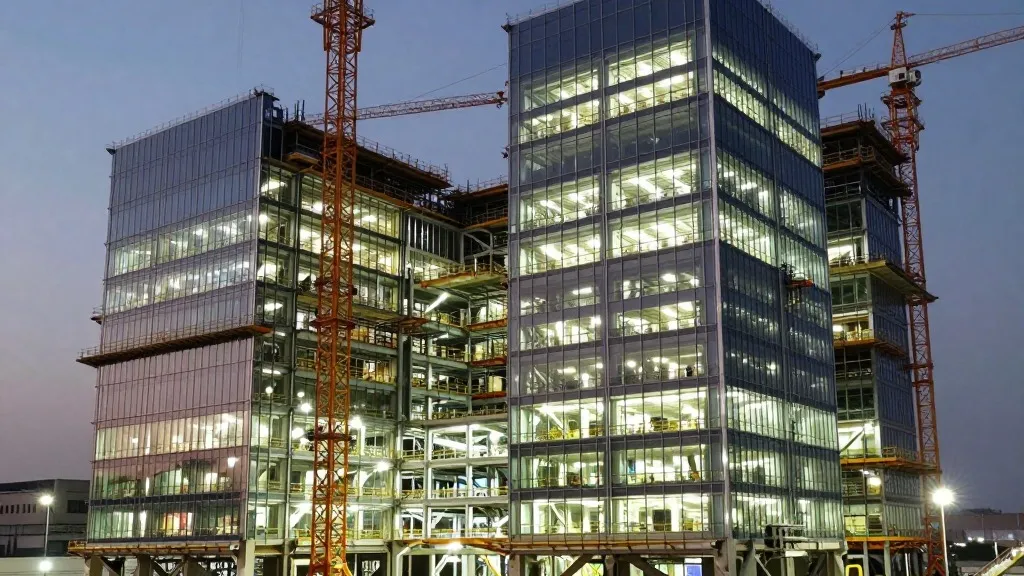
Tesla and SpaceX have set a target to produce one terawatt of AI computing power per year at their new Terafab facility in Gibbons Creek, Texas, a scale that would place a single building within the top 20 global economies by gross domestic product. The ambitious milestone, which Elon Musk described as highly aspirational during a live broadcast on X yesterday, October 20, coincides with a broader push to secure the supply chain for this vertically integrated chip manufacturing project.
The announcement confirms that volume chip production at the primary facility is targeted for the third or fourth quarter of 2028. To support this aggressive schedule, Musk stated that critical equipment suppliers, including ASML, have accelerated shipments. He expressed appreciation for these partners in helping to meet the project's demanding deadlines, while noting that the timeline carries significant uncertainty or "big error bars." Prior to full-scale production at Gibbons Creek, SpaceX plans to manufacture its first experimental test chip at its research fabrication facility in Austin around the second quarter of 2027.
The project’s scale requires extensive collaboration across the semiconductor industry. Terafab will utilize extreme ultraviolet lithography systems based on Intel’s 14A manufacturing node, with Intel having joined the venture in April 2026 to co-develop the silicon fabrication technology. ASML, the sole commercial provider of the necessary $400 million EUV tools, remains a pivotal partner, with the first such tool reportedly slated for delivery in mid-2027. Other major contributors include American firms Applied Materials, Lam Research, and KLA Corporation, as well as Japan’s Tokyo Electron, which are supplying front-end processing and metrology equipment. Additionally, Tesla and SpaceX are in negotiations with approximately ten South Korean manufacturers for specialized components such as advanced packaging and process valves.
Beyond the physical fabrication of chips, the project is integral to the AI infrastructure plans of Musk’s enterprises. He indicated that his AI companies expect to have 2.5 to 3 gigawatts of computing capacity active by the end of this year, with a high level of confidence in reaching a total of 13 gigawatts by the end of 2027. To achieve this, SpaceX and xAI are aggressively procuring next-generation NVIDIA hardware, specifically planning a 440,000-GPU Vera Rubin training cluster by the end of the second quarter of 2027. This capacity is intended to support xAI clusters, self-driving vehicles, Optimus robots, and orbital data centers.
Despite the supplier commitments, experts remain skeptical of the one-terawatt ambition. For context, Gartner estimates the total global AI-optimized data center capacity at roughly 44 gigawatts as of late 2026. This means Terafab’s planned output would equal 4.4 percent of the entire world’s current capacity. While global AI computing power has grown significantly since 2022, the leap required for Terafab to reach its stated goal remains substantial.
The facility is designed to mitigate future shortfalls of cutting-edge processors from external foundries like TSMC by internalizing the production of logic, memory, and advanced packaging. The project represents a multi-billion-dollar investment aimed at creating a self-sufficient ecosystem for advanced silicon fabrication. If successful, it would consolidate multiple stages of the chip manufacturing process within a single physical location in Texas.
The expedited nature of the equipment deliveries occurs while capacity remains tight across the broader semiconductor supply chain. The success of the timeline will depend on whether the reported acceleration in tool deliveries aligns with the initial mid-2027 delivery estimates for the first EUV systems. The project stands as one of the most aggressive attempts to scale domestic chip production in history, with its outcome potentially reshaping the global landscape of AI infrastructure.
Source: Tom's Hardware