Menú del Día: Spain's 4 Million Daily Meals Face Rising Costs
Average prices have climbed to €14.70, threatening a midday ritual that began as a Franco-era tool to showcase post-war abundance to tourists.
By Olga Menon ·
The average price of Spain's fixed-price daily lunch has reached 14.70 euros. This cost increase is straining a tradition that serves approximately 4 million meals on working weekdays. The menu, known as the menú del día, includes a starter, a main course, a dessert or coffee, bread, and a drink. It has remained a staple of Spanish dining for more than half a century.
The tradition began in the mid-1960s under Manuel Fraga, the information and tourism minister during the dictatorship of Francisco Franco. The government created the menu to demonstrate to foreign visitors that food in Spain was plentiful and affordable following the post-civil war scarcity. Regulations required establishments to serve a soup starter, a main of egg, fish, or meat with a side, and a dessert. A quarter-litre of Spanish red or white wine with at least 12% alcohol content was also mandatory to prevent owners from serving diluted drinks. Prices were capped between 50 and 250 pesetas.
In the early 1970s, the offering was renamed to encourage local Spaniards to eat out and to distance the meal from its tourist-focused origins. Ferran Adrià, a renowned chef, declared the tradition dead in 2009. He cited economic downturns and the rise of bistro-style restaurants charging 20 to 30 euros for simple meals. Seventeen years later, the practice persists, though food journalist Lakshmi Aguirre argues it is in trouble.
Aguirre explores the history in her new book, Menú del Día: Everyday Scenes of a First Course, a Second Course and Pudding. She notes that many Spaniards are unaware of the menu's origins. "It says a lot about us Spaniards; we forget very quickly," Aguirre said, describing the reaction she received when mentioning Fraga during her research. She views the menu as a reflection of societal evolution, noting that nostalgia for the format is growing.
Several factors are eroding the habit. Time-poor workers often bring food from home or microwave supermarket meals. Rising energy and food costs make it difficult for family-run restaurants to maintain rotating daily choices. Some establishments have switched to a single dish of the day, while others have incorporated Latin American staples to reflect demographic changes. Aguirre accepts these shifts, stating the menu has always mirrored the society that eats it.
Aguirre identifies the loss of the menu as a loss of a social meeting point. It serves families with limited means and provides company for people living alone. "What's being lost is a meeting point," she said. The privilege of the menú, she added, lies "not just in being able to pay for a meal, but also in having the time to enjoy it."
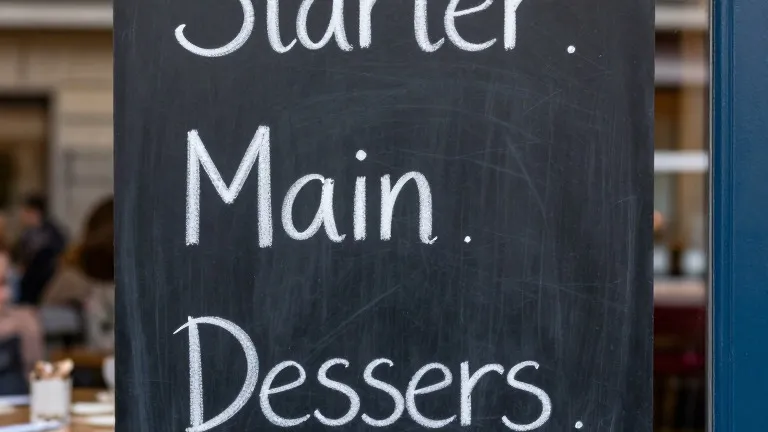
Restaurants continue to display the daily offerings on blackboards and whiteboards before midday. While some have simplified their operations, the core structure of the meal remains largely intact for the millions who still rely on it for their weekday lunch.
Source: The Guardian