Humanoid Ambition: Tesla Activates High-Volume Robot Production
The automaker has begun manufacturing production-grade humanoid robots in Fremont, aiming to build a self-improving fleet of 10,000 to 20,000 units to train its next-generation AI.
By Noor Haddad ·
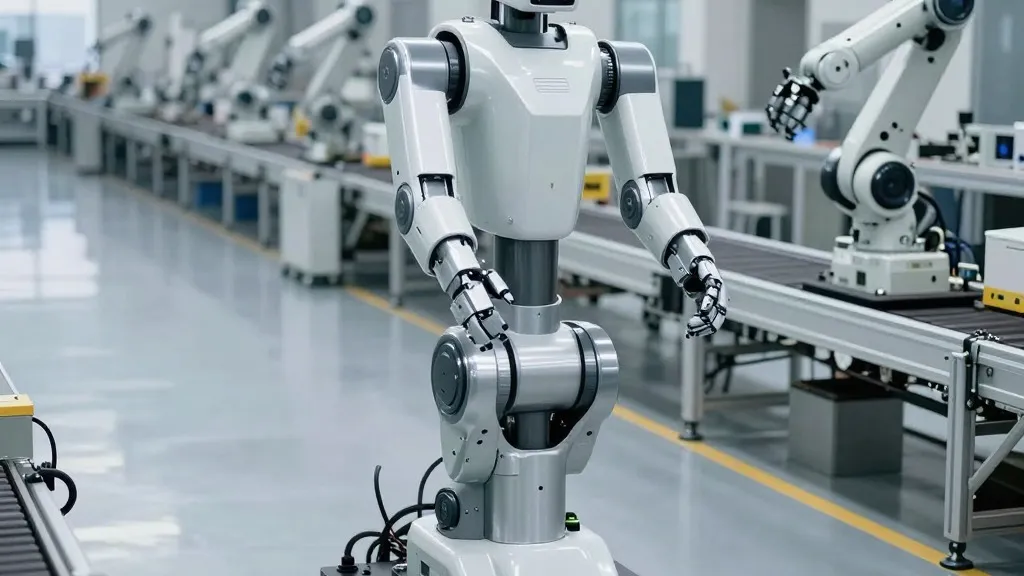
Ten thousand to twenty thousand humanoid robots will soon form the core of a new training facility, a strategic pivot that Tesla has confirmed as it moves its Optimus program from prototype to mass production. This internal academy, which the company revealed in its third-quarter shareholder letter, represents the primary method Tesla will use to teach its machines. Unlike the automotive division, which relies on data from millions of vehicles on the road, the robotics team lacks a similar fleet to generate training inputs. Consequently, every unit rolling off the new assembly line will serve as a data source, practicing various tasks and feeding their results into the next iteration of the artificial intelligence model.
The physical infrastructure for this endeavor is already in place. Tesla has repurposed the space within its Fremont factory that previously housed the Model S and Model X assembly lines. The transition was executed rapidly, with the company clearing the old vehicle production equipment in just 46 days to make way for a robot line sized for a potential annual output of one million units. In a statement to shareholders, Tesla declared that the machines coming off this line are the first to meet the standards of a genuine commercial product, proving that the current manufacturing process is viable for widespread sale.
CEO Elon Musk outlined the production trajectory during Wednesday’s earnings call, describing the growth pattern as a classic S-curve. He noted that the initial phase would involve a shallow slope, but output is expected to climb significantly as the line ramps up. Musk indicated that the majority of the necessary equipment for high-volume production is already installed in Fremont, with weekly output targets set to approach 20,000 robots. This aggressive scaling is part of a broader plan to refine the robot’s electromechanical design, reliability, and service life, with engineering work expected to be completed by the end of next year.
Once the engineering phase is finalized, Tesla intends to begin delivering Optimus units to external clients. The initial target market for these robots includes industries requiring labor for dangerous, repetitive, and around-the-clock tasks. This timeline aligns with the company’s goal of establishing a robust supply chain and refining the AI capabilities that distinguish the product from existing humanoid competitors.
Hardware upgrades are also on the immediate horizon. Tesla plans to integrate its AI5 chip into the Optimus platform next year, a move designed to enhance the robot’s processing capabilities. Musk also teased a new video demonstration within the next one or two months, which will showcase the robot completing tasks driven by AI rather than preprogrammed motions. He specifically criticized rival humanoid demonstrations that rely on scripted routines, arguing that such methods would not withstand the complexities of real-world environments.
The supply chain is actively supporting this expansion. In September, Tesla certified three key partners, Tuopu, Joyson, and Sanhua, for mass production of Optimus components. While Fremont serves as the initial high-volume hub, a much larger facility is under construction at Giga Texas. Recent drone footage shows the steel frame of that plant nearing completion, with Musk pegging its long-term capacity target at 10 million robots per year.
Cost management remains a central focus of the engineering effort. Executives noted that Optimus production costs are trending toward the expected manufacturing cost of the Cybercab, signaling that the robot is being engineered for volume from the outset. However, the design of the robot’s hands remains the most challenging aspect of the project. This area, which Musk highlighted at the recent X Takeover event, continues to be the primary focus of current engineering resources as the company works to finalize the product for commercial delivery.
Source: Teslarati