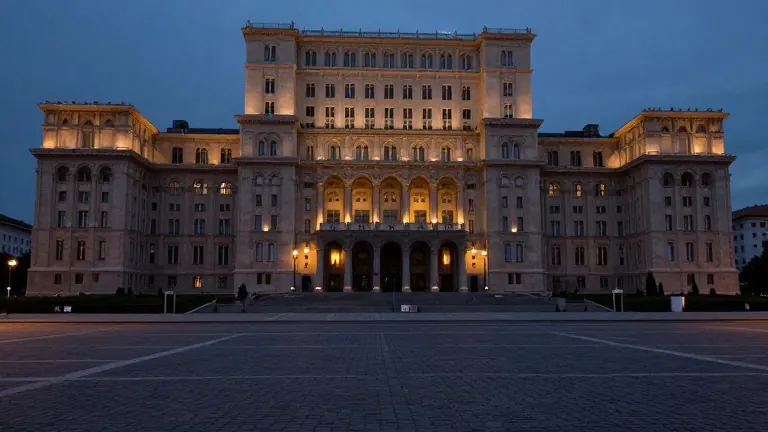
Georgia sees 5.5 million tourists while facing two-year protest anniversary
The country's economy grew by 7.5 percent in 2025, yet political tension persists following the suspension of EU accession talks.
By Ricardo Brooks ·
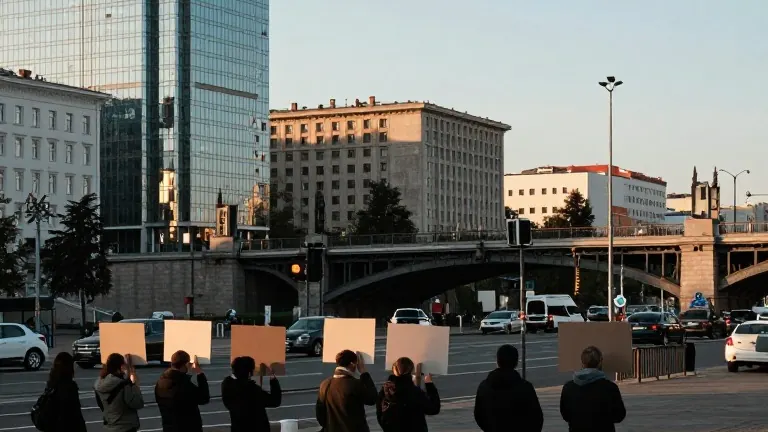
Tbilisi is hosting a record number of visitors even as its streets remain a site of political conflict.
The Georgian National Tourism Administration reports that 2025 saw more than 5.5 million international tourist visits. This figure represents an 8.4 percent increase over 2024. Two decades ago, the country received about 560,000 visitors.
The surge in tourism coincides with a long-running protest movement in the capital. Every Saturday, crowds gather in Avlabari Square in Tbilisi's Armenian quarter. They march toward the Bridge of Love and Freedom Square, heading to parliament. Protesters chant against the government of Prime Minister Irakli Kobakhidze. Their primary target is Georgian Dream, the ruling party in power since 2012. Critics accuse the party of authoritarianism for halting EU accession talks. Georgia received candidate status from the EU in 2023.
The current standoff traces back to October 2024. Contested parliamentary elections took place on October 26, 2024. Protests began two days later. The movement peaked on November 28, 2024. On that date, the government announced it would not begin EU negotiations before the end of 2028. Monday marks the two-year anniversary of those elections.
Economically, the country has shown strong performance. GDP rose by 7.5 percent in 2025. This marks five consecutive years of expansion. However, the economy still faces challenges, including unemployment, low wages, and rural depopulation. Moscow remains a key economic partner despite diplomatic tensions. Trade, tourism, remittances, and energy imports support Tbilisi's financial structure.
The relationship with Russia is complex. Since the 2008 conflict, diplomatic relations have been severed. Russia maintains military control over Abkhazia and South Ossetia, which account for roughly 20 percent of Georgian territory. Yet, many Russian citizens have moved to Georgia since the 2022 invasion of Ukraine. These residents bring capital and open businesses. Their presence has increased pressure on the property market. Locals often view Russia as an occupying power, recalling wars in the 1990s and 2008.
Tourists come from diverse regions, including Europe, the Middle East, and Russia. They are drawn to historic sites, post-Soviet urban landscapes, and mountain villages along the Georgian Military Road. The port city of Batumi offers a coastal resort atmosphere, while Tbilisi features a vibrant underground scene and repurposed industrial spaces. The Rustaveli Theatre, renovated by billionaire Bidzina Ivanishvili, stands as a national symbol. Ivanishvili founded Georgian Dream in 2012 and served as prime minister from 2012 to 2013.
Geopolitical tensions extend beyond domestic politics. The EU has criticized the Georgian government on rule of law and political repression. Observers note that a stronger Moscow in the Ukraine war could increase pressure on the Caucasus. Georgia, with a population under 4 million and a size similar to Ireland, finds itself at a crossroads. The upcoming two-year anniversary of the election crisis will likely see continued demonstrations in Tbilisi.
The next major date is the weekend following the two-year mark of the October 2024 elections. Protesters are expected to continue their Saturday marches. The government remains in control as Georgian Dream holds power. The tourism sector continues to grow, with visitors arriving from across the globe.
Source: The Guardian