Costa Rica sloth corridors: Rope bridges replace lost canopy
Conservationists in Puerto Viejo de Talamanca have installed 410 rope crossings to help sloths handle a fragmented coastal landscape.
By Olga Menon ·
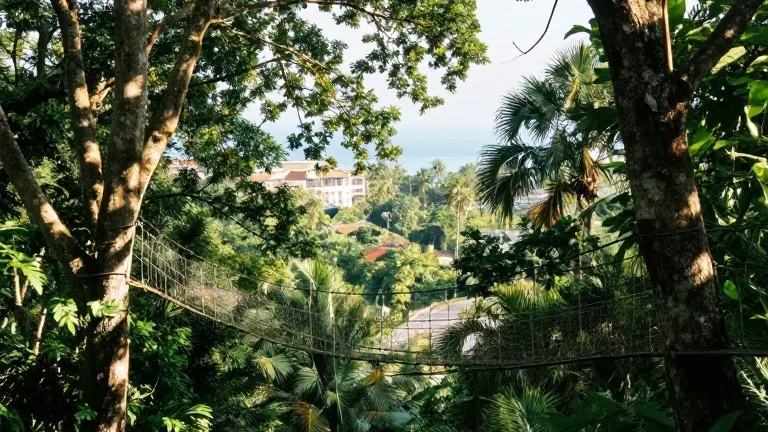
Conservationists behind a beachfront hotel in Puerto Viejo de Talamanca are rigging ropes between trees to create safe passage for sloths. The Sloth Conservation Foundation has installed approximately 410 such bridges across Costa Rica’s Caribbean coast. These structures span gaps created by roads, buildings, and power lines that have cut through the forest canopy.
Sloths cannot jump between branches like monkeys. They rely on established routes to find food and shelter. A gap of just two or three meters often forces them to descend to the ground. There, they face risks from dogs, vehicles, and electrical cables. Rebecca Cliffe, a British zoologist who founded the organization, described the bridges as life preservers for animals crossing gaps they could otherwise not negotiate.
The bridges are made of single ropes. Cliffe noted that while they look simple, they function effectively for arboreal species. Cameras monitoring the structures have recorded more than 22,000 wildlife crossings. These counts include animals other than sloths. The team travels to sites where sloths have been observed, including hotels and other properties along the coast.
Costa Rica increased its forest cover from an estimated 21% in 1987 to 59% according to a 2023 OECD report. However, this recovery has not eliminated habitat fragmentation. Carlos Morera Beita, a geographer at the University for National Costa Rica, stated that much of the regrowth occurred in former grazing lands. These areas remain divided by decades of agricultural expansion.
Morera Beita argued that sloths have shown more adaptability than previously thought. They use tree lines in pastures and live fences to move between forest patches. He emphasized that these connections remain key. Without them, recovering forests can still isolate sloth populations, limiting their access to food, mates, and shelter.
The rope bridges require maintenance. Cliffe said the ropes deteriorate after four or five years in tropical conditions. The project also includes planting trees and working with landowners to restore natural connections. At the Sloth Sanctuary of Costa Rica near Penshurst, staff care for sloths that cannot return to the wild due to injuries or disabilities. Many arrive after their mothers are killed by cars or dogs.
Climate change poses additional threats. Morera Beita explained that small forest patches are more exposed to heat, wind, and low humidity than continuous forests. This reduces habitat quality even where trees stand. Cliffe noted that extreme heat can deplete sloths' limited energy reserves. The conservation group is now testing thermal imaging drones and detection dogs to improve population estimates. Two regional rescue centers receive about three sloths per day.