Army sets Tuesday blast date for Iowa lead azide stockpile
Experts warn the controlled detonation of 68 barrels could release toxic hydrazoic acid, while military officials cite decades-old deterioration as the reason for the immediate action.
By Amit Ricci ·
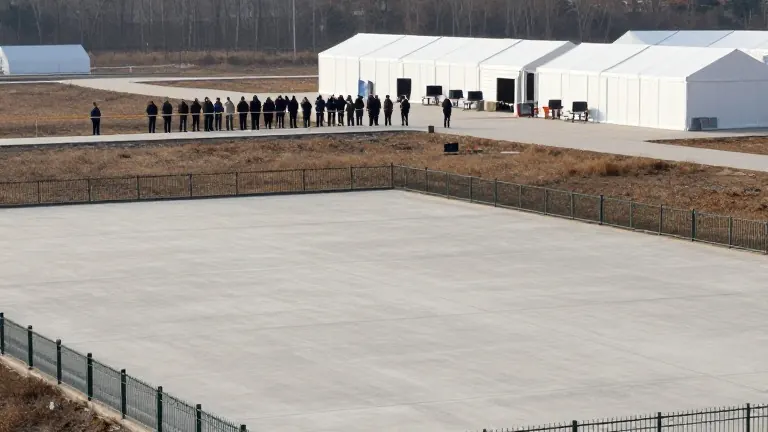
Residents near the Iowa Army Ammunition Plant in Middletown face a new air quality risk as the military prepares to detonate a stockpile of lead azide on Wednesday, Nov. 25. The controlled blast is designed to destroy 68 barrels of the sensitive chemical, but air quality experts argue the Army has not fully accounted for the release of hazardous gases during the explosion.
Dr. Ranajit Sahu, an air quality expert, filed a sworn declaration in federal court on behalf of the Iowa Environmental Council and the Sierra Club. He stated that while the Army acknowledged the release of lead particles, it failed to estimate the volume of hydrazoic acid that would enter the atmosphere. Sahu described the acid as colorless, volatile, and highly toxic in his filing.
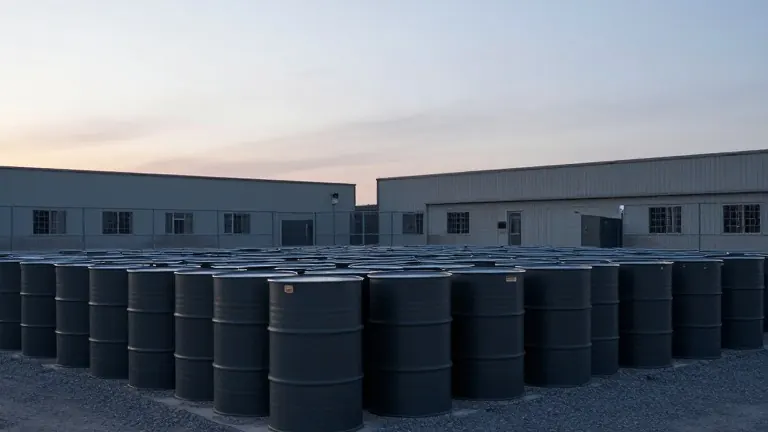
The chemical was stored in burlap bags and sawdust, submerged in a mixture of ethanol and water to prevent it from freezing or drying out. Sahu warned that detonating all of these materials together could produce additional poisons, including hydrogen cyanide. He also challenged the military's position that open-air detonation is the only safe method, arguing that officials dismissed chemical neutralization too quickly.
Maj. Gen. Eric Shirley, who is leading the operation, said military officials and outside experts spent months reviewing alternative methods before concluding that a controlled detonation is the only safe option at this point. During a Tuesday morning press conference, Shirley stated that inaction is no longer an option and that delaying the process would put lives in danger.
According to the Army, the lead azide has sat in storage for decades. Inspectors found crystallization on the outside of the barrels, lids, and bolts earlier this year. Those crystals are sensitive to friction, meaning that even unscrewing a bolt could trigger a chain-reaction explosion. As temperatures drop, the liquid inside the barrels could freeze, further increasing the risk of an accidental blast.
Rob Sakata, director of the Bureau of Alcohol, Tobacco, Firearms and Explosives (ATF), said the military contacted the International Manufacturers of Explosives to determine if a different mitigation method existed. Sakata noted that every organization consulted agreed that the current plan is the only safe path forward. The military began using lead azide as a primary explosive nearly a century ago and phased it out due to its sensitivity and difficulty in maintenance.
Around 2009, the nation's remaining stockpile of roughly 10,000 pounds was consolidated and moved to the Iowa Army Ammunition Plant. Sakata said some of that material was already more than 60 years old, with some deterioration noted at the time but no dangerous crystallization recorded.
Crews normally inspect the barrels every month and refill them with the water-and-ethanol mixture if needed. A routine monitoring inspection on March 11 found that the lead azide had partially crystallized, making normal handling unsafe. This discovery prompted officials to begin planning the controlled detonation.
The Army's public safety advisory confirms that the March inspection triggered the shift to a controlled detonation strategy. The operation remains scheduled for Wednesday, with military and environmental groups continuing to monitor the conditions surrounding the 68 barrels of lead azide.