187: The Narrow Margin Defining a New California Congressional Battle
Two veteran politicians with contrasting approaches to affordability face off in a redrawn district where the previous winner won by fewer than two hundred votes.
By Sofia Ramirez ·
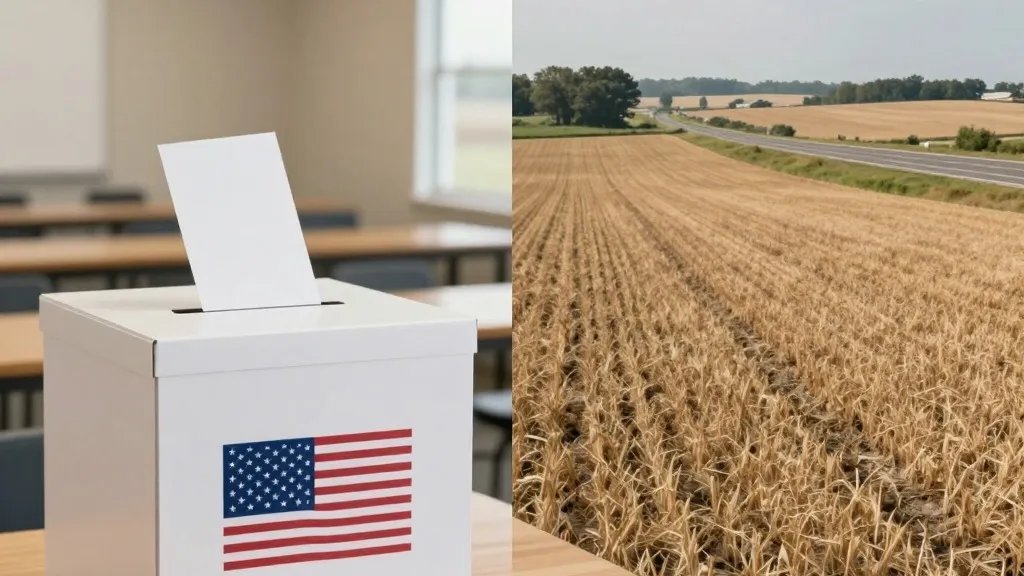
The stakes in California's 13th Congressional District could hardly be higher for a race decided by a razor-thin margin. On November 3, voters will choose between Democratic incumbent Adam Gray and Republican challenger Kevin Lincoln, two seasoned figures who agree that affordability is the paramount concern but disagree fundamentally on the path forward. The tension in this contest is amplified by the district's history; Gray secured his seat just two years ago by defeating John Duarte by only 187 votes out of more than 210,000 cast. That near-photofinish victory now sets the backdrop for a rematch that both sides view as a definitive test of their political viability in the region.
The geographic and political landscape has shifted significantly since that last contest. Following redistricting mandated by Proposition 50, the district now encompasses the agricultural heart of the San Joaquin Valley and stretches south along Interstate 5 to the Coalinga area, bypassing Fresno. Lincoln, a well-known figure in Stockton due to his time as mayor, initially sought a rematch against Josh Harder in the 9th District. However, the new boundaries forced him to pivot, bringing him into direct competition with Gray, a former state assemblymember who may be less familiar to some residents despite representing the area.
Financial resources currently favor the incumbent. Federal Election Commission data from June 30 indicates that Gray has raised $4.2 million in contributions and loans, a substantial lead over Lincoln's $2.2 million. In terms of partisan registration, state records from 2023 show the district leans Democratic, with 42.3% of voters registered as Democrats compared to 28.5% Republicans. This numerical advantage is a key factor in how both campaigns are structuring their outreach to the local electorate.
Lincoln brings a high-profile endorsement from President Donald Trump, who declared on Truth Social in December that he offered his "Complete and Total Endorsement." Lincoln, a former Marine who served in the White House Military Office from 2001 to 2005, has kept this support front and center on his campaign site. He also highlighted his background as a pastor at LifeSong Ministries in a video for the National Republican Congressional Committee. His platform centers on restoring the American dream by lowering costs for gas, food, and utilities, while cutting taxes and creating jobs. He accuses Gray of voting to raise taxes, specifically noting a 113% increase in the gas tax during his legislative career.
Gray, a native of Merced, positions himself as a moderate independent voice rather than a standard Democratic candidate. He serves as a whip for the Blue Dog Coalition and has cited his work to reverse Medicaid cuts and limit presidential tariff powers without congressional approval. He has been critical of the administration's immigration enforcement, describing the deportation policies as "irresponsible, reckless, dangerous." Democrats are betting that high gas prices and aggressive immigration raids will dampen the enthusiasm for candidates closely aligned with the president, a strategy Lincoln says he is prepared to counter with his experience as a fighter and winner.
The campaign will now move into its final phase as both candidates seek to convert their respective bases and undecided voters. Lincoln aims to leverage his local name recognition and presidential backing, while Gray focuses on his record of moderation and fiscal prudence. With the district's composition now firmly established, the outcome on November 3 will likely signal the political direction for this part of the San Joaquin Valley in the years to come.
Source: Stocktonia News