White House Demands AI Giants Share Energy Costs With Local Residents
The administration is pressuring tech firms to offset neighborhood power spikes by returning excess electricity, aiming to defuse local opposition to new data center projects.
By Jasmine Coleman ·
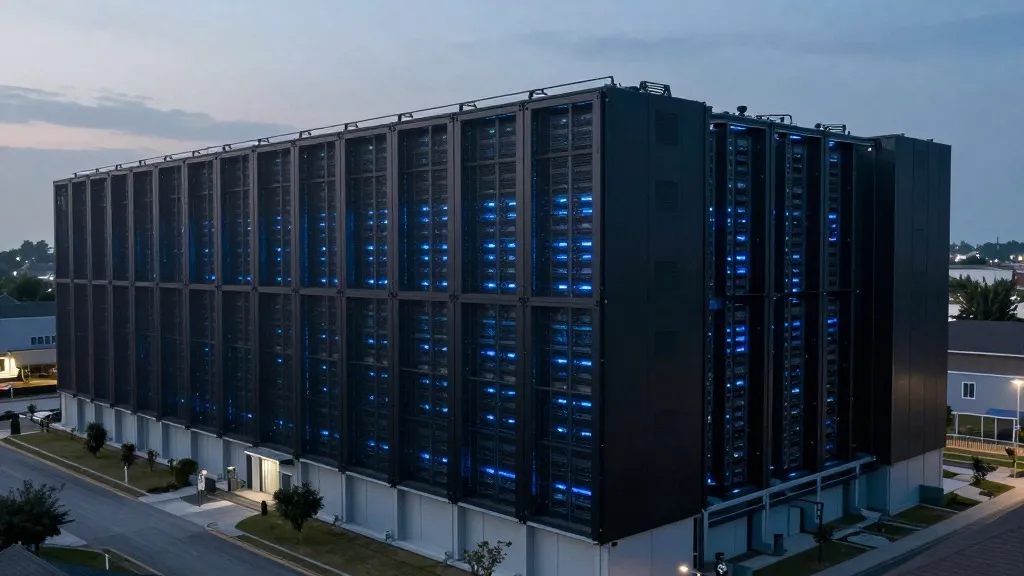
A sharp tension has emerged between the rapid expansion of artificial intelligence infrastructure and the residents living beside it. To address growing local resentment, President Donald Trump has issued a directive requiring data center builders and AI hyperscalers to provide a financial or energy dividend to nearby communities. The core of the mandate is simple: companies must either generate their own power or return excess energy to the local grid, with the goal of stabilizing or lowering electricity rates for households that have been shouldering the cost of these massive facilities.
The friction has built over the past year as AI data centers have proliferated across the United States. In many small towns, the arrival of these facilities has triggered significant community backlash. Residents have cited a cascade of local impacts, including soaring utility bills, persistent noise pollution, and strain on water resources. These concerns, combined with air quality issues and deforestation, have made data centers a contentious presence in regions that previously had little interaction with large-scale tech infrastructure.
The administration’s push is driven by a dual objective: maintaining a competitive edge in the AI race against China while mitigating the social friction that can slow down project approvals. By forcing a direct benefit to the host community, the White House hopes to turn potential opponents into supporters. This strategy builds on a previous executive order that required these companies to source their own electricity, ensuring they do not rely on the existing local grid in a way that drives up costs for typical consumers.
In a post on Truth Social, the President emphasized the practical benefits of this approach, noting that data centers often become popular in an area once a financial agreement is reached. He urged developers to "MAKE DEALS, and get them built!!!" The directive suggests that the dividend could take the form of a partial subsidy for local electricity costs or the direct sale of surplus power. This aligns with a recently passed act that obligates data centers to cover the costs of necessary grid upgrades, preventing those expenses from being passed on to local taxpayers.
The mechanics of this dividend remain to be fully detailed. The administration has indicated that excess electricity from on-site generation could be fed back into the community grid. This would theoretically lower the price of power for residents in the immediate vicinity. However, the specific structure of these payments, whether they will be direct cash dividends, reduced utility rates, or a combination, has not yet been codified into a final regulatory framework.
Critics and analysts point out that the economic aspect is only one part of the equation. While addressing the cost of electricity is a tangible win, it does not resolve other major grievances, such as high water consumption, ecological damage, and localized pollution. These non-monetary factors continue to make data centers a difficult sell in many communities, suggesting that financial compensation alone may not be enough to secure broad public approval.
Looking ahead, the success of this mandate will depend on how strictly it is enforced and how quickly the promised energy returns materialize. The administration is eager to see more projects move forward, but the industry must now negotiate not just with regulators, but with the neighbors whose support is increasingly vital. The coming months will test whether this new model can balance the urgent demand for AI capacity with the reasonable expectations of the communities hosting these power-hungry facilities.
For now, the directive stands as a bold attempt to rewrite the social contract of the AI era. By insisting that the benefits of these massive installations be shared locally, the White House is betting that a fairer distribution of costs and resources can smooth the path for the next generation of data centers. The outcome will hinge on whether these deals are seen as genuine concessions or merely a tactic to fast-track construction.
Source: Tom's Hardware