Ten Needles and a 'Blown' Vein: The Mechanics of a Failed Execution
Court filings reveal that medical staff struggled to insert intravenous lines in a Tennessee death row inmate, warning that her veins may have ruptured before lethal drugs were administered.
By Valentina Cruz ·
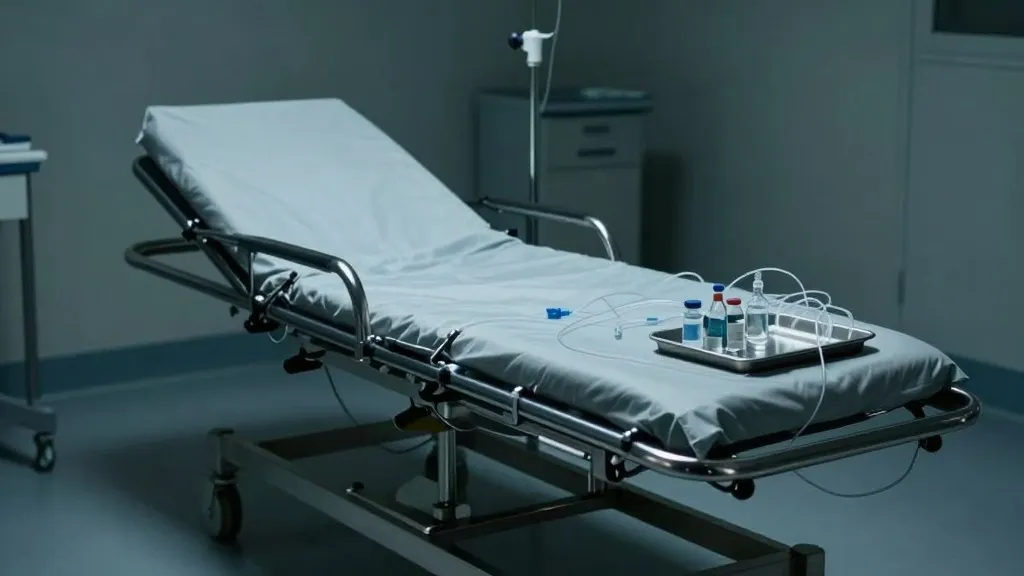
Ten needles were used by the medical team attempting to insert intravenous lines in Christa Pike’s arms, a figure that underscores the difficulty of the procedure described in new court documents. This detailed account, filed on Thursday, provides the most comprehensive look yet at the mechanics of the state's failed attempt to execute the 50-year-old inmate. The records highlight significant technical struggles that preceded the administration of the lethal drug, raising fresh questions about the reliability of Tennessee's protocol.
The numbers in the filing paint a picture of a medical process fraught with complications. The team began their work at 6:34 p.m., and while an IV was established in Pike's right arm within six minutes, the left arm took nearly an hour to secure. During this time, staff reported difficulties pushing saline through the final site. A team member noted at 6:57 p.m. that a vein might be "blowing," and by 7:07 p.m., another stated, "I think it's blown." The team finally declared the line successful at 7:13 p.m., just five minutes before phone calls to the execution chamber began.
Pike, who was convicted in the 1995 stabbing death of Colleen Slemmer, has become a central figure in this ongoing legal and medical debate. At the time of the crime, she was 18 and became one of the youngest women sentenced to death in history. Following the September 30 attempt, she survived two doses of pentobarbital, a drug that Tennessee's protocol specifies for a second injection if the first fails. However, the state's rules do not clearly define the steps to take if an inmate survives the second dose. Pike was placed on a ventilator for several days, with her lawyers initially doubting her survival, before eventually regaining consciousness and returning to prison.
The stakes for Pike and other inmates on death row are high as legal challenges continue against the state's lethal injection methods. Kit Thomas, an attorney representing a group of inmates challenging these procedures, stated that the recent events validated their concerns. "Our predictions about the likelihood of botched executions have come true, and will continue to come true, without substantial change," Thomas said. The filing suggests that the physical trauma of the procedure, combined with the lack of clear guidelines for survivors, creates a precarious situation for those awaiting execution.
According to attorney Randy Spivey, the team members pushing the drug from an adjoining room repeatedly asked the IV team to check Pike's left arm. At 7:34 p.m., Pike remarked, "I feel like my arm is about to bust. It burns." In the following 30 minutes, she strained and struggled to breathe. Spivey was denied a phone in the witness room and had to travel seven minutes through the facility to call for a halt. He noted that a third dose was not authorized and requested immediate medical care. An ambulance arrived at the hospital at 9:14 p.m., roughly 20 minutes after medical staff began life-saving measures.
This incident adds weight to the broader argument that the current system is prone to error. The specific details of the needle insertions and the verbal warnings from the medical team provide concrete evidence of the challenges faced during the procedure. As the legal battle continues, the focus remains on whether the state will amend its protocols to account for such medical uncertainties.
Source: CBC News