120 Seats Decide Israel's Path After Oct. 7
Voters choose parties in a fragmented field where no single group can secure a majority, forcing months of coalition talks.
By Amit Ricci ·
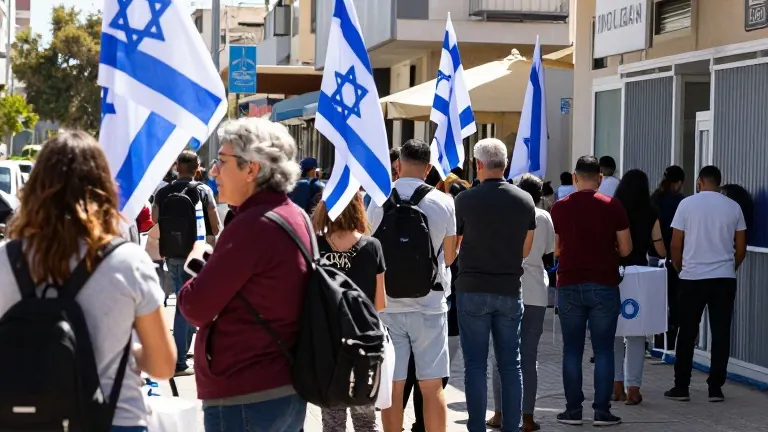
Israeli voters cast ballots on Tuesday in a fragmented election where the outcome will depend on coalition math rather than a single winner. The 120-seat parliament, known as the Knesset, has never been controlled by one party, requiring candidates to secure at least 61 seats to form a government. With no clear front-runner in opinion polls, the vote sets the stage for protracted negotiations among a dozen parties expected to win representation.
The campaign centers on the legacy of Prime Minister Benjamin Netanyahu, who has led the country for nearly two decades. His primary challenger is former military chief Gadi Eisenkot, who is seeking to capitalize on voter frustration over the security failures that preceded the Hamas-led attack on October 7, 2023. Eisenkot visited Ofakim, a community in southern Israel targeted during that assault, to meet with voters as polls opened. His son and two nephews were killed in combat in Gaza, a personal loss he used to underscore the stakes of the security debate.
Emotions ran high in several regions as voters headed to the polls. In Kiryat Shmona, a stronghold for Netanyahu near the Lebanese border, a man tore down a poster of Eisenkot. In Tel Aviv, families of victims and former hostages held moments of silence. Yona Adam, the mother of Mapal Adam who was killed in the 2023 attack, urged the crowd to remember those whose voices are gone. The presence of these families highlighted the personal weight of the conflict on the national discourse.
Thousands of volunteer observers from groups such as Elections Guards were stationed at polling sites across the country to monitor the process. Eyal Sher, a volunteer, said he participated because he believed the current government was willing to take extreme measures to remain in power. He emphasized that every vote counted and that the procedures needed to remain intact to ensure fairness in what he described as a critical contest.
Netanyahu’s political future hangs in the balance. A poor showing could end the 77-year-old’s career on a bitter note, while a victory would cement his reputation as a political survivor. U.S. President Donald Trump endorsed Netanyahu earlier this month, but the late timing of the support was seen as a setback. Netanyahu had previously framed his close relationship with the Republican president as a key selling point for his reelection bid.
The election also tests the strength of Netanyahu’s ability to form coalitions with religious and nationalist partners. Opinion polls indicate a tight race between his bloc and the alliance led by Eisenkot. The Eisenkot camp argues that Netanyahu must be held accountable for the events of October 7 and for failing to convert battlefield victories into diplomatic gains. Netanyahu has traditionally relied on partners who support his efforts to exempt ultra-Orthodox Jews from military service and his 2023 judicial overhaul, a move critics view as an assault on democratic institutions.
The campaign focused heavily on the security breakdown of October 7, the deadliest day in the country’s history. Candidates debated Netanyahu’s role in that failure and his domestic policies, while largely avoiding a detailed discussion of Israel’s wartime conduct in Gaza. That war led to an international arrest warrant for the prime minister. Broad support remains for Israel’s occupation of parts of southern Lebanon and Syria, as well as its two recent wars against Iran, but the central question for voters is whether Netanyahu can maintain his grip on power in a divided parliament.
Source: KSAT-TV