US Markets Stabilize as AI Stock Volatility Eases Amid Tariff and Inflation Fears
US stocks clawed back early losses on Wednesday as AI sector volatility subsided, though concerns over new tariffs and rising inflation persisted.
By Ricardo Brooks ·
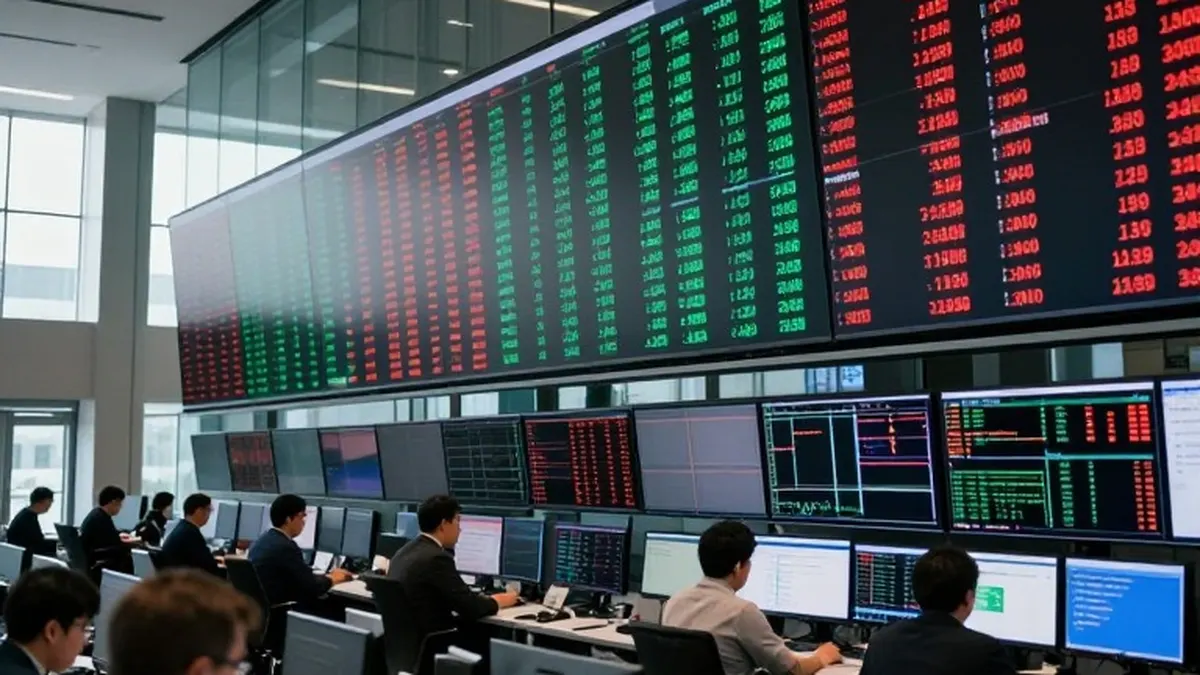
Wall Street indices recovered significant ground on Wednesday, November 25, after suffering steep losses earlier in the trading session. The S&P 500 index closed down 0.3 percent, a marked improvement from a low point where it had fallen 3.2 percent. Meanwhile, the Dow Jones Industrial Average gained 164 points, or 0.3 percent, while the Nasdaq composite ended the day 0.6 percent lower. In Canada, the S&P/TSX composite index finished 217 points higher, representing a 0.64 percent increase.
The market resilience came despite new concerns regarding persistent inflation and escalating trade tensions. The Trump administration proposed new tariffs on China and dozens of other nations on Wednesday, citing the need to protect American industries. Greg Taylor, a portfolio manager at PenderFund Capital Management, noted that this move suggests the market may have been overly optimistic about the prospect of immediate trade deals. Taylor stated that the trade wars are not over and that such tariffs would likely stoke inflation, adding further stress to consumers.
AI stocks continued their two-day retreat following a relief rally on Monday. That earlier surge had been driven by the surprise reinstatement of Jensen Huang as CEO of Nvidia. Since setting an all-time high last month, concerns have grown that AI valuations have become unjustifiably high. On Wednesday, several major tech firms saw their losses narrow significantly. Nvidia, which had dropped more than nine percent at one point, closed with a 3.9 percent loss. Broadcom finished just 0.1 percent lower after being down more than six percent, and Microsoft recovered from a three percent slide to end down 1.2 percent.
Some technology names posted gains, helping to offset broader sector weakness. Meta climbed 3.4 percent, while Salesforce rose two percent. Gains in financial services also supported the broader market. Visa increased by 1.8 percent, Mastercard gained 1.9 percent, and American Express rose 1.2 percent. Anthropic, which recently went public, bounced back from an early drop to close with a 1.1 percent gain, though its shares have fallen approximately 28 percent since its initial public offering.
The S&P 500 remains down 5.2 percent for the month of November. Chris Zaccarelli, chief investment officer at Northlight Asset Management, commented in a research note that the combination of AI sector anxiety and new tariffs makes a traditional year-end rally seem unlikely. Questions regarding Nvidia's corporate governance and the influence of the U.S. president, who holds a significant stake in the company, have further complicated the outlook for the AI sector. Investors are increasingly worried that AI profits may not justify the massive investments and current stock prices.
Inflation data remains a key driver of market sentiment. The Federal Reserve's preferred inflation measure, the personal consumption expenditures price index, showed prices rising at a 3.8 percent rate in October, up from 3.6 percent in September. This rate is well above the central bank's two percent target. Consequently, the Federal Reserve is expected to raise its benchmark interest rate at its December policy meeting to tame inflation. While the U.S. economy grew at a revised annual rate of 4.3 percent in the third quarter, the fastest in three years, that growth has been largely driven by large tech firms and high-income households.
Energy prices also contributed to inflationary pressures. Brent crude, the international oil benchmark, rose 3.5 percent to settle at $94.61 USD on Wednesday. The price has fluctuated significantly since the U.S. and Israel attacked Iran in February, with the current level reflecting ongoing impacts on global supply. Tiff Macklem, the governor of the Bank of Canada, stated on Tuesday that high energy prices are expected to continue affecting consumers into 2027. Energy stocks generally performed well on Wednesday, with Chevron rising 1.1 percent.
In the bond market, Treasury yields declined. The yield on the 10-year Treasury note fell to 4.87 percent from 4.91 percent late Tuesday. The recent trade conflicts and tariff changes have added to rising costs for businesses, which often pass these expenses on to consumers. This dynamic has contributed to public frustration over high prices, a factor that influenced recent election results where Democrats gained majorities in both the House and the Senate.