UK launches 72-hour survival guide for households
The British government urges citizens to prepare for three days without essential services, citing risks from climate, cyber, and geopolitical threats.
By Olga Menon ·
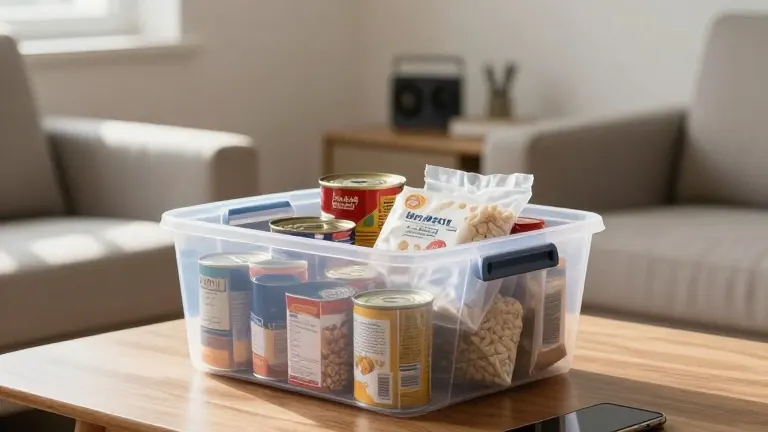
The United Kingdom has introduced its first national public preparedness campaign in nearly 50 years, instructing households to be self-sufficient for 72 hours during emergencies. The "Be Ready" guide launched last month, directing residents to manage without external support in scenarios ranging from climate disasters to cyber disruptions and hostile state actions. This three-day target aligns with advice in Canada but differs from neighboring Europe, where Sweden recommends a seven-day supply and Germany advises up to ten days.
The initiative follows comments from Gen. Sir Roland Walker, the head of the British Army, who addressed approximately 700 soldiers at the country's largest garrison in northern England. Walker stated that the "extreme jeopardy" of global affairs has returned to the national consciousness. He predicted that political leaders would soon engage in frank conversations with citizens regarding specific risks. The campaign marks a major shift from the 1980 "Protect and Survive" effort, which advised on nuclear survival and was often mocked for its grim tone.
Experts argue that the public seeks reassurance rather than fear. Lucy Easthope, a disaster recovery specialist who has advised on events from the Novichok poisonings to the 2004 tsunami, noted that planners have long sought such a campaign. She emphasized that the UK has avoided negative messaging. However, skepticism persists among some residents. Nyari Matebwe, a family physician in Hertfordshire, initially viewed the guidance as "scaremonger-y." Her perspective shifted after recent cyberattacks on supermarket freezers and medical fridges in Europe, as well as airplane bomb hoaxes, prompted her and her teenage daughter to take the advice more seriously.
Officials maintain that the threats are immediate. Richard Horne, head of the National Cyber Security Centre, described the current situation as a "moment of urgency." The NCSC assesses that AI-powered malware is "highly likely" to target British power stations, airports, and hospitals within two years. Horne also warned that military networks face sustained penetration attempts, including Russian hybrid warfare campaigns. In October, Defence Secretary Wes Streeting stated the country must be "ready for war in 1,000 days," citing potential Russian aggression.
Cultural factors influence public reception. Luis Martinez Arnal, an IT professional in London, noted that British familiarity with hard times has faded, creating a psychological comfort that masks vulnerability. This concern is compounded by infrastructure changes; Britain plans to convert all copper-wire landline phones to internet-only service by the end of January 2027, raising questions about connectivity during outages. Meanwhile, some citizens are acting on the new guidance. Preyal Shah, a mother in Harrow, is stockpiling 10 kilograms of rice, 5 kilograms of pasta, and tinned food. Reena Patel, a lawyer, plans to purchase a wind-up radio and water filters to address "competing crises," including the war in Ukraine.
The government aims to normalize self-sufficiency in a culture that has historically relied on community resilience for short-term disruptions. While some dismiss the effort as excessive state involvement, the specific focus on a 72-hour window provides a concrete target for household planning. The campaign positions personal readiness as a necessary complement to national defense strategies in a period of heightened global instability.