Trump pauses new Iran strikes after Gulf leaders intervene
The U.S. president said he would maintain a naval blockade in the Strait of Hormuz while regional mediators push for a diplomatic resolution.
By Ricardo Brooks ·
U.S. President Donald Trump said on Monday that the United States will hold off on launching new military strikes against Iran.
The decision comes after direct appeals from several Gulf states, including a meeting between Trump and Qatari Prime Minister Sheikh Mohammed bin Abdulrahman Al-Thani at the White House.
Trump stated that he is acting at the request of neighboring countries. He specifically named Qatar, Saudi Arabia, the United Arab Emirates, Bahrain, and Kuwait as nations that prefer the U.S. not launch fresh attacks.
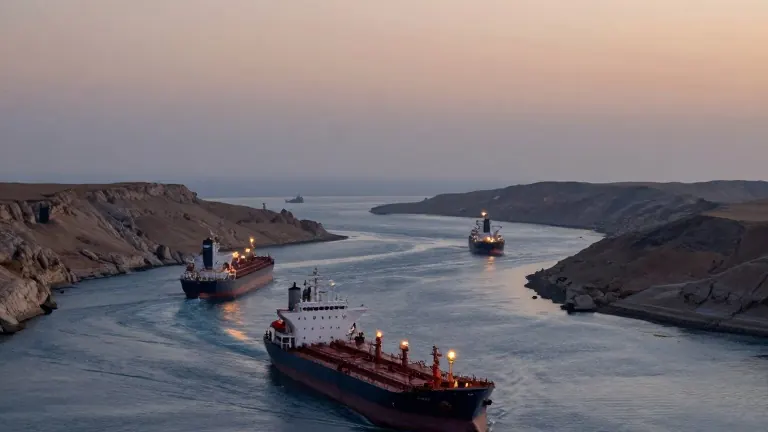
Despite the pause in strikes, Trump said the U.S. will keep up a naval blockade in the Strait of Hormuz. He told reporters that the United States is fully prepared with the best equipment available, but he does not expect a need to use it.
The conflict, which began on February 28 alongside Israel, has lasted more than eight months. While Trump has downplayed the likelihood of major warfare resuming, he remains unwilling to accept the current Iranian truce plan. Senior U.S. and Gulf officials have expressed doubt that an immediate deal is likely.
Mutual attacks continued on Monday. Iranian state media reported that the U.S. struck Qeshm island overnight. In the same period, Iran attacked tankers in the Gulf and Strait of Hormuz, while its Houthi allies in Yemen hit Saudi Arabia.
Al-Thani, who serves as both prime minister and foreign minister, met with Trump after visiting Tehran the previous week. He described the talks with Trump and Vice President JD Vance as positive. On the social platform X, he wrote that he was grateful for the discussions aimed at reaching a deal and bringing peace to the region.
Iranian officials have pushed back on the current diplomatic trajectory. Mohsen Rezaei, the Iranian security council chief, told the U.S. to stop manufacturing fake news about imaginary talks. He said it was time for the U.S. to surrender to the seven conditions Iran has repeatedly set out. Iran's proposal includes ending the U.S. blockade of its ports, lifting some sanctions, and halting bombing in exchange for Tehran stopping its own blockade of the Strait of Hormuz.
U.S. Secretary of State Marco Rubio rejected that plan on Sunday, calling Tehran's conditions outrageous and unrealistic. Iranian Foreign Ministry spokesperson Esmaeil Baghaei defended the proposal on Monday as the most reasonable offer available.
Domestic pressure to end the war has grown in the United States. Senior Republicans, including Vance, have attributed their party's losses in the midterm elections to the conflict. Despite this, Rubio said a diplomatic breakthrough was not imminent. Anwar Gargash, a senior United Arab Emirates official, agreed, stating that a comprehensive political settlement appeared difficult. He advised preparing for a long period of uncertainty where stable regional order cannot be taken for granted.
Turkish President Tayyip Erdogan said on Monday that he told Trump Ankara did not want a new escalation. He emphasized that issues could be resolved through dialog and diplomacy, noting that the region was seeing a negative shift again.
The Sunday night strikes on Qeshm island did not impact vital infrastructure, according to a provincial official who spoke to Fars news agency. The U.S. has not commented on those reports. A senior Iranian source told Reuters that the strikes targeted Iranian radar systems, missile launcher bases, and mine-laying systems. International maritime agencies showed that attacks on tankers ramped up sharply in October. Iranian state television reported on Monday that 11 tankers had been disabled over the past 10 days.