Pope Leo XIV Visits Argentina Amid Tensions With President Javier Milei
The pope's visit to Buenos Aires comes as Argentina faces a 32.3% poverty rate and a government that has cut social spending by nearly half.
By Olga Menon ·
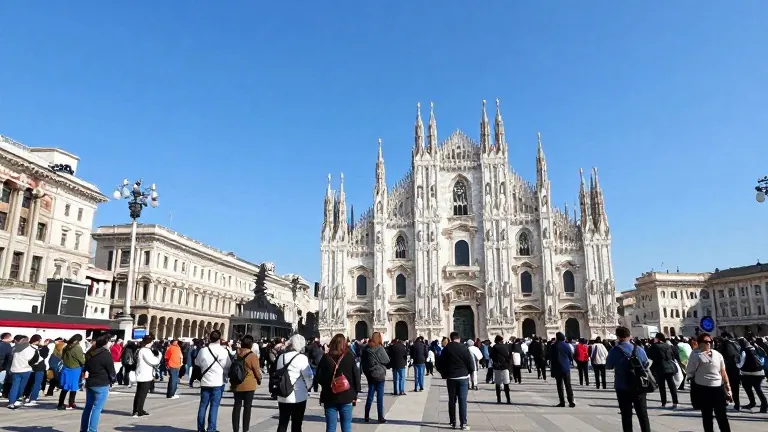
Pope Leo XIV concluded his first stop in South America in the Uruguayan city of Florida, where the Vatican estimated that 50,000 people gathered for Mass. The city has a resident population of only 40,000, meaning the event attracted a crowd far larger than the local community. The gathering took place under clear skies, with many attendees walking several kilometers to reach the main square.
During the homily, Leo addressed the role of women in preserving Catholic faith in a country that has become increasingly secular. He acknowledged the grief of mothers and grandmothers whose children no longer practice. He urged them to continue their efforts, stating, "Mothers and grandmothers: never tire of passing on the faith!" Leo became the first pope to visit Uruguay in nearly 40 years, aiming to reconnect the nation with its Catholic roots.
The pope now travels to Argentina for the second leg of his tour. This stop is expected to be politically sensitive due to the relationship between the Catholic Church and the administration of President Javier Milei. The two leaders are scheduled to meet at the airport in Buenos Aires for a traditional welcome ceremony and exchange of speeches.
Milei, a libertarian, has overseen a strict austerity program since taking office in December 2023. His government slashed the healthcare budget by 48% in real terms and has proposed cuts to the public university system. These measures have drawn sharp criticism from the Argentine Church. Official data shows that poverty reached 32.3% of the population in the first half of 2026, affecting approximately 15 million people.
Milei has defended the cuts as necessary to fix the economy and eliminate waste. He has described social justice as "an aberration" and dismissed complaints from families struggling to make ends meet as "huge stupidity." The government has also promoted artificial intelligence with limited regulation, a stance that contrasts with Leo's call for strict international safeguards on the technology.
Karina Milei, the president's sister and secretary-general of the presidency, told reporters that the visit is purely religious. She said, "The pope belongs to all Argentines. He doesn't belong to a political party or a political camp." However, political observers note the tension between the pope's focus on the poor and the government's austerity measures.
Luis Bahamondes, a professor at the University of Chile, described Argentina as a society in deep polarization and economic crisis. He noted that Milei defies conventional protocol and had previously challenged Pope Francis. David Lantigua, a theology professor at the University of Notre Dame, said that Leo is completing unfinished business left by Francis, who never returned to his homeland during his 12-year pontificate.
Leo, who spent two decades as a missionary in Peru, carries on Francis' legacy of ministering to the vulnerable. He is scheduled to visit Peru at the end of his tour. In Buenos Aires, posters reading "At last, a Lion who unites" have appeared, playing on the Spanish word for Leo and the lion imagery often used by Milei.
Security concerns have also emerged. Argentina's state intelligence agency announced on Saturday that a person was arrested for death threats against the pope. A federal court in Campana, 70 kilometers northwest of Buenos Aires, ordered the arrest less than 24 hours after receiving a tip. The agency did not provide further details about the suspect.