Italian schools face second wave of hoax bomb threats in one week
Over 1,800 schools in Italy received new bomb threat emails on Thursday, prompting evacuations and political debate over the nation's cyber defense strategy.
By Ricardo Brooks ·
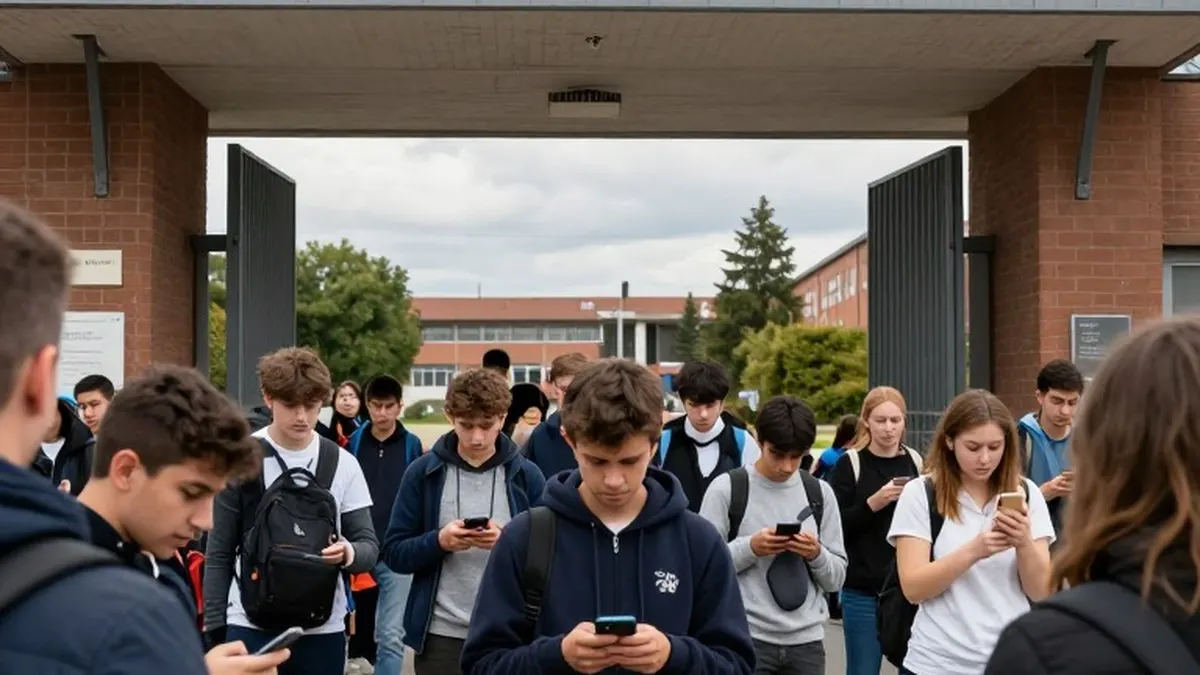
More than 1,800 schools across Italy received emails containing bomb threats on Thursday, according to government officials. This latest incident occurred just one day after approximately 6,300 educational institutions received similar alerts on Wednesday. The rapid succession of threats has caused significant disruption to the school system, with many institutions closing their doors immediately upon receiving the warnings. As a result, parents rushed to collect their children, creating chaos in and around school buildings.
Police forces in Rome stated that there was nothing to substantiate the threats. The emails shared specific characteristics with the previous day's messages, as both were reportedly signed by an individual identifying as Mikhail Andropov. According to Italy's Ansa news agency, the sender presented himself as the leader of the Vilayat of Misoginistan. This purported author also claimed responsibility for email bomb threats sent to newsrooms in Ireland and Bulgaria last week.
In response to the escalating situation, Prime Minister Giorgia Meloni has summoned opposition leaders for talks to discuss how the government should handle such incidents. Her office issued a statement advising that buildings should not be evacuated in the absence of concrete evidence beyond the mere receipt of a mass email suggesting genuine danger. The administration plans to instruct schools to act in accordance with this guidance to prevent unnecessary evacuations in the future.
The issue is not limited to Italy. Authorities in Scotland, Northern Ireland, and the Republic of Ireland reported that many schools had received similar threatening emails from abroad on Wednesday. However, these regions classified the messages as hoaxes and allowed classes to continue without major interruption. This cross-border pattern highlights the growing nature of coordinated digital threats across European educational sectors.
The sequence of events has intensified political debate within Italy. Opposition parties have accused Prime Minister Meloni of prioritizing spending on conventional military equipment while neglecting what they describe as more pressing cyber threats. Elly Schlein, the leader of the main opposition Democratic Party, stated that there is a need for stronger coordination among the bodies responsible for cybersecurity. She added that her party has proposed shifting part of the available resources towards cyber defenses to better protect public institutions.
The latest security alert arrives amid rising concerns in Europe regarding hybrid warfare threats. Recent incidents have targeted various civilian infrastructure sectors, including supermarkets, blood banks, air traffic systems, and television broadcasters. These attacks are part of a broader campaign that has unsettled officials across the continent, prompting closer scrutiny of digital vulnerabilities in essential services.
The geopolitical context of these threats remains a point of contention. On Tuesday, France summoned Iran's ambassador after accusing Tehran of orchestrating a cyberattack that disabled refrigerators in hundreds of supermarkets. Tehran rejected the French accusations, describing them as baseless and hostile. Meanwhile, some European officials suspect that Russia is orchestrating the wider campaign of threats in countries that support Ukraine, following Moscow's full-scale invasion. Russia has denied this accusation, characterizing the claims as a smear campaign.
As Italy navigates the aftermath of the second wave of threats, the focus remains on balancing immediate safety protocols with long-term strategic adjustments. The government aims to clarify communication channels between authorities and schools to ensure a more measured response to future mass email incidents. The situation underscores the increasing importance of cyber resilience in maintaining the stability of public education and daily life in Europe.