Abu Dhabi Talks Resume as Russian Drones Strike Ukraine Overnight
U.S. envoys seek a comprehensive European security deal while Russian and Ukrainian delegations remain divided on territory and military limits.
By Olga Menon ·
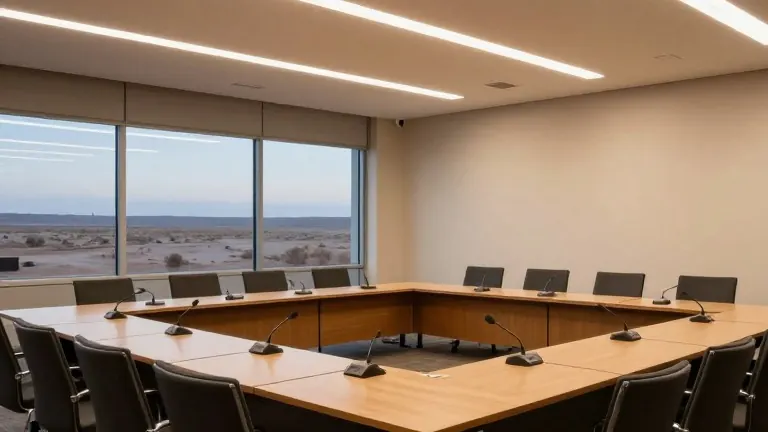
Residents of Ukraine face a new round of diplomatic efforts while enduring a surge in aerial attacks. The United States, Russia, and Ukraine opened two-day talks in Abu Dhabi on Tuesday, marking the first formal meeting since February. The sessions aim to address security guarantees and the long-term structure of European defense.
Washington is pushing for a settlement that extends beyond the immediate conflict. Jared Kushner, U.S. President Donald Trump’s son-in-law and special envoy, stated on X that the team is working toward a negotiated solution. He described the goal as creating a sovereign and secure Ukraine within a more stable European security environment. Steve Witkoff, a fellow envoy, is participating in the discussions alongside Kushner.
The negotiations occur against a backdrop of intensified military operations. Ukrainian air force officials reported that Russia launched 162 drones and one ballistic missile at Ukraine overnight. In response, the Russian Ministry of Defense claimed its forces shot down 155 Ukrainian drones above eight regions and the Crimean Peninsula. These strikes highlight the continued exchange of long-range fire even as diplomats meet in the Gulf.
Delegations from both sides are led by experienced officials. Vladimir Medinsky, a Kremlin aide who has led Russian talks since 2022, heads the Moscow team. He noted that the delegation has become larger and more professional. Rustem Umerov, head of Ukraine’s Foreign Intelligence Service, leads the Kyiv delegation. Before the three-way session began, Umerov met with U.S. envoys and representatives from the United Kingdom, France, Germany, Italy, NATO, and the European Commission.
Substantial gaps remain between the two governments on core demands. Vladimir Putin seeks to have Ukraine withdraw troops from the Donetsk, Luhansk, Zaporizhzhia, and Kherson regions. Moscow also wants Ukraine to abandon its bid for NATO membership, accept strict military limits, and lift restrictions on the Russian language and the Moscow-affiliated Orthodox Church. Putin has rejected a temporary ceasefire, arguing it would only allow Ukrainian forces to rest and replenish stockpiles.
Kyiv rejects the idea of voluntarily ceding territory that Russian forces have not fully captured on the ground. Volodymyr Zelenskyy, who was visiting Denmark on Tuesday, opposes any limits on Ukraine’s military or its relationships with Western partners. Ukraine insists that an immediate ceasefire is the necessary first step toward a wider settlement. Kyiv maintains that a direct meeting between Putin and Zelenskyy is the only viable path to resolving territorial disputes.
The U.S. aims to build a broader multilateral process. Kushner said the Abu Dhabi talks will set the stage for direct engagement between Russia and European partners. Sergey Lavrov, Russia’s foreign minister, welcomed the U.S. proposal to place collective security on the agenda. However, some European officials view Washington’s current approach as overly accommodating to Moscow. Russia has objected to deep European involvement in the initial three-way talks but agreed that EU representatives could join at a later stage.
The ground war has evolved into a stalemate along the 1,200-kilometer front line. Russia has intensified attacks on Ukraine’s power grid to weaken resolve before winter, relying on ballistic missiles and jet-powered drones to exploit shortages of U.S.-made Patriot interceptors. Ukraine has escalated drone strikes on Russian oil refineries. The delegations in Abu Dhabi include senior figures such as Sergei Ryabkov, Igor Kostyukov, and Yuri Zhigarlovsky for Russia, and Kyrylo Budanov, Sergiy Kyslytsya, and Davyd Arakhamia for Ukraine.