Legacy Infrastructure: Four-Hour Ground Stop
Transportation Secretary Sean Duffy attributes the massive Friday disruption to 1980s-era hardware and copper lines that became overwhelmed during normal operations.
By Olga Menon ·
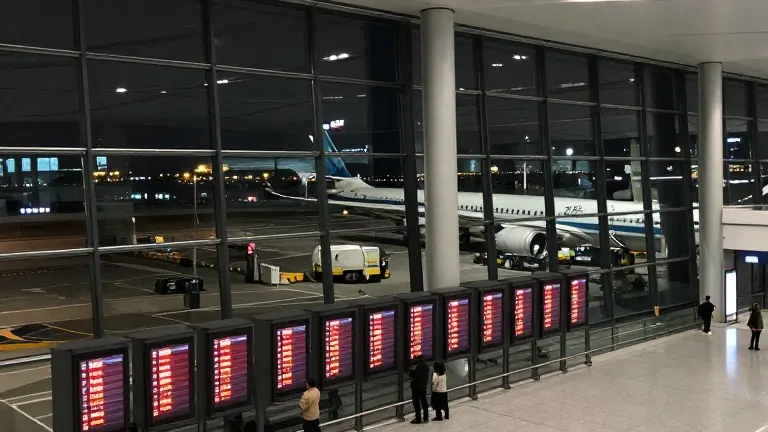
The Federal Aviation Administration ended a nationwide ground stop on Friday that had paralyzed the United States aviation system for approximately four hours. This event marks the second time since the September 11, 2001 attacks that all U.S. airports have been shut down simultaneously. The previous occurrence happened in 2023 when a system outage in the NOTAM database, which alerts pilots to hazards, forced a similar halt.
Flight tracking data from FlightAware shows the scale of the disruption. By 9:00 p.m. Eastern Time, more than 8,000 flights had been delayed and 7,000 had been canceled. These figures follow a busy Thursday that saw nearly 7,000 flight delays. The FAA identified the issue as intermittent outages in radar and communications systems at Air Route Traffic Control Centers, the facilities that manage high-altitude traffic across the country.
Transportation Secretary Sean Duffy addressed the media during a Friday night news conference at the White House. He pointed to outdated technology as the primary cause of the failures. "We have old switches, old routers. We use 1980s little copper lines. It's an old system that went down and went down everywhere. It got overloaded," Duffy stated. When reporters pressed him on why these systems would fail on a standard travel day, Duffy did not provide a specific technical explanation.
Homeland Security Secretary Markwayne Mullin joined Duffy in the briefing room to address security concerns. Mullin said there was no evidence the outages resulted from an attack. "We have seen zero evidence this is a cyber attack," he said. FAA leaders were not present for the briefing and did not offer further details on the specific communication failures that triggered the stop.
The disruption left many travelers stranded in terminals across the country. Regina Harling was waiting at Dallas Fort Worth International Airport for a last-minute flight to San Diego for a family emergency. She learned of the nationwide grounding by checking news on her phone after waiting hours past her scheduled departure. "There's still a sign right in front of me that says we're boarding in 16 minutes," Harling said Friday afternoon. At Chicago O'Hare International Airport, passenger Giliann Karon was already on board a plane when the stop was ordered. Karon noted she had already experienced a delay the previous day due to weather in New York City.
The FAA has recently started rolling out an AI-enhanced software tool called the SMART system as part of a larger overhaul of air traffic control. Air Space Intelligence, the company that developed the tool, quickly clarified that its product was not connected to the Friday disruptions. "The current ground stop is not based on or a result of the SMART system, any product of ASI or our integration with FAA and ATC," the company posted on social media.
Senator Richard Blumenthal of Connecticut released a statement late Friday evening calling for a prompt and penetrating investigation into the causes. Blumenthal described the widespread communication outage as highly alarming and a danger to national security and safe travel near the holidays. He said the Department of Transportation owes Americans credible action and factual disclosure.