Dublin Summit: EU Leaders Push for Collective Ukraine Funding
Chancellors and prime ministers agreed on a joint approach to close a 70 billion euro gap in Kyiv's 2027 budget, setting the stage for friction with nationalist states.
By Amit Ricci ·
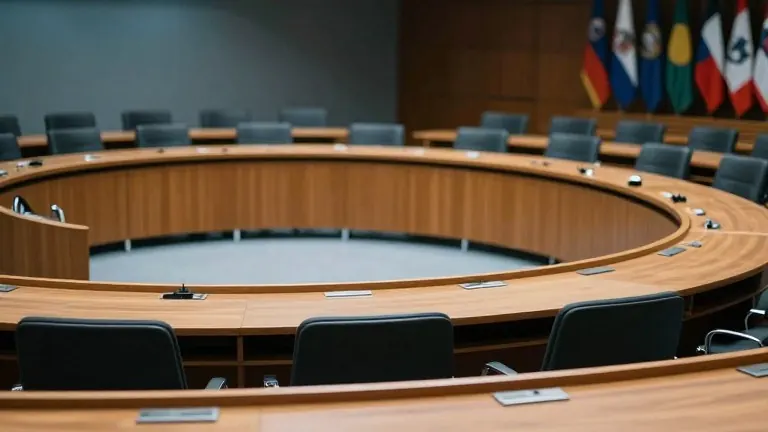
Ireland currently holds the rotating presidency of the Council of the European Union, and its capital hosts the bloc's top political meetings. Leaders in Dublin on Friday demanded that all member states contribute to a new financial package for Ukraine.
The primary objective is to fill a 70 billion euro hole in Kyiv's budget for the coming year. Ukrainian officials attribute this deficit to the ongoing war that began with Russia's full-scale invasion in February 2022. The EU will be asked to cover 45 billion euros of the shortfall. The United Kingdom, Norway, Canada, and other western allies will provide the remainder.
German Chancellor Friedrich Merz and other European prime ministers established a red line requiring a collective approach. This stance creates an immediate tension with nationalist governments that resist sending money to Kyiv. Sweden's Prime Minister Ulf Kristersson stated that all 27 member states must support the new aid package. He called it "totally unacceptable" for any country to opt out of participation.
Taoiseach Micheál Martin indicated that an EU-backed loan remains the preferred method for raising funds. He described borrowing as a bloc as the "most effective" way to secure the required tens of billions of euro. Martin noted that while this is the current solution, it is not intended to be a permanent structural arrangement for European finance.
The current plan follows a previous agreement in December, where 24 EU countries approved a 90 billion euro loan. Hungary, Slovakia, and the Czech Republic refused to join that deal. The EU borrowed the money as a single entity for the first time to finance support for Ukraine. Viktor Orban, who led Hungary at the time, allowed his country to sit out the payment while others proceeded with the plan.
Political shifts in central and eastern Europe have altered the landscape for future negotiations. Peter Magyar, who replaced Orban in elections this year, has moved to repair relations with Brussels. However, Magyar remains skeptical about direct aid to Ukraine. Robert Fico of Slovakia and Andrej Babis of the Czech Republic maintained similar resistant stances during the previous funding round.
Bulgaria's new Prime Minister Rumen Radev has declared that his country will not take part in any common EU loan. A strategic push is underway to link the next long-term EU budget to an agreement on Ukrainian assistance. The four nations opposing a new loan, including Bulgaria, are all net beneficiaries of the union's common budget through agricultural subsidies and regional development funding.
The previous loan was secured by 210 billion euros in Russian central bank assets. Brussels sanctions froze these funds inside European financial institutions after the 2022 invasion. The loan terms allow European countries to potentially recoup borrowed funds from these Russian assets. Latvia's Prime Minister Andris Kulbergs argued that Europe should tap these assets directly. He described the Russian cash as "lying on the ground" rather than forcing the EU to use its own pockets.