Israeli Forces Evict 250 Families From Hebron Neighborhoods
Residents were ordered out at gunpoint after two soldiers were killed in a checkpoint shooting, leaving the municipality to activate emergency shelters.
By Olga Menon ·
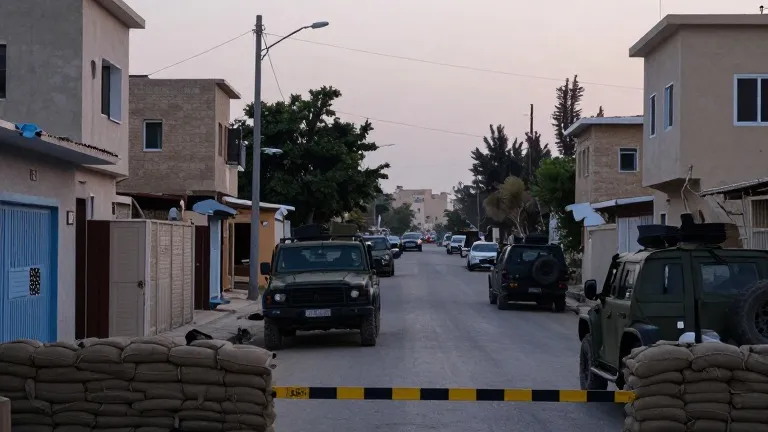
The West Bank city of Hebron is under a broad military closure following a deadly incident at a checkpoint, which has triggered a large-scale evacuation of Palestinian residents. The operation, described by the Israeli military as a measure to thwart terrorism, has displaced hundreds of households from their homes in the western part of the city.
The crisis began on Friday when two Israeli soldiers were killed and three others wounded during a shooting near the Farsh al-Hawa checkpoint. Israeli forces killed two suspected Palestinian attackers, identified as Ahmad and Hamouda al-Joba, according to the military. In the subsequent sweep, the army, working with the Shin Bet intelligence service and Border Police, searched for weapons and what it termed terrorist infrastructure.
The Hebron Municipality reported that approximately 250 families have been forced to leave their homes so far. Deputy Mayor Khaled al-Qawasmi stated that this figure is not final and may rise as the operation continues. The evacuations affected the neighborhoods of al-Jalada, Ein Deir Bahha, Wadi al-Maghariba, and Shi'b al-Milh.
Residents described the process of removal as abrupt and forceful. Abdul Hamid Shahada, a resident of the al-Jalada neighborhood, said soldiers arrived shortly after the initial attack. He noted that the military distributed maps indicating which buildings must be vacated and forced families to leave with little time to pack. Shahada and his family waited in their building, packing only medicines, chargers, and documents, before being directed to Al-Salam Street.
Soldiers told some families they could return once further notice was given, while others were informed they would be out for six months to a year. Many displaced residents sought refuge with relatives, while others moved into shelters opened by the municipality. These facilities include the Childhood Happiness Centre, family guesthouses, and the Korean Centre.
The military operation coincided with the demolition of residential and commercial buildings in Farsh al-Hawa. Local sources reported that approximately seven dunums of land were leveled. Israeli forces blocked main entrances and roads to the city, creating a siege that extends to surrounding villages and refugee camps.
In response to the displacement, the Hebron Municipality activated an emergency plan. This includes an operations center to monitor resident needs and prepare additional shelters. Qawasmi warned that the limited capacity of current facilities could lead to a shelter crisis if the military expands its operations. At least 13 Palestinians were arrested in the city, and dozens were detained for field interrogations.
The two families of the alleged shooters live in the al-Jalada neighborhood, where the heaviest presence of troops was observed. Residents reported seeing homes left with open doors and windows after soldiers ransacked and vandalized the interiors. The military has not yet announced an end date for the operation or the closure of Hebron.
Source: Middle East Eye