Iraqi Supreme Court Backs Federal Control Over Kurdish Borders and Oil Assets
Iraq's Federal Supreme Court has ruled that the central government can deploy troops to Kurdish borders and oversee oil fields, a move aimed at curbing smuggling but criticized by regional authorities.
By Olga Menon ·
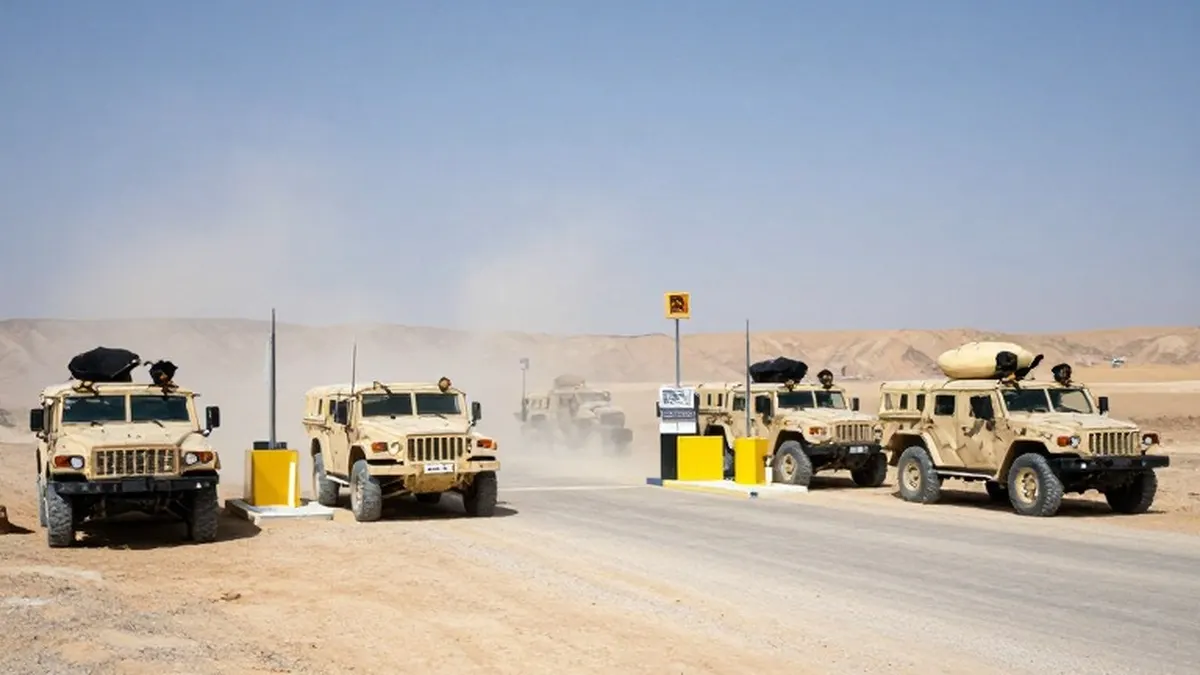
The Federal Supreme Court of Iraq has issued a ruling that grants the central government the authority to deploy troops to the country's international borders. This legal decision explicitly includes the semi-autonomous Kurdish region in northern Iraq. The court's judgment provides the legal framework for Baghdad to assert greater control over border security and energy resources.
The ruling was announced on Wednesday. It followed a directive issued the previous day by Prime Minister Ali al-Zaidi. The prime minister ordered federal forces to assume control of border crossings managed by Kurdish authorities. He also demanded federal oversight of oil fields currently secured by Kurdish forces. The primary stated goal of these actions is to reduce the volume of oil being smuggled out of the country.
The Federal Supreme Court further clarified that federal agencies can oversee operations at all border crossings. This includes locations within the Kurdish region. However, the court specified that federal authorities must coordinate with regional and provincial governments regarding customs administration. State television reported that the federal oil ministry will also have the power to audit and oversee oil and gas fields. Baghdad will share management responsibilities for production with regional governments and the producing provinces.
Kurdish authorities have reacted strongly to the developments. The regional government described the federal move as an assault on the region's constitutional rights. In a statement released on Wednesday, the Kurdistan Regional Government rejected what it termed military language and threats from the Iraqi military. Despite the tension, the Kurdish government stated it is cooperating with federal authorities to combat corruption and end oil smuggling.
This legal victory for the central government comes in the context of broader efforts by Prime Minister al-Zaidi to consolidate power. Just one week prior, he faced off with Kataib Hezbollah, a powerful Shia militia aligned with Iran. The confrontation arose from allegations of oil smuggling. Al-Zaidi ordered troops to prepare for entry into Jurf al-Sakhar, a stronghold of the militia south of Baghdad. Although the group initially resisted, a compromise brokered by Shia politicians allowed soldiers to enter the city.
Analysts suggest that while the court's decision is a significant win for al-Zaidi, implementation may prove difficult. The challenge lies in enforcing moves against the Kurds and heavily armed Shia militias that maintain close ties with Iran. Renad Mansour, an expert at Chatham House, noted that Iraq's judiciary is supportive of the government's push for a centralized political order. He explained that the government is attempting to reclaim sovereignty in what he described as a fragmented state lacking a strong center.
A senior Shia politician close to the prime minister told Reuters that al-Zaidi aims to dismantle the model of a state within a state. The politician added that the prime minister seeks to restrain armed factions operating above state authority. Additionally, the goal is to draw clearer limits on the Kurdish region's exercise of authority over strategic economic and security matters.
The Iraqi government has not yet specified the timeline or methods for implementing the takeover. State news agencies cited a federal intelligence report indicating that oil from the state-owned North Oil Company is being diverted. The report claims oil is being smuggled from Kirkuk and Sulaimaniyah in the Kurdish region to Iran and subsequently to Afghanistan.
In a related diplomatic development, the defense ministers of Syria and Iraq held a phone conversation on Wednesday. According to Syria's Ministry of Defense, the two officials discussed several issues of mutual interest during the call.