Israel tightens flight crew screening after flydubai attack, but gaps and operational hurdles remain
New rules require airlines flying to Israel to submit crew details 48 hours ahead, though experts question how deeply the data will actually be checked.
By Amit Ricci ·
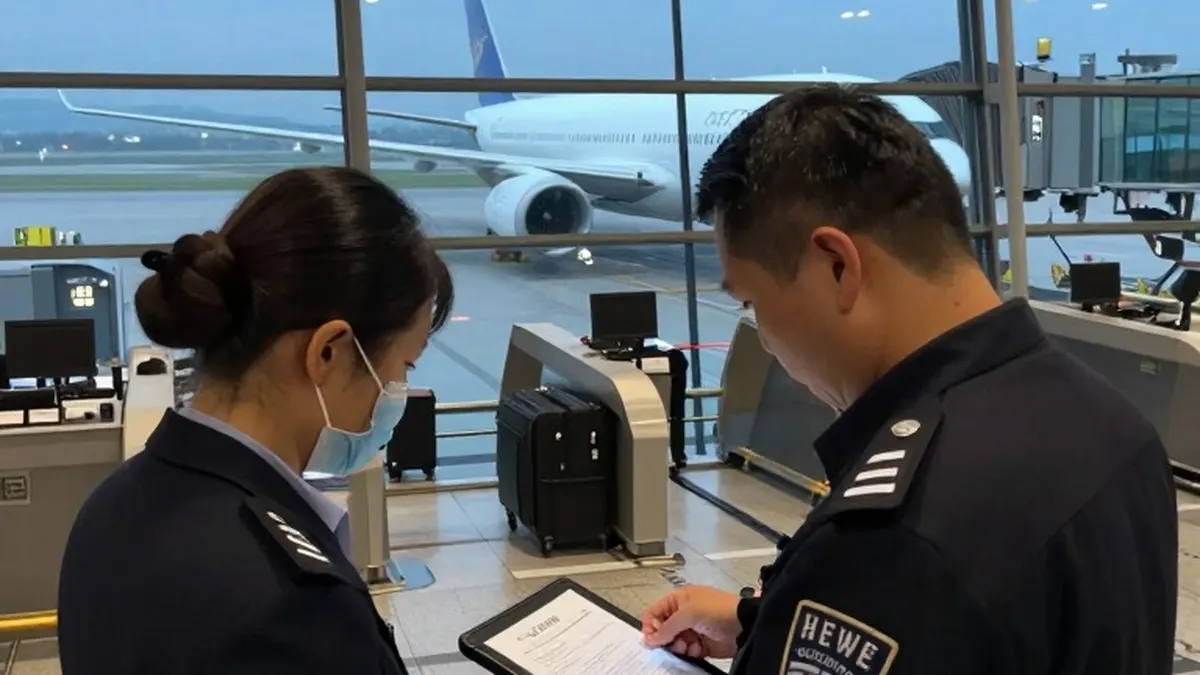
Israel has introduced stricter security screening rules for pilots and flight crews following the attempted flydubai terror attack, but questions persist about how effective the measures will be given their reliance on foreign airline compliance and the operational burdens they create.
The tougher directives, issued a month after the September 30 attempt to crash a flydubai flight bound for Tel Aviv carrying mostly Israeli travelers, require airlines flying to Israel to submit crew information 48 hours before departure. The aim is to give Israeli authorities time to screen and flag potential threats before takeoff.
The guidelines are meant to end Israel's reliance on foreign carriers to vet their own crews, a weakness exposed when Omani copilot Hamam al-Hammami attempted to bring down Flight 1073 from Dubai. The attack was stopped when Indian captain Smit Machchhar, seriously wounded after being stabbed, opened the cockpit door so passengers could subdue the assailant. It later emerged that flydubai had hired al-Hammami even though Omani Air had previously grounded him over concerns about extremist views. Two other pilots who happened to be aboard landed the plane safely in Saudi Arabia.
Despite Israel's reputation for the world's most thorough security checks, the incident revealed the Transportation Ministry had not been properly vetting foreign aircrews entering the country due to a lack of intelligence resources. "For an effective security system, we can't rely on the trust and goodwill of the other side," Roy Bargil, CEO of aviation security firm Veloryx, told The Times of Israel, calling the new directives a step in the right direction after a wake-up call that exposed almost no oversight.
Under the new system, the National Center for Passenger Information Data Analysis, known as Malan, a division of the Israel Tax Authority, has mandated a multi-stage reporting scheme with strict nationality criteria. Foreign carriers and Israeli airlines operating foreign aircraft must submit an online form with full details on pilots, cabin crew and passengers at least 48 hours before entering Israel, with last-minute roster changes accepted up to two hours before takeoff. The Population and Immigration Authority will review the data and approve or reject boarding requests.
Yet the system lacks precise operational guidelines for deeper background vetting, and it is unclear how Malan will share or cross-reference what it collects. The Tax Authority said Malan is only the data-receiving body and does not pass records on unless asked. The Shin Bet, which previously oversaw security for Israeli airlines, will now reportedly also handle security procedures for incoming foreign carriers and their departure points, including designating high-risk nationalities, though the extent of actual independent screening remains uncertain. The Shin Bet was not available for comment.
David Sprecher, head of aviation at law firm Afik & Co., said closer cooperation between countries' secret services sharing information with Malan would be better than placing liability on airlines. Yossi Amrusi, a former senior Shin Bet officer and researcher at the Misgav Institute, similarly argued that because the threat is global, the solution must be international, with information sharing, joint standards and cooperation between countries, aviation authorities and airlines.
The rules also pose immediate practical problems for foreign airlines, many of which have been hesitant to restore regular service to Israel after years of wartime disruption. Crew members holding single or dual citizenship from some 30 countries without formal diplomatic ties to Israel, including Pakistan, Iran, Iraq and Oman, are barred from flights entering Israeli airspace, shrinking the pool of reserve crews and complicating last-minute staffing changes. "If pilots don't fly, they still cost money to airlines," Sprecher said, noting the global pilot shortage.
Kobi Zussman, Israel country manager at the International Air Transport Association, said the government briefed carriers and asked the association to relay the rules to its 380 member airlines, adding that only limited concerns have been raised so far. The Lufthansa group said it complies with all official requirements, while Wizz Air, Delta Airlines and Air France did not immediately respond to requests for comment.
Amrusi cautioned that screening alone cannot guarantee safety. "No screening is capable with certainty to identify crew members who conceal their malicious or dangerous intentions," he said, arguing that technological or remote backup tools are needed to handle cases where someone slips through the checks.