Engineers Clear Rusting Masts From WWII Wreck in Thames Estuary
The removal of the three masts from the SS Richard Montgomery is complete, reducing structural strain on the sunken vessel while its massive cargo of explosives remains untouched.
By Lucia Herrera ·
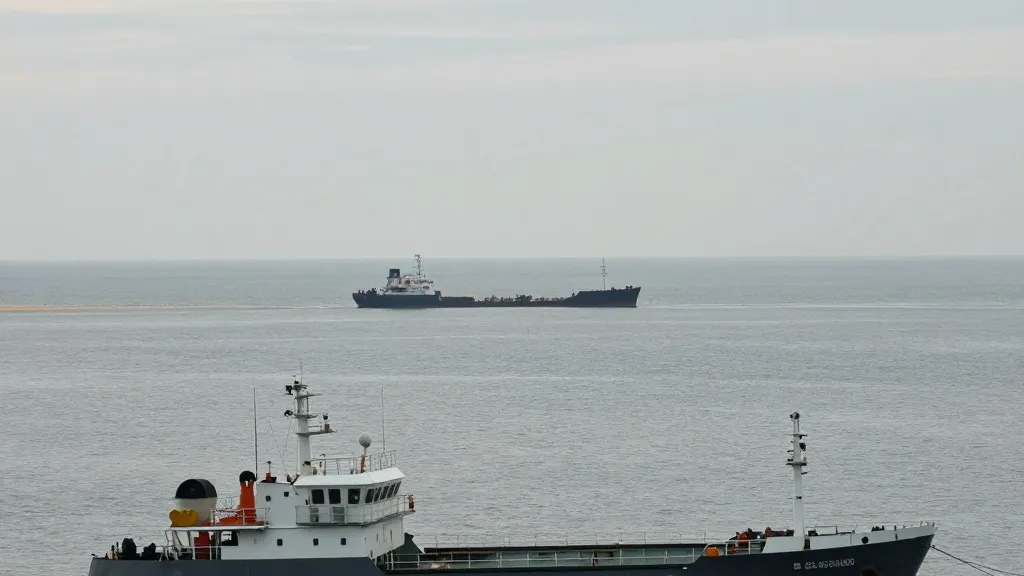
The United Kingdom has concluded a significant maritime engineering effort to mitigate potential hazards in the Thames Estuary. Officials confirmed that crews have successfully removed the three rusting masts from the SS Richard Montgomery, a World War II era vessel that remains submerged near the British capital. Although the structural elements protruding from the water are now gone, the estimated 1,500 tons of explosives within the hull have not been disturbed. Authorities intend to maintain close surveillance of the site to ensure long term stability.
The Montgomery was constructed as part of a fleet of approximately 2,700 vessels built in the United States to bolster the Allied war machine. In August 1944, the ship ran aground on a sandbar off Sheerness, a location roughly 40 miles from London. Its cargo was intended to supply the Allies following the D-Day landings. The vessel fractured during initial salvage attempts and sank, leaving a substantial load of munitions in its holds.
For many years, the masts served as a distinct visual landmark for locals and passing ships. However, recent structural surveys indicated that the masts were deteriorating at an accelerated rate. This raised concerns that the structures might collapse, potentially impacting the sensitive explosives below. The intervention was designed to address this specific vulnerability before it could trigger a catastrophic event.
Nolan Conway, a naval architect at Resolve Marine Group, the firm contracted for the operation, noted that the ship had begun to lean. He explained that the primary danger was the possibility of the masts falling onto the cargo and causing a detonation. Conway highlighted that some of the munitions are believed to have pressure fuses, meaning that physical impact could potentially set them off. This fragility necessitated an extremely careful approach to the removal process.
The principal technical challenge involved separating the masts from the wreck without transmitting vibrations or shocks to the hull. To achieve this, the team engineered a custom lifting frame that allowed each mast to be raised vertically without any swinging or swaying. The cutting process utilized a remotely operated underwater diamond wire saw. This device clamps around the mast with hydraulic arms and cuts through the metal, eliminating the need for divers to enter the water and operate equipment manually.
U.K. maritime minister Keir Mather addressed the House of Commons this week to announce the completion of the project. He described the work as a complex endeavor that was finished ahead of schedule and within budget. The total cost for removing the three masts was reported to be just under $13 million. Mather stated that the masts had placed a significant load on the structure, and their removal reduces the risk while supporting the safe management of the site over the long term.
The explosives have been left in place because extraction would involve considerable risks. There is no consensus among experts regarding the specific consequences of a potential detonation. Conway noted that estimates vary widely, ranging from localized shoreline damage to a tidal wave traveling up the Thames, or a minor event that merely closes a nearby shipping channel. He summarized the situation by stating that while the range of impacts is large, none of the outcomes are desirable. Nevertheless, officials maintain that the overall probability of an explosion remains low.
The government has maintained an exclusion zone around the wreck, which lies approximately 1.5 miles off the coast of Sheerness. Mather confirmed that this zone will continue to enforce continuous monitoring and control. The removed masts are expected to be preserved and displayed at the Historic Dockyard Chatham museum. This exhibit will recognize the ship's historic significance and its role in supporting Allied forces. More than eight decades after it failed to reach Europe, the Montgomery and its cargo will remain where they rest, now entirely out of sight but far from forgotten.
Source: CBS News