Border Politics: Shifting Sentiments in Texas
Hispanic voters in the Rio Grande Valley are showing signs of moving away from the Republican Party ahead of upcoming elections.
By Ricardo Brooks ·
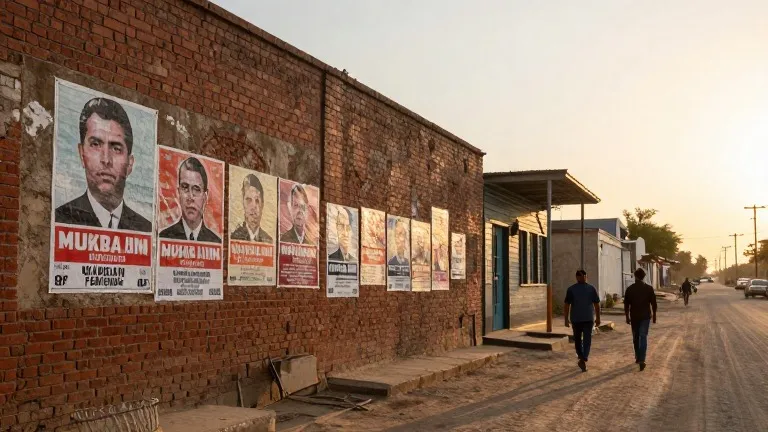
A roughly 18-point Republican advantage engineered in Texas's 15th congressional district has evaporated, with current polling indicating a Democratic lead of five or six points. This reversal of fortune comes as the United States prepares for the midterm elections scheduled for 3 November. The shift in political allegiance is becoming evident across the Rio Grande Valley, a region that played a significant role in delivering Donald Trump an unusually strong performance among Hispanic voters in 2024. Democrats are looking to reclaim lost ground in this area, though the path to victory remains fraught with difficulty.
The timeline of this shift begins with the 2024 campaign. In an effort to halt illegal crossings, Trump secured approximately 55% of Hispanic votes in Texas, a figure marking a record for a Republican presidential candidate. However, recent data indicates that this momentum has stalled. Polling conducted since late summer reveals that a majority of Hispanic voters in Texas disapprove of the president's performance and favor Democrats over Republicans by a substantial margin. Government statistics obtained by the Deportation Data Project show that Texas accounted for roughly one third of all Immigration and Customs Enforcement arrests nationwide in July 2026, a share larger than any other state.
Economic factors and the enforcement of immigration policies appear to be driving voter sentiment. At a local avocado festival, attendees blamed the president for rising prices, with one resident stating, "He is in control of our destiny with all that, and right now he's not doing a very good job." Others pointed to the impact of enforcement actions on local labor. Mario Guerrero, a Mexican-American businessman and head of the South Texas Builders Association, plans to vote for Democrats in November after voting for Trump three times. He noted that voters were not informed of how far the administration would go, citing an acquaintance whose crew of 35 daily workers has shrunk significantly. Republican consultant Mike Madrid observed that Latinos are more likely than any other group to identify as independents.
As the election approaches on 3 November, Republican campaigners acknowledge they are facing headwinds. Student volunteer Alexis Uscanga described the midterms as "purely a game of turnout," while candidate Tano Tijerina admitted that "national political headwinds are real." Democratic candidate Bobby Pulido, a Tejano singer and two-time Latin Grammy winner, has focused on the economy rather than the national party brand, stating, "This isn't New York, this isn't LA." If polls prove accurate, even a modest swing toward Democrats could reshape races beyond Texas, potentially putting a US Senate seat in play that Democrats have not won in more than 30 years.
Father Roy Snipes, a Catholic priest who has served his congregation for nearly 50 years, recently addressed concerns regarding deportation policies during a service near the border. "There's no good excuse to detain, incarcerate and deport poor, good folks who are our neighbours," he told worshippers. Despite this, Javier Villalobos, the Republican mayor of McAllen, expects a tough race but credits the administration with securing the border. He emphasized that while people accept deporting criminals, deporting productive, law-abiding individuals is where the problem begins.
Source: BBC News