Chile's driest desert is blooming after record rains
El Niño storms turned the Atacama into a temporary garden, drawing thousands of visitors and scientists before the flowers fade in mid-November.
By Olga Menon ·
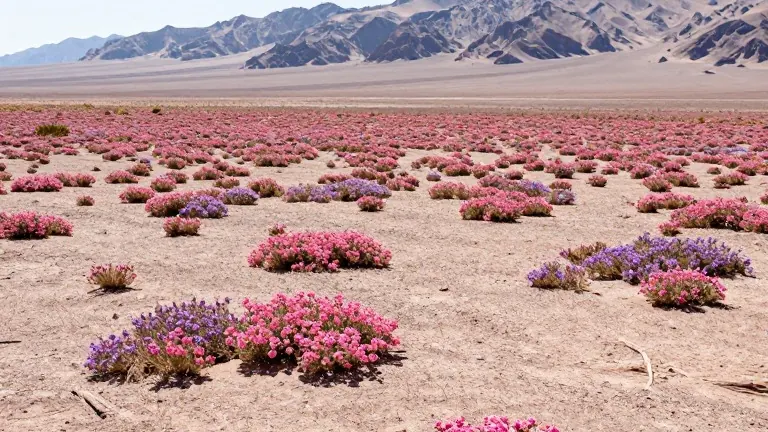
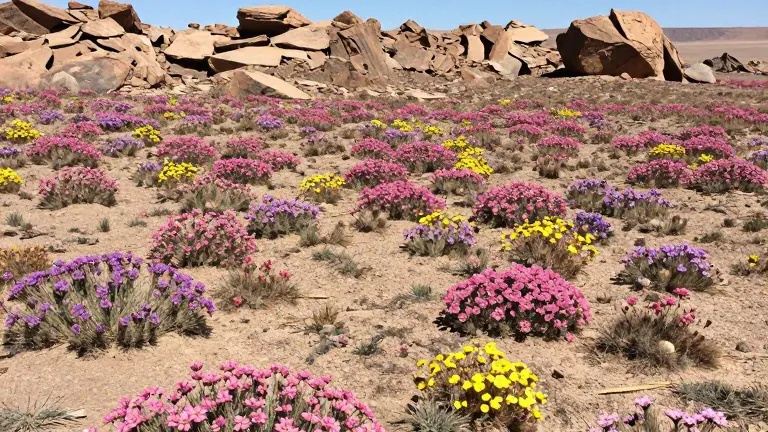
The Atacama Desert, usually a stark expanse of dry earth, is currently covered in pinks, yellows, and purples. This sudden explosion of color follows heavy rains linked to the El Niño super cycle, which brought some areas their highest rainfall since records began in the 1950s. While the July and August floods damaged dozens of homes and forced hundreds of evacuations, the water also triggered the largest floral display in three decades.
The phenomenon has a short timeline. Rainwater soaked into the ground deeper than usual, waking millions of seeds and bulbs that had lain dormant under the sand for years. A month ago, pale-yellow plants appeared first. They were followed by soft purple hues, and now nearly every crevice in the desert floor is streaked with color. More than 200 species are currently in flower.
Scientists note that blooms are appearing in spots where flowers were never previously recorded. Moisés Grimberg, the administrator of Llanos de Challe National Park, describes the situation as a race against time. The brief biological window allows these species to complete their life cycle, which lasts roughly two to three months. Grimberg calls the area a natural seed bank that becomes a living archive when the rains arrive.
Llanos de Challe is a 113,000-acre park along the arid coastline. It typically receives about 10,000 visitors a year, but 15,000 tourists have arrived in the last few weeks alone. Roads across the desert are lined with cars. Chile's national tourism board expects around 300,000 overnight trips during the two-month blooming period. One of the main attractions is the garra de león, a crimson flower with flame-like green leaves that grows only on this specific stretch of coastline.
The temporary ecosystem supports insects, lizards, bats, and guanacos. Biologists from INIA, Chile's national seed bank, are collecting specimens to analyze before the season ends. Ana Sandoval, a biologist, said the desert is awakening after waiting for the right conditions. She pointed out how different plants harvest water, such as leaves covered in fine hairs or a thick waxy cuticle. The team aims to preserve the genetic material and unique adaptations these plants developed to survive extreme aridity.
Local authorities are using the event to push for international recognition. In June 2023, a national park was created to protect a 141,000-acre area where these blooms occur. Now, Miguel Vargas, the governor of the Atacama region, is beginning the process to seek UNESCO World Heritage status. Vargas said the recognition would help diversify a regional economy that is heavily reliant on mining. He hopes to secure Chile's eighth World Heritage site within a couple of years.
The bloom is projected to last until mid-November. As the flowers begin to fade, researchers face two key questions: whether this was the largest flowering event on record and if the inspection reveals any previously unknown species among the millions of plants.