Neither Bloc Wins Majority in Israeli Election, Setting Up Weeks of Coalition Talks
Partial results show Benjamin Netanyahu's camp and the opposition led by Gadi Eisenkot both short of the 61 seats needed to govern.
By Olga Menon ·
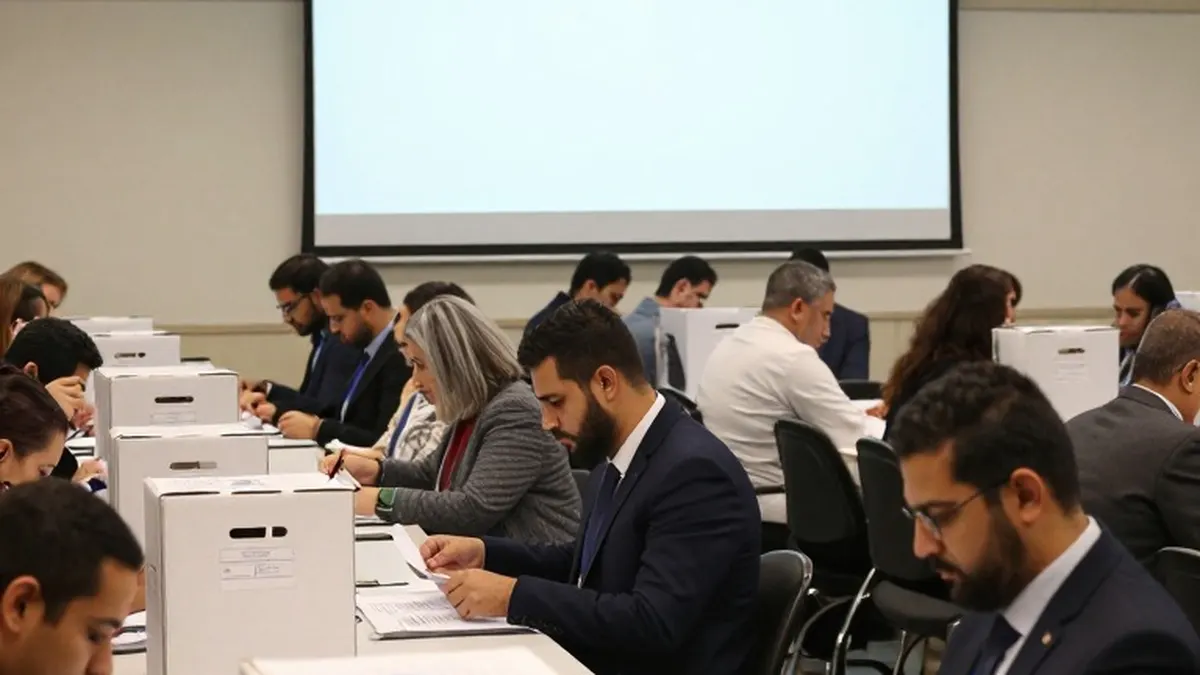
Israel appears headed for a prolonged period of political bargaining after exit polls and partial official results indicated that neither Prime Minister Benjamin Netanyahu's coalition nor the opposition bloc led by former general Gadi Eisenkot had reached a governing majority.
With about 70% of the vote counted, representing roughly 4m ballots, Netanyahu's bloc held 54 seats and Eisenkot's Change bloc held 47. Palestinian parties stood at 19 seats. A government needs 61 of the parliament's seats to command a majority.
Netanyahu, Israel's longest-serving prime minister, vowed to put together a coalition through agreements between his Likud party, far-right factions and Jewish religious parties. Eisenkot said earlier in the evening that "people decided in favour of change" and argued that Netanyahu should have announced his retirement from politics.
The strong showing by Palestinian parties reflects record turnout among Israeli citizens of Palestinian origin. They form a discriminated minority making up about 20% of the population. The Guardian's Julian Borger, reporting from Nazareth, said Eisenkot would have to work with Arab-Israeli leaders if he hopes to govern. Millions of other Palestinians living under Israeli rule in the occupied West Bank and Gaza are not able to vote.
Elsewhere, Donald Trump said his administration is "terminating" Biden-era rules that held oil and gas companies accountable for large leaks of methane, a potent planet-warming gas. The Environmental Protection Agency expects the proposal to save consumers and businesses $45bn. The US emitted more methane from its oil and gas sector last year than any other country, and methane is responsible for at least a quarter of current warming.
In Brazil, far-right senator Flávio Bolsonaro has reportedly left the country for the US after losing Sunday's presidential election to incumbent Luiz Inácio Lula da Silva. Allies told the news website Metrópoles he would land in Florida and seek political asylum. Federal police are investigating him over possible involvement in a money-laundering scheme worth about £680m ($905m) involving betting companies. Lula called the departure "shameful".
In Spain, at least 30 people were killed in a collision between high-speed trains south of Madrid, regional authorities said. It is the country's second such disaster this year, after a January crash in the south that killed 46 people.
In southern Ukraine, a local ceasefire in the Russian-occupied city of Oleshky appeared to be holding, with both sides halting drone attacks ahead of an expected evacuation of about 2,000 trapped civilians. Witnesses said the frontline across the river was quiet for the first time in four years. Separately, Finland's president Alexander Stubb and Norway's prime minister Jonas Gahr Støre held what they called a "frank and substantive" call with Vladimir Putin, while Ukraine's president Volodymyr Zelenskyy said Russia "must stop dragging out this war".
Source: The Guardian