Ebola Outbreak Hits 10,000 Cases as Africa CDC Warns Virus Could Reach UK
The Bundibugyo strain has spread across three African regions, with the Africa CDC director general urging all continents to raise treatment readiness.
By Ricardo Brooks ·
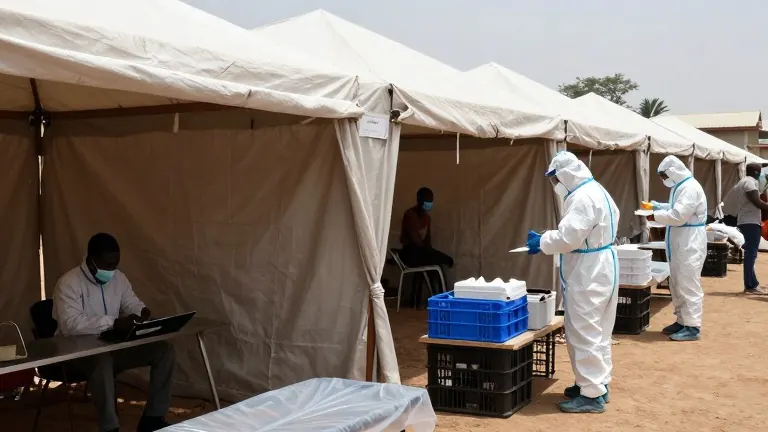
The Ebola outbreak spreading across Africa has reached 10,091 cases and could move into the United Kingdom and other regions if readiness measures are not raised, the head of the Africa Centres for Disease Control and Prevention said on Wednesday. Dr. Jean Kaseya said he would convene a meeting of African health ministers to push for cross-border screening at entry and exit points.
The outbreak, which has killed 4,887 people, began in February in the Democratic Republic of the Congo and was formally declared in Ituri province on 15 May. It has since reached Kenya and Uganda in East Africa. Nigeria confirmed a case in Abuja last week after a woman arriving from Uganda tested positive. France remains the only non-African country to record a case, involving a doctor who returned from the DRC in June. Of the 10,091 cases reported, 10,060 are in the DRC. Two deaths have been recorded in Uganda and two in Kenya.
The current strain is the Bundibugyo virus, the pathogen behind the seventeenth Ebola outbreak identified in the DRC since the disease was first recognized there. It is the largest and deadliest the country has recorded. Kaseya compared the spread to the Covid-19 pandemic, which began in China before moving worldwide. "We want all countries to know that they are not safe if they don't take appropriate measures," he said. "We shouldn't forget that at the beginning of Covid, many countries said there was zero risk of being affected, but a few months later, they became the hotspot."
Kaseya said the geographic reach of the current outbreak marks a first for the continent. "It is the first time three African regions have been affected [by Ebola]," he said. Response efforts have been slowed by shortages of protective equipment, unpaid health worker wages that triggered strikes, conflict in the DRC, misinformation, mistrust of officials in affected areas and cuts to global aid. No treatment for the Bundibugyo virus has been approved, though vaccine trials are under way. Kaseya said results are expected in three to six months.
Funding remains short of requirements. Kaseya said governments have pledged $3bn, but more than $2bn is outstanding. African countries have committed $120m; the remainder is expected from donors including the United States, the United Kingdom and the European Union. "We need this money now," Kaseya said, adding that a lack of funding now would raise future costs if the virus reaches other countries.
Kaseya will meet African health ministers on Wednesday, 28 October, to press for screening and treatment capacity at points of entry and exit. In November, he plans to meet African heads of state to seek a "corridor of peace" in conflict zones, citing insecurity in Ituri that has blocked health workers from reaching affected populations.
Source: The Guardian