Retired Admiral Warns Australia Needs Triple Submarine Crew for Aukus Fleet
A retired admiral warns that Australia must significantly expand its naval workforce to crew the larger nuclear submarines set to arrive under the Aukus deal.
By Olga Menon ·
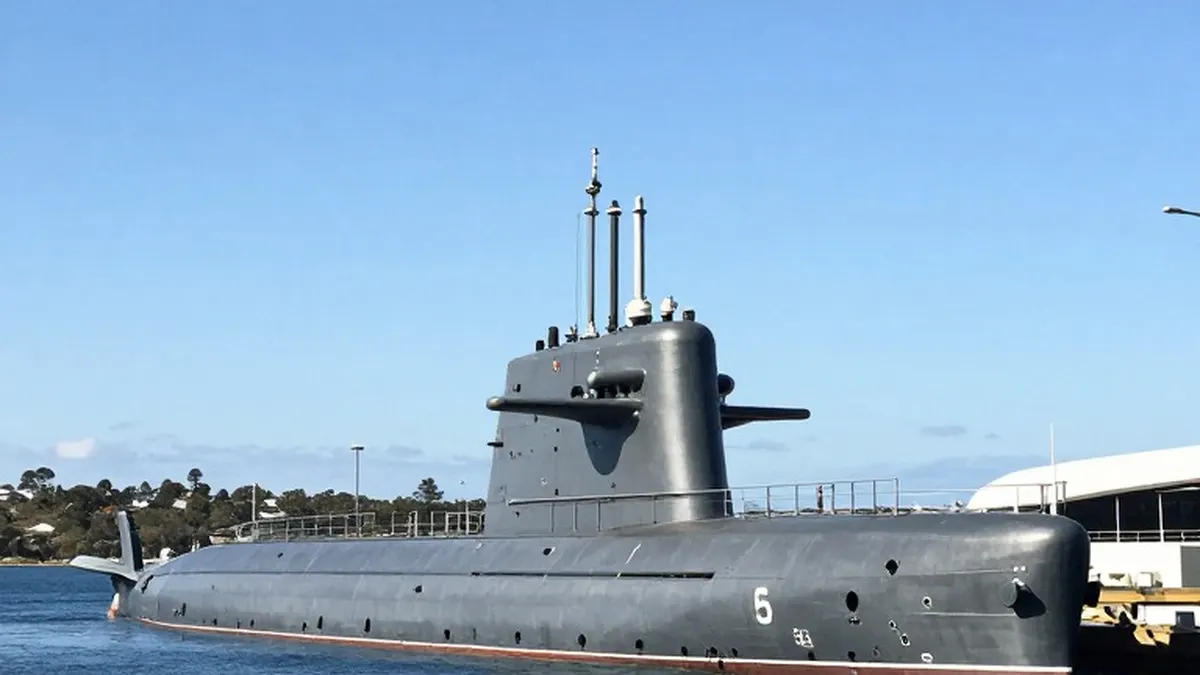
A retired Australian admiral has issued a stark warning that the nation faces a significant challenge in recruiting and training enough naval personnel to operate the future nuclear-powered submarines under the Aukus security pact. As the Virginia-class submarine USS Colorado arrived at HMAS Stirling near Perth on Tuesday, retired Admiral Peter Briggs emphasized the urgent need to expand the navy's submarine program.
Under the $368 billion trilateral defense agreement, Australia intends to purchase three to five Virginia-class nuclear vessels from the United States. These boats are designed to replace the country's five aging diesel-electric Collins-class submarines. The new vessels are substantially larger than their predecessors and require up to 134 crew members, nearly three times the staffing level of the Collins class.
The Royal Australian Navy currently has 230 personnel at various stages of the US nuclear submarine training pipeline. A navy spokesperson noted that approximately 145 of these individuals have completed US Naval nuclear power training and are gaining experience on US Navy nuclear-powered submarines. The service projects that by 2030, it will have 400 officers and sailors trained and ready for duty.
Despite these figures, Admiral Briggs argued that a more intensive recruitment strategy is required. He stated that the submarine arm must triple in size and highlighted the need for specialized nuclear skills. Briggs estimated that Australia is heading toward a requirement for a submarine arm of approximately 3,000 personnel, describing it as a major hurdle to overcome.
Currently, about 850 submariners are qualified to operate the existing Collins-class fleet. The Virginia-class boats serve as a bridge to the future SSN-AUKUS design, a larger vessel being developed jointly by Australia and the United Kingdom. Briggs noted that maintaining two distinct submarine types adds complexity to training, logistics, maintenance, and spare parts management.
The Australian government did not provide specific responses regarding recruitment targets or the status of workforce development programs. The recruitment process is complicated by the need for over a dozen different trades, ranging from sonar and radio operators to cooks and electricians.
The USS Colorado will remain in Perth for a month of routine maintenance. This visit is intended to help Australian personnel practice and test procedures across various nuclear-related operational scenarios. Officials confirmed that no radiological material would be transferred and that related exercises would be simulated.
The vessel, built in 2018, arrived carrying conventional weapons, including four torpedoes and four payload tubes. The journey from Pearl Harbor in Hawaii took two weeks and was made by a crew of 160 men. Captain Justin Reeves noted that the submarine is built for combat rather than comfort, with sleeping arrangements that can involve stacked bunks or sharing beds through rotating schedules.
Reeves highlighted the operational advantage of nuclear power, noting that the vessel does not require refueling. He described the limits of the submarine's endurance as being determined by food and toilet paper, which can last for several months. The USS Colorado will return to Australian waters in late 2027 as part of a rotational force program designed to build local skills and infrastructure.
Source: The Guardian