Xi and Trump to Meet in Shenzhen as Tech Tensions Overtake Taiwan in Agenda
While leaders gather for the APEC summit, the focus remains on export controls and stalled defense deals rather than a resolution to the cross-strait standoff.
By Olga Menon ·
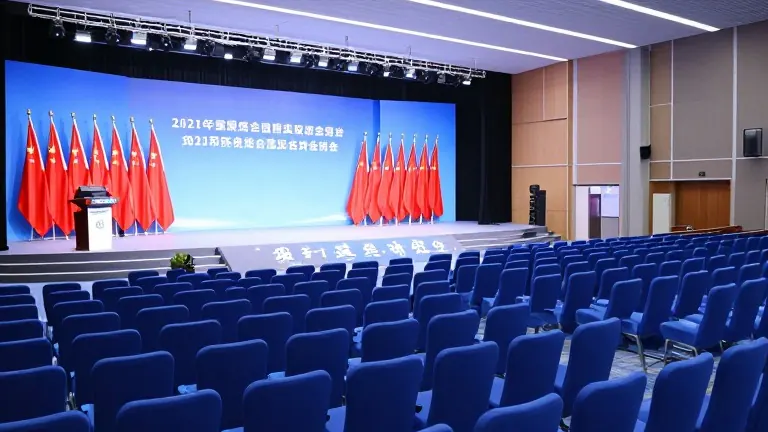
The upcoming meeting between Chinese President Xi Jinping and U.S. President Donald Trump in Shenzhen is expected to center on technology competition rather than the status of Taiwan. Leaders from 23 economies are gathering for the Asia Pacific Economic Forum this week. Recent developments, including the resignation of Nvidia’s CEO and new export controls, have intensified the focus on the tech rivalry between Beijing and Washington.
Arthur Zhin-Sheng Wang, an expert on cross-Straits relations at Taiwan’s Central Police University, noted that the Trump administration does not view Taiwan as a core issue in its bilateral negotiations with China. This perspective holds despite the U.S. remaining the island’s largest informal ally and arms supplier. The U.S. does not formally recognize the self-ruled island, which Beijing claims as part of its territory.
Behind the diplomatic rhetoric, operational cooperation between the two nations has continued. In the summer, the de facto U.S. embassy in Taiwan shared images of joint coast guard patrols. Kuo Yu-jen, director of the Institute for National Policy Research, described the patrols as proof of decades of training and cooperation. He expressed surprise at the public visibility of these joint maneuvers.
Defense procurement remains a point of friction. Trump has urged Taiwan to increase its defense spending, prompting the island to commit to allocating 5% of its GDP to the sector. A $14 billion arms package currently stalled in approval has drawn media attention, though an $11 billion package approved late last year is already in progress. Experts suggest some delays predate the current U.S. administration.
The delivery of F-16V fighter jets illustrates the logistics challenges facing the relationship. Taiwan received two jets in October and three more in early November. These aircraft are part of a backlog of U.S. orders worth nearly $30 billion, according to the Taiwan Security Monitor research project at George Mason University. Kuo attributed delays to manufacturing capacity rather than political signaling to Beijing.
Congress approved the sale of long-range precision strike systems to Taiwan in December 2025. However, limited supplies create competition for these assets. Kuo pointed out that the approved missiles, including HIMARS rockets, are also being used by the U.S. military in the ongoing conflict with Iran. He stated that production rates are the primary constraint on timely delivery.
China has intensified pressure on Taiwan through military and nonmilitary means. The People’s Liberation Army conducted approximately 5,448 fighter jet sorties toward the island in 2025, a sharp rise from the sporadic flights of previous years. As of November 12, the number of recorded flights this year stands at 2,401. Joseph Wu, chief of Taiwan’s National Security Council, noted that Beijing recently deployed more than 100 vessels in unannounced drills in the Western Pacific.
Wang observed that Beijing is shifting its strategy toward blockading and sealing off Taiwan rather than firing live missiles. This gray-zone approach includes the expanded role of the Chinese coast guard. Since June, Chinese vessels have patrolled off Taiwan’s east coast, mirroring tactics used in the South China Sea. This expansion extends Chinese activities beyond the outlying islands closer to the main island.