Wisconsin voters reject constitutional amendment on worship closures
Wisconsin voters turned down a proposed constitutional amendment that would have restricted the government's ability to close places of worship during declared emergencies.
By Ricardo Brooks ·
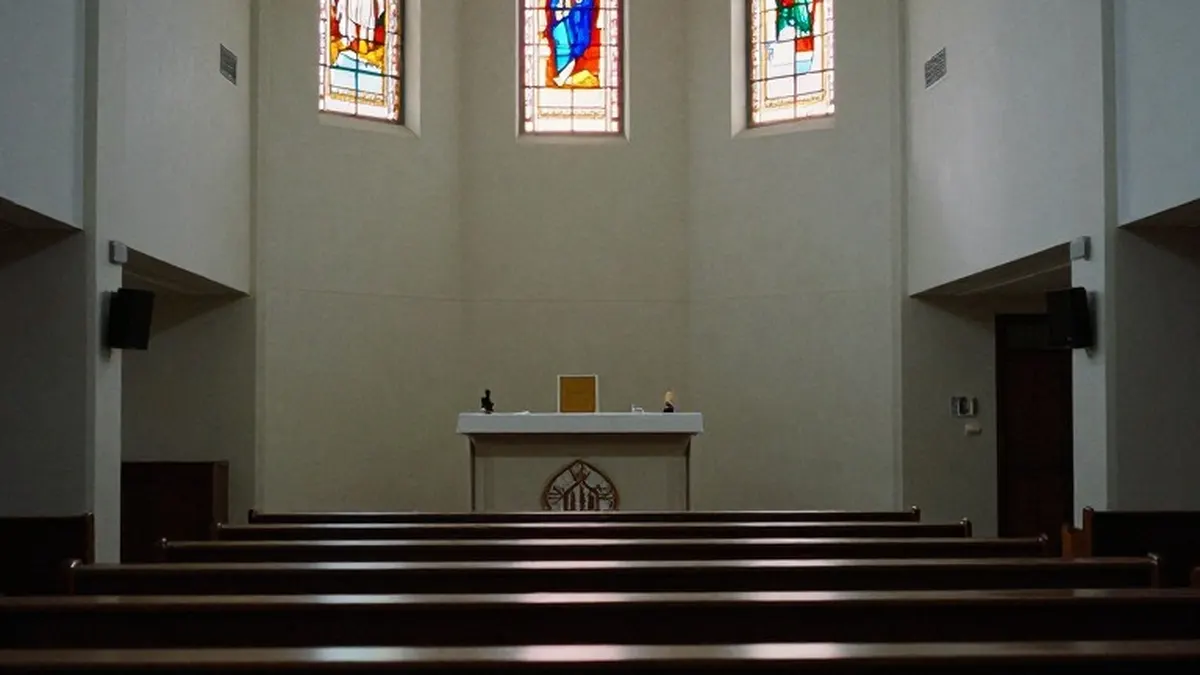
In an election held on Tuesday, November 3, 2026, Wisconsin voters rejected a referendum that sought to prohibit state and local governments from ordering the closure of places of worship during declared emergencies. The measure failed to secure a majority, with 52% of voters casting their ballots against the change to the state constitution.
The proposal originated during the COVID-19 pandemic, a period when public health orders frequently restricted large gatherings in religious institutions. Had the amendment passed, the Wisconsin Constitution would have included specific language preventing the state from forbidding gatherings in worship spaces during national, state, or local emergencies, including those related to public health.
Opponents of the measure argued that the proposed language was too vague. Critics pointed out that the referendum did not clearly define what constitutes a place of worship, leading to uncertainty about whether private homes hosting religious services would be covered. The League of Women Voters of Wisconsin, which opposed the initiative, described it as a threat to public health. The organization noted that existing laws already allow individuals to practice their faith privately within their homes during emergencies.
Rabbi Joel Alter, who leads Congregation Beth Israel Ner Tamid in Milwaukee, supported the rejection of the amendment. While acknowledging the concerns that prompted the proposal, Alter stated that he did not believe the state constitution was the appropriate vehicle for addressing these issues. He advocated for the creation of advisory panels and legislative hearings to develop thoughtful recommendations for handling houses of worship in future crises.
Proponents of the amendment, including the Wisconsin Family Council and various local churches, argued that the measure was necessary to protect religious freedom. The conservative Christian organization stated that the law would ensure that local churches are never again labeled non-essential by the government. Other supporters described places of worship as lifelines during times of crisis, viewing their closure as a violation of religious liberty.
The Wisconsin proposal would have offered stronger protections for religious institutions than for other essential locations such as schools or grocery stores. While Kentucky, Oklahoma, Florida, New Hampshire, and Texas have adopted similar protections, the Wisconsin amendment aimed to provide a more robust constitutional shield for synagogues, churches, and other worship centers.
The amendment was placed on the ballot by the Republican-controlled state legislature to bypass the veto power of Governor Tony Evers. Evers, who did not seek reelection in this cycle, had previously vetoed a bill containing similar protections in 2021. Because governors cannot veto constitutional amendments, the legislature used this mechanism to bring the measure directly to voters.
Alongside the religious freedom referendum, Republican lawmakers introduced two other constitutional amendments. One amendment, which sought to further limit the governor's partial veto powers, passed with 51% of the vote. A second amendment, which could restrict affirmative action and certain diversity, equity, and inclusion programs, also passed, receiving 56% of the vote.
Democratic governor-elect David Crowley indicated his personal stance on the issues by saying he would have voted no on all three questions. The election results reflect a complex landscape of state policy priorities, with voters choosing to maintain the status quo on worship closures while approving changes to executive powers and affirmative action provisions.
Source: The Times of Israel