Ukraine, US, and Russia reach prisoner swap deal in Abu Dhabi
Delegations from Ukraine, the US, and Russia concluded talks in Abu Dhabi with a prisoner exchange agreement but no ceasefire, as experts debate the diplomatic progress and future prospects.
By Ricardo Brooks ·
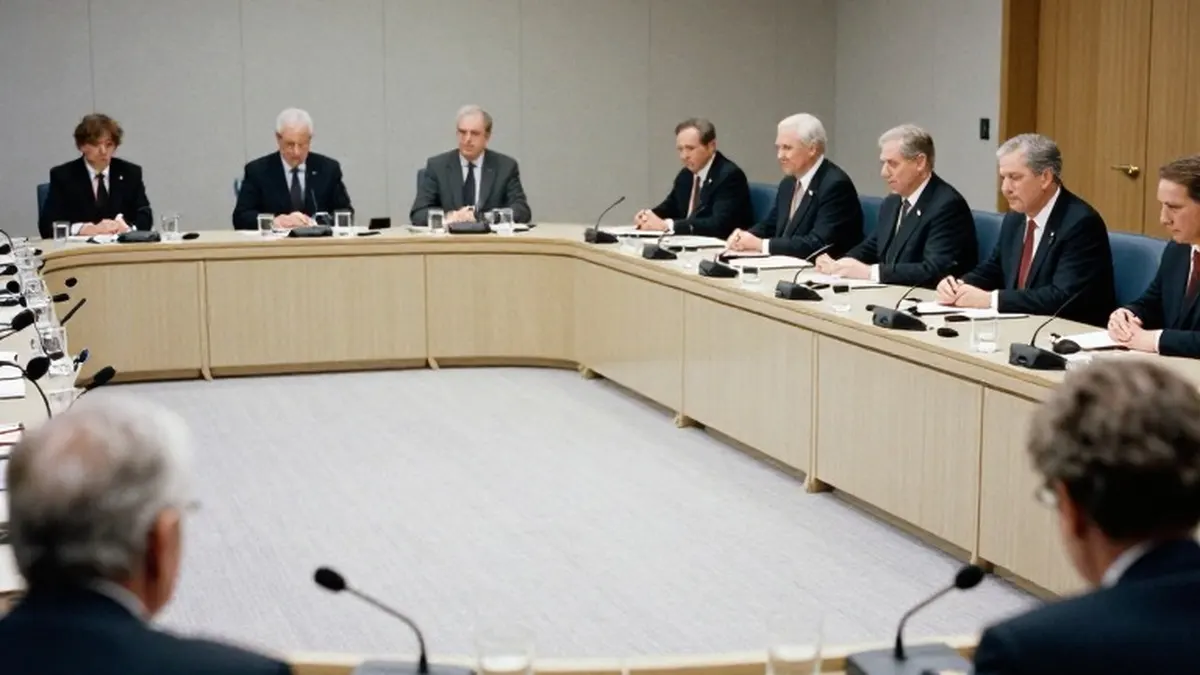
A two-day round of trilateral talks between Ukraine, the United States, and Russia concluded on November 11 in Abu Dhabi without a formal ceasefire agreement. The primary outcome of the negotiations was a consensus on a significant humanitarian prisoner exchange. Jared Kushner, a US envoy, announced that the parties had agreed to the largest release of prisoners to date, with final numbers expected to be confirmed the following day.
US representatives Kushner and Steve Witkoff traveled to Moscow on Thursday to meet with Russian President Vladimir Putin. Prior to the Abu Dhabi meetings, Ukrainian President Volodymyr Zelenskyy proposed exchanging prisoners in ratios such as 1,000 for 1,000 or 1,500 for 1,500. Russian officials indicated that a large-scale swap could be completed within two to three weeks. Zelenskyy stated on Telegram that the discussions covered security guarantees and emphasized that ending the war and ensuring Ukraine's security should be the initial steps. He also called for European involvement at every stage of the diplomatic process.
Experts interviewed by Deutsche Welle described the prisoner exchange as a tangible humanitarian success. Artjom Bronzhukov of the Ukrainian think tank Polityka called it a major step forward. Pavlo Lakiychuk of the Strategy XXI center agreed, noting that bringing people back home is a major achievement that justifies continuing the dialogue. Lakiychuk highlighted that a true breakthrough would involve releasing civilian detainees from territories occupied since 2014, particularly from Crimea.
Despite the positive tone, some analysts urge caution. Iuliia Osmolovska of GLOBSEC noted that diplomats rarely admit to failure, and that statements about constructive talks are often standard protocol. She referenced a summer assessment by 71 Ukrainian security experts that estimated the probability of a peace agreement or ceasefire this year or next at just 19 percent. Osmolovska argued that neither side is fully ready for genuine negotiations, with Russia yet to accept that its military objectives may not be fully achievable.
Davyd Arakhamia, Ukraine's representative at the talks, expressed hope for an agreement by the end of the year. He stated that while Russian instructions were strict, the US approach to structuring the dialogue regarding the postwar situation allowed for more productive work. Conversely, Bronzhukov suggested the talks may serve to buy time for Moscow. He viewed the visits by the Russian delegation, led by Vladimir Medinsky, as an attempt to offer grand promises to the US administration in exchange for continued gestures of goodwill, such as the lifting of sanctions on Russian diesel.
Reports from Western media, including The Economist, suggested new US proposals to redraw administrative boundaries in the Donetsk and Luhansk regions. A member of the Ukrainian delegation stated that there had never been discussions about concessions on territories occupied by Russia. Kyrylo Budanov, head of the Ukrainian president's office and a delegate, declined to confirm if Russia demanded a Ukrainian troop withdrawal from the Donbas, keeping the specifics confidential until an agreement is reached.
Vladimir Medinsky, leading the Russian delegation, took a firmer stance, declaring that every inch of Russian land would be returned one way or another. Putin currently claims the four Ukrainian regions of Donetsk, Luhansk, Zaporizhzhia, and Kherson in their entirety, in addition to Crimea, despite lacking full military control. Bronzhukov argued that Putin is seeking geopolitical influence rather than just local territory, recalling that Ukraine was asked in early 2026 to turn parts of the Donbas into a free economic zone, which he warned could become Russian-controlled.
Lakiychuk questioned the logic of changing administrative boundaries, asking why Putin would stop there. He believes US negotiators are seeking unilateral concessions from Ukraine without demanding equal terms from Russia. Osmolovska described the proposal as risky for Ukraine's leadership, noting that public support for concessions remains low. After a harsh winter with energy shortages, only 5 percent of Ukrainians were willing to make concessions to stop attacks on their energy sector.
Following the Moscow meeting, Zelenskyy said he intends to coordinate positions with the Americans again. No further trilateral meetings have been announced. Osmolovska expects the parties will eventually admit the negotiations have reached a dead end, leading to a return to military action. Lakiychuk, however, advocates for continuing talks to secure prisoner returns, believing European involvement is essential for the continent's security.