Washington expands financial pressure on Iran and Hezbollah networks
The US Treasury has designated a Lebanese charity and three individuals as part of a new sanctions package aimed at disrupting Hezbollah's financial networks and Iran's proxy support systems.
By Ricardo Brooks ·
The United States government has introduced a new package of sanctions aimed at disrupting the financial infrastructure of Hezbollah, the Lebanese political and military group that Washington has long classified as a terrorist entity. The move signals a significant escalation in the efforts to isolate the group and its backers as regional tensions continue to simmer.
On Wednesday, the US Treasury Department designated the Wa Ta’awanu Association, a group whose name translates to “and cooperate” from a well-known Quranic verse. Officials described the organization as a front for Hezbollah, stating that it provides cover for the group's activities by operating under the guise of delivering humanitarian services.
In addition to the association, three individuals based in Lebanon were placed on the sanctions list. This group includes Afif Abdel Rida Chouman, the founder of the Wa Ta’awanu Association. Also targeted were two brothers, Hassan Khechen and Ibrahim Khechen, who are businessmen accused of channeling funds from Iran to Hezbollah. Two gold companies reportedly operated by these brothers were also added to the list.
Treasury Secretary Scott Bessent stated that the Iranian regime's attempts to infringe on Lebanon's sovereignty through terror proxies would not be tolerated. The administration of President Donald Trump framed these new measures as part of a broader strategy to dismantle Hezbollah’s financial networks and cut off resources flowing to Iran’s regional allies.
These sanctions come amid an ongoing military conflict between the United States, Israel, and Iran that has persisted since late February. The initial premise for the offensive was the need to prevent Tehran from acquiring nuclear weapons, a claim Iran has consistently denied, maintaining that its uranium enrichment program is intended for civilian energy infrastructure.
Although President Trump suggested earlier this month that the military phase of the conflict was effectively over, US forces recently struck Iran’s Qeshm Island. The United States continues to enforce a naval blockade and maintains a specific effort known as Task Force Iron Gate to prevent Iran from receiving supplies via land or the Caspian Sea.
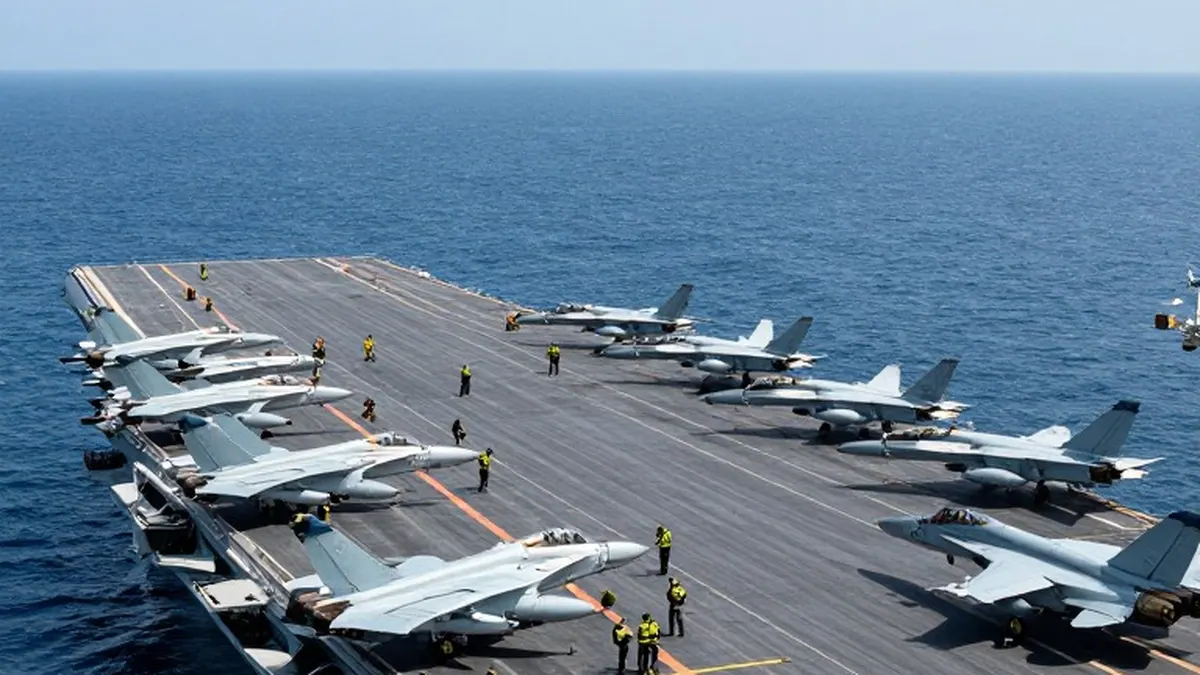
To bolster this maritime presence, the US aircraft carrier USS Theodore Roosevelt arrived in the Middle East. Just hours before the new designations were announced, the US military issued an advisory stating that it would treat ships receiving cargo at sea from vessels loaded in Iran as attempts to evade the blockade. The military warned that it could take action against such vessels.
US Secretary of State Marco Rubio told foreign ministers from the Group of Seven forum last week that the United States would continue to impose devastating economic costs on Iran. This diplomatic messaging aligns with the Treasury's accusation that civilian charitable organizations have been channelling outside donor funds toward Hezbollah’s terrorist activities.
Hezbollah has previously denounced US sanctions, describing them as an attempt to intimidate the free Lebanese people. The group added that such economic penalties would have absolutely no practical effect on its strategic choices, suggesting a resilience to external pressure despite the tightening financial noose.