US envoy says Washington wants Syria to control Suwayda
Tom Barrack told an Australian commentator that the US favors Damascus authority over local Druze militias in the southern governorate.
By Olga Menon ·
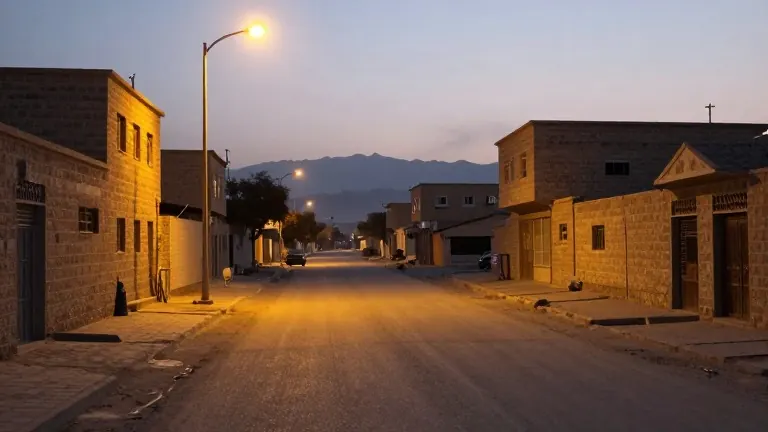
The United States prefers the Syrian government to hold authority over the southern province of Suwayda rather than local armed groups.
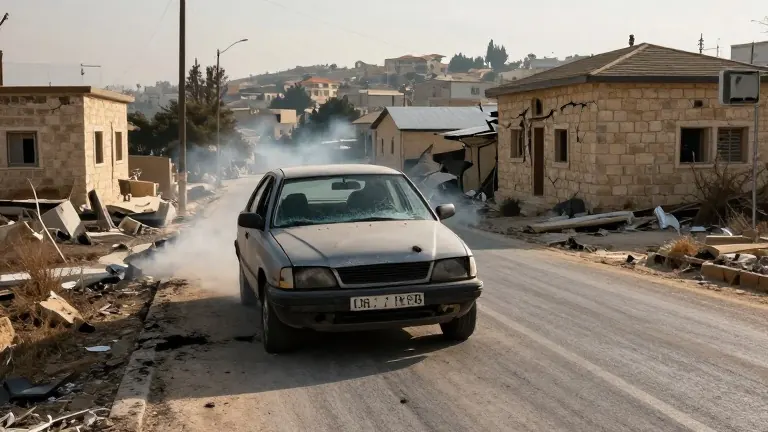
The conflict in Suwayda has roots stretching back to 2023, when residents of the majority Druze region protested the regime of Bashar al-Assad. Those protests continued until the government collapsed in December 2024. While many in the province celebrated the end of Baathist rule, hesitation followed. Tensions escalated in July 2025 when clashes between Bedouin tribes and Druze citizens turned into deadly sectarian violence. Reports indicate that government-connected forces fought on the side of the Bedouins, resulting in casualties that were overwhelmingly Druze. Israel intervened during that fighting and has since sought closer ties with local leaders who oppose Damascus.
On Friday, Tom Barrack, the US special envoy to Syria and Iraq and ambassador to Turkiye, discussed the situation with Mario Nawfal, an Australian personality on the social platform X. Barrack identified a specific Druze sheikh, widely believed to be Hikmat al-Hijri, as a key figure in the standoff. The National Guard, a Druze armed group linked to al-Hijri, has faced accusations of receiving support from Israel. Barrack’s comments indicated that Washington views the sheikh as an Israeli proxy rather than a primary partner. This stance contrasts with the approach of Israeli Prime Minister Benjamin Netanyahu, whose government has invaded parts of southern Syria and bombed the Syrian Ministry of Defence.
Navvar Saban, a researcher at the Arab Center for Contemporary Syrian Studies, described Barrack’s message as clear. He stated, "Israel backing [al-Hijri] does not equal American backing. Washington has prioritised an agreement with Damascus while Israel retains its own security demands and relationship." Nanar Hawach, a Syrian analyst who visited Suwayda in September, noted that these remarks expose divergent views between Washington and Jerusalem. He argued that the US is building a partner in Damascus, while Israel appears to prefer a weaker central government that cannot assert itself in the south.
The path to the current stalemate includes a trilateral agreement signed in Amman in September 2025. That deal, brokered with Jordan hosting, required Syria to invite an independent international commission to investigate the events of July 2025. The agreement stated that perpetrators would be brought to justice. However, trust remains low. Hawach observed that residents feel government pressure in their salaries, children's exams, and access to roads leading to the capital. He added that the state must serve residents directly to rebuild trust. Saban emphasized that a durable settlement requires credible accountability for the 2025 violence. He noted that the Druze community needs guarantees of protection for movement, education, and security. Neither weakening al-Hijri nor simply restoring government institutions will be enough to restore confidence.
The next steps involve the implementation of the Amman agreement. The independent commission is tasked with investigating the sectarian killings. Damascus must pursue accountability for the events of July 2025 to win back the support of Suwayda residents. The US continues to support President Ahmed al-Sharaa’s government in its efforts to stabilize the country after thirteen years of war. Israel maintains its military presence in southern Syria, using Suwayda as a point of leverage against Damascus. The outcome will depend on whether the central government can deliver tangible services and justice to the Druze community.
Source: Al Jazeera