AI-generated videos falsely depict total collapse of Crimea bridge
While the Kerch Bridge sustained real damage from Ukrainian strikes, fact-checkers have identified multiple viral videos showing exaggerated destruction as synthetic fabrications.
By Ricardo Brooks ·

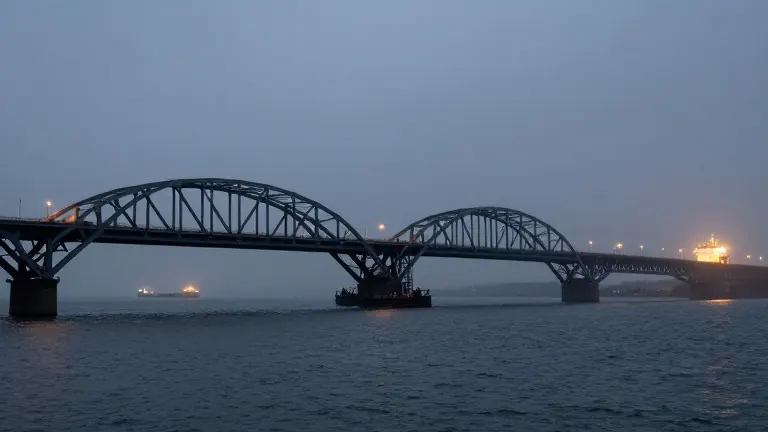
Ukraine conducted attacks on the Kerch Bridge, the 19 kilometre link connecting Russia to the occupied Crimean peninsula, over two consecutive nights this week. The strikes caused genuine structural damage to the crossing. However, not all of the dramatic footage circulating online accurately reflects the situation on the ground. Several highly shared videos have been identified as artificial intelligence fabrications that show the bridge collapsing with extensive damage.
An account named Sueta News published two distinct clips claiming to show the aftermath of the attacks. The first video purported to display vehicles unable to cross the bridge, with visible damage to the road surface in two locations and a deformed supporting arch. A second clip, filmed from a closer angle, appeared to show large sections of the structure falling into the water, with debris allegedly blocking the shipping channel.
Analysis using Google's SynthID detector revealed that both videos contained AI-generated content. This tool identifies invisible digital watermarks embedded in media created or edited with specific AI technologies. One of the clips was identified as being generated by Google AI, while the other carried a watermark associated with a different SynthID partner.
Beyond digital watermarks, visual inconsistencies further exposed the footage as fake. In the first video, the railway bridge running alongside the road crossing appears as a straight, linear structure. In contrast, authentic photographs published by news agencies show a much more curved and intricate design. The video also contains internal inconsistencies, as the appearance of the damaged arch changes between different shots.
Investigators also uncovered another video attempting to pass itself off as footage from an established Ukrainian news organisation. The clip carried a prominent logo for UNN and claimed that both road and rail traffic had been halted, with debris blocking the shipping channel. Although the original Instagram post carried an AI-generated content label, SynthID independently detected a watermark indicating the footage had been created using Google AI.
The account behind this video raised additional questions regarding its authenticity. The logo referred to the Ukrainian National News agency, a well-known media organisation. However, the video was not published by the genuine outlet, despite the Instagram handle being @unn.media. Instead, the account linked to a different website calling itself the United News Network. This entity claimed to be based in Ukraine but listed a Singapore-based address alongside a US phone number.
The Sueta News account, responsible for the other fabricated videos, is also among the outlets associated with this network. The official Ukrainian National News agency does not list @unn.media among its official social media channels. There is no evidence linking the agency to the account that published the video, meaning the branding risked giving viewers the impression that the footage came from a recognised source when it did not.
These fake videos emerged while reports of the Ukrainian strikes were still developing. They appeared alongside genuine images of damage released by Ukraine's Security Service. The distinction is important for public understanding. The attacks on the Kerch Bridge were real, and the bridge did sustain damage. Nevertheless, the viral videos purporting to show its extensive destruction were artificial creations.
The incident highlights the ongoing challenge of verifying visual evidence in fast-moving conflicts. As AI tools become more sophisticated, fabricated media can quickly gain traction and credibility, particularly when they mimic the branding of established news agencies. Fact-checkers continue to rely on a combination of digital forensics and visual analysis to separate reality from simulation.