Tasmania pitches quiet escapes with a campaign that tells tourists to stay away
Tourism Tasmania is using humour and reverse psychology to appeal to Australians who prefer to see themselves as travellers seeking space away from crowds.
By Amit Ricci ·
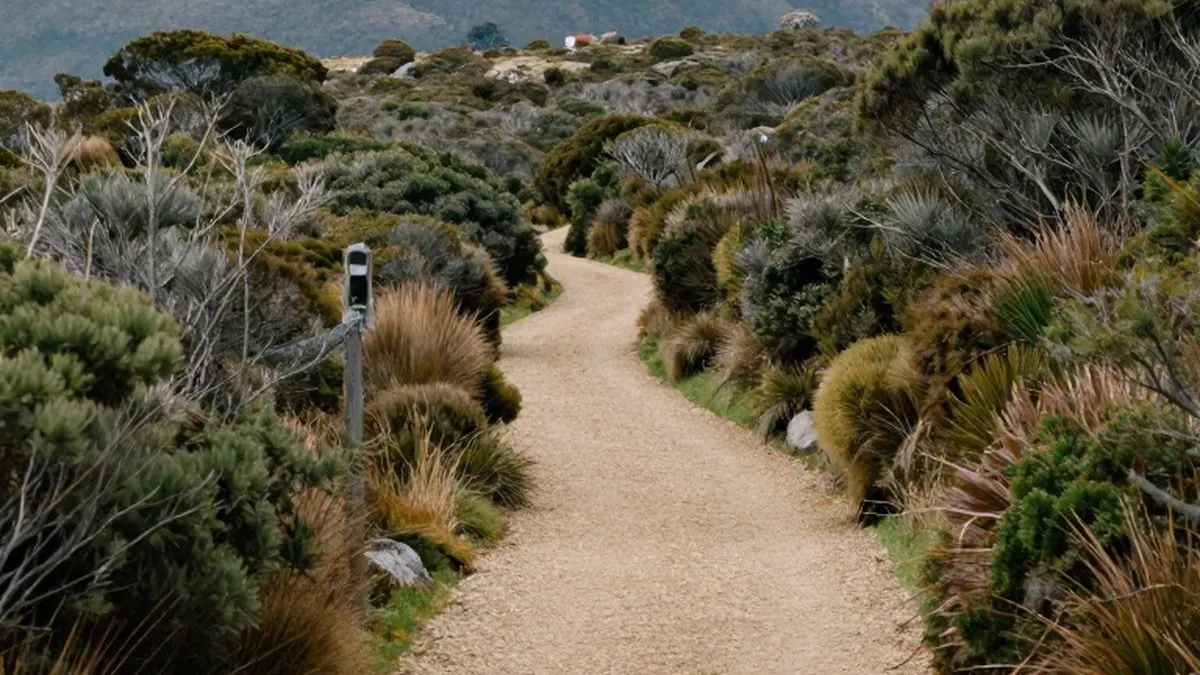
Tasmania is inviting visitors to escape the crowds by suggesting the island is not for them. A new Tourism Tasmania campaign presents the state as “not really for tourists”, drawing on the idea that Australians would rather describe themselves as travellers than tourists.
Former SBS newsreader Lee Lin Chin has joined the campaign, which uses humour to promote a quieter kind of holiday. Its central video follows a man sent to the end of a seemingly endless queue for a pastry advertised as world famous. He eventually gives up waiting and heads into Tasmania’s outdoors, where he finds solitude.
Chin also appears in videos exploring walking trails during her visit to the state. She spends much of her life offline and does not have a mobile phone. Tourism Tasmania chief executive Sarah Kingston Clark said the deliberately wry approach was intended to reflect the tensions surrounding modern travel, rather than discourage visitors.
Prof Can-Seng Ooi, who specialises in cultural and heritage tourism at the University of Tasmania, said research helped explain the campaign’s premise. “Studies have shown that tourists hate themselves,” he said. “They want to avoid each other.” He identified stressed mainland city residents looking for quiet as a particular audience for the message.
Ooi said the campaign appealed to people’s preferred image of themselves when travelling, with the word tourist carrying associations they wanted to avoid. Having lived in Scandinavia for 20 years while researching tourism, culture, heritage and regional development, he also saw similarities with that region. Images of saunas, records and books, he said, evoked a quiet destination where life feels slower.
Char-lee McLennan, an associate professor at QUT’s school of management, described the approach as involving reverse psychology. She said it could help regional economies by encouraging people to look beyond familiar visitor hotspots and explore other destinations.
University of Technology Sydney marketing expert Prof David Waller interpreted Tasmania’s “Come down for air” theme as a response to crowded attractions and queueing, rather than an objection to tourists themselves. He said Chin brought humour to the campaign through her intelligence, unconventional style and dry wit.
McLennan cautioned that the campaign’s effectiveness would depend on what followed the advertising. The experience of visiting Tasmania would need to match the promise being promoted, while also producing meaningful economic benefits for regional communities.