Three Meteor Showers and a Supermoon Define November Sky
Astronomers advise using binoculars to spot Uranus at opposition on November 25, while the moon reaches perigee later in the month.
By Amit Ricci ·
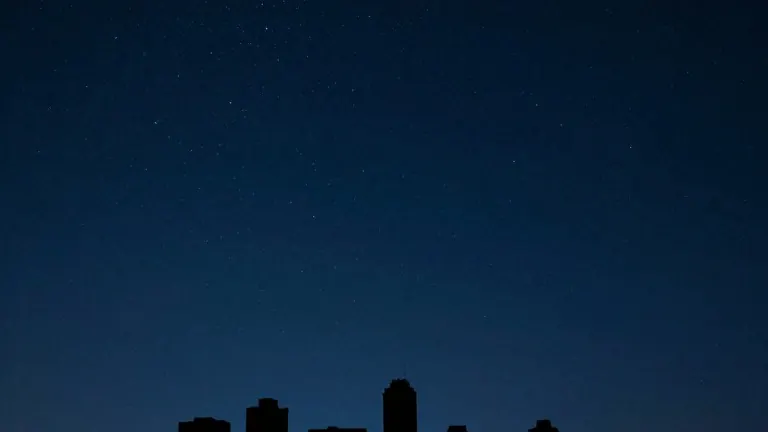
Astronomers predict a busy November for skywatchers, with three meteor showers and a supermoon offering distinct viewing opportunities.
The month begins with the Southern Taurids peaking on November 4 and 5. Jackie Faherty, an astrophysicist at the American Museum of Natural History, noted that this shower is a favorite among stargazers. Although the rate is approximately five meteors per hour, the events are exceptionally bright and slow-moving. Bart Fried, a member of the American Astronomical Society, stated that city dwellers can see these streaks without needing a specific location in the sky. The Northern Taurids follow a week later, peaking on November 12 and 13 under similar low-light conditions. The Leonids conclude the sequence of showers on November 17 and 18. This event produces about 15 meteors per hour, though a half-moon will brighten the sky. Fried recommended observing from dark locations like Floyd Bennett Field between midnight and dawn for the best results.
The moon will reach perigee, its closest point to Earth, on November 23 and 24. During this supermoon phase, the lunar disc will appear 14 percent larger and 30 percent brighter than usual. This occurs because the moon is near the closest point in its elliptical orbit. The next supermoon will occur on Christmas Eve, marking the final one of the year.
Planetary visibility is high this month. Jupiter is currently the brightest planet in the sky, located in the southeast. Mars will appear close to Jupiter for most of the month, visible in evening skies. Saturn is also visible in the southern sky, though its rings require binoculars or a telescope to see clearly. Uranus, the seventh planet from the sun, reaches opposition on November 25. This places it at its closest distance to Earth during its 84-year orbit. The ice giant is at its highest point in the sky around midnight. Fried advised using a planetarium app to locate the greenish-blue dot, noting that a 4-inch telescope makes it easy to find. Venus is visible as the morning star for early risers. Orion and Gemini are prominent constellations in the night sky, with Sirius, the brightest star in the night sky, visible as part of Canis Major.
Faherty noted that Gemini is a good target for observers. The stars Castor and Pollux are visible high in the sky from urban areas. The seasonal shift brings these constellations into a prominent position for the coming weeks.
Source: Gothamist