St. Louis veteran uses Goldendoodle to return to work
James Poggi, who has undergone five back surgeries and one amputation, relies on his service dog Teddy to manage daily tasks and return to his job as a school crossing guard.
By Ricardo Brooks ·
James Poggi lost a lower leg and required five back surgeries during his career in the Marine Corps aviation sector. The physical toll left him dependent on wheelchairs and walkers, a stark contrast to his previous life of long-distance travel and physical exertion. Poggi attributed the injuries to multiple accidents, hard landings, physical therapy mishaps, a car crash, and a bout of spinal meningitis that occurred while he was still on active duty.
Poggi’s wife and caregiver suggested he acquire a service dog to manage the emotional and physical strain of his condition. The family brought home Teddy, a Goldendoodle, who now serves as Poggi’s daily support partner. Teddy performs specific tasks that allow Poggi to maintain a degree of independence, such as retrieving dropped keys, fetching a cell phone, and carrying items. Poggi describes the dog as a modern equivalent of a battle buddy who always has his back.
The dog has also provided emotional relief for Poggi, who describes Teddy as being as important to him as his children. The animal helps restore a sense of joy that Poggi felt was missing after his injuries. This personal experience aligns with recent research indicating that service dogs can help reduce symptoms of anxiety and depression in veterans suffering from post-traumatic stress disorder.
Teddy underwent training at Dog Training Elite St. Louis, a facility that prepares dogs for real-world scenarios beyond basic obedience. Matt Willis, the owner of the facility, stated that the training simulates actual experiences to ensure the dogs can handle the complexities of daily life. Willis noted that the interaction between a veteran and a service dog causes chemical changes in the body that provide an uplift, particularly for those dealing with physical and mental trauma.
Willis pointed out that while the government attempts to support veterans, gaps remain in the care provided for those with service-connected disabilities. To address some of these financial barriers, a private donor grant is currently available to assist ten veterans or active military members. The grant covers 30% of the training costs for each selected individual, aiming to make service dogs more accessible to those who need them.
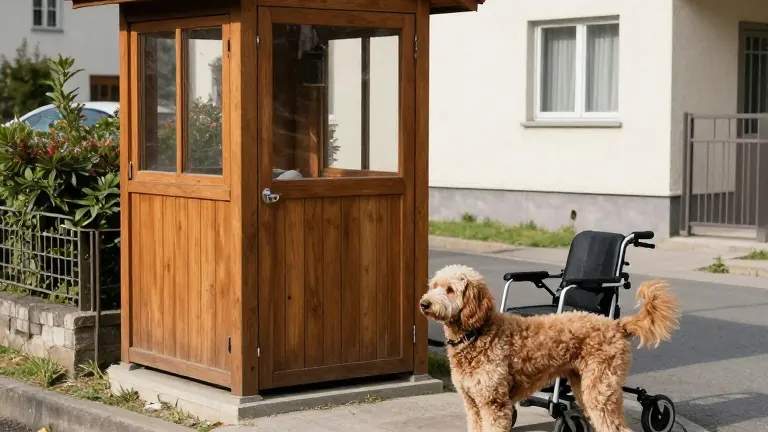
Poggi is preparing to resume his full-time position as a school crossing guard in Mascoutah, Illinois. He plans to return to the corner every day of the school year, with Teddy working alongside him in a small crossing guard hut. Poggi noted that the dog is an integral part of his return to the job, providing stability and assistance in the public setting.
A 2024 survey of approximately 600 veterans found that about 40% had never had a PTSD service dog but expressed a desire for one. Despite this demand, the Department of Veterans Affairs does not currently provide service dogs for mental health conditions like PTSD, stating that it is still studying the potential benefits of such interventions for the veteran population.
Source: WOIO