ANC Heads for Worst Result in Its History in South African Municipal Elections
With nearly all votes counted from Wednesday's local polls, South Africa's governing party has slumped to just over 30 percent and lost its majority in six of eight metropolitan regions.
By Amit Ricci ·
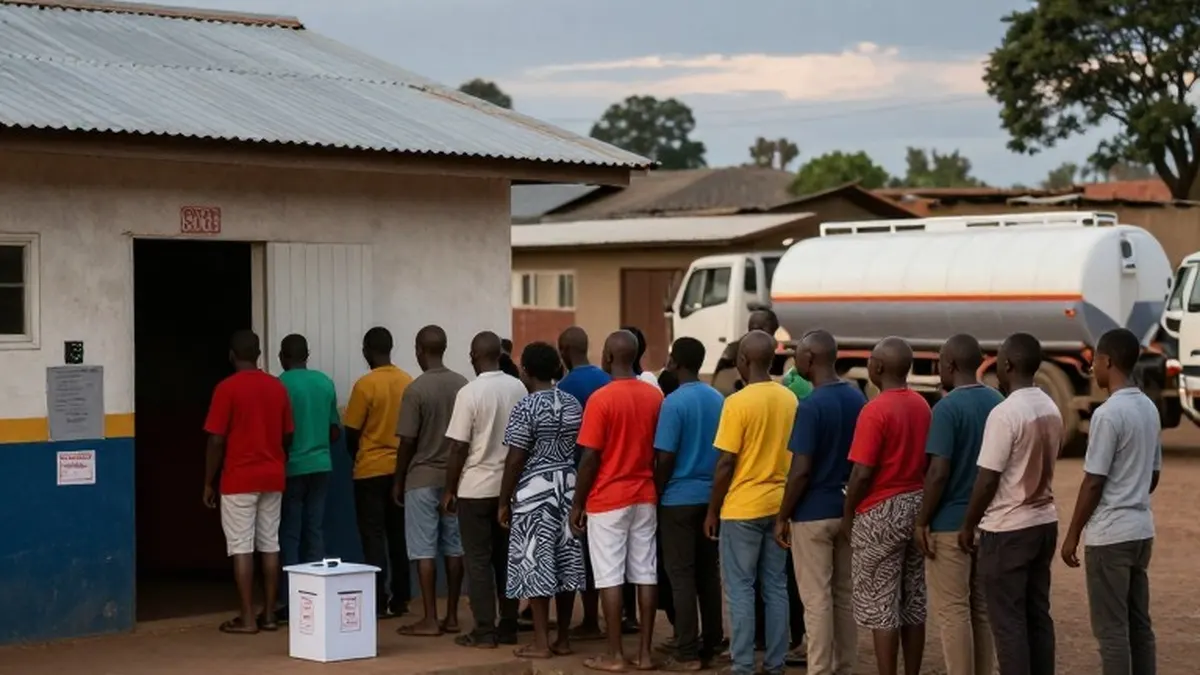
South Africa's African National Congress is heading for the weakest election performance in its history, with the near-final count from Wednesday's municipal elections showing the party once led by Nelson Mandela securing only a little more than 30 percent of the national vote.
The Electoral Commission said on Saturday, with 98 percent of ballots counted, that the ANC had also lost its majority in six of the country's eight metropolitan regions, opening the door to complex coalition negotiations over who will govern South Africa's towns and cities.
Voters went to the polls angry about water and electricity shortages, and many held the ANC responsible for the poor condition of municipalities. High unemployment, crime and widespread corruption were among the other pressing concerns driving the electorate.
President Cyril Ramaphosa, who also leads the ANC, had not addressed the results publicly by Saturday evening. Earlier in the week, however, he conceded in his weekly presidential letter that "municipal failures have contributed to declining public trust and confidence in democratic governance."
ANC Secretary-General Fikile Mbalula told reporters on Saturday that the party must work to win back public confidence. "We cannot ask the people to trust us merely because of our history," he said, calling the outcome catastrophic for the movement even though it remains the largest party.
Political analyst Daniel Silke told the AFP news agency the outcome was the most severe the ANC could have feared and its worst result ever. He said it would weaken the party's authority at both local and national level and could serve as an indicator of voter sentiment ahead of the 2029 general elections.
The ANC was instrumental in ending apartheid and took power in 1994 when South Africa became a democracy, governing with an absolute majority for most of the period since. That era ended at the 2024 general election, when the party lost its outright parliamentary majority for the first time and formed a national unity government with all parties represented in parliament, an arrangement still in place.
The party's support has eroded steadily over the past decade amid disillusionment over corruption, mismanagement and joblessness, while newer smaller parties have cut into its base. The ANC won just over 40 percent in the 2024 national vote and 46 percent at the previous municipal elections in 2021.
The pro-business, center-right Democratic Alliance finished second with 24 percent of the vote. The DA kept control of Cape Town with an absolute majority and also performed strongly in the capital, Pretoria, and the economic hub of Johannesburg, where it is expected to assemble coalitions that shut out the ANC.
DA leader Geordin Hill-Lewis told reporters that the election contest was now over and that it was time to build governments capable of fixing towns and cities. "We have already reached out to many parties over the last 24 hours and will continue to do so today," he said on Saturday.