Global report highlights rising threats to synagogues and worshipers
A new report from Israel's Diaspora Affairs Ministry details a global rise in attacks on synagogues, noting increased use of firearms and arson, as well as threats to worshipers in transit.
By Olga Menon ·
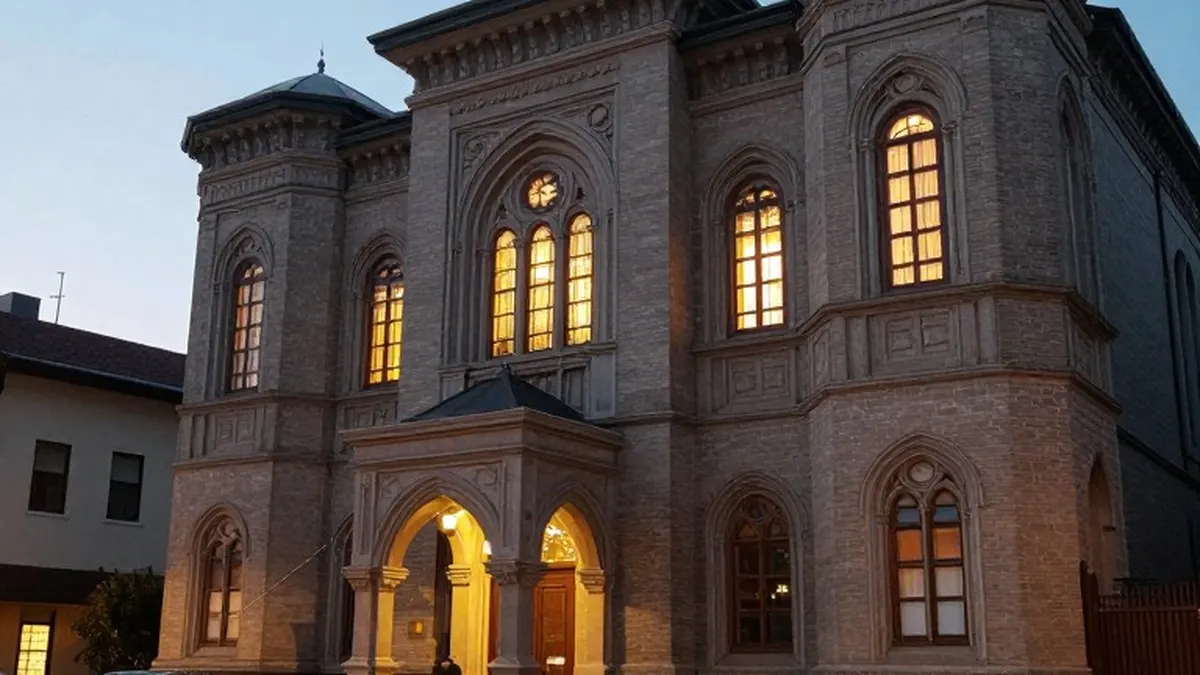
A new report released by Israel’s Diaspora Affairs and Combating Antisemitism Ministry on Thursday warns that threats against synagogues and Jewish worshipers are escalating across the globe. The document, published ahead of the 88th anniversary of Kristallnacht on November 9, details a significant shift in attack tactics. Attackers are increasingly relying on firearms, incendiary devices, and vehicle ramming. Furthermore, the scope of these threats has expanded beyond the physical buildings to include congregants traveling to and from prayer services.
The analysis covers incidents and thwarted plots between October 2023 and September 2026. A distinct pattern emerged showing that attacks often cluster around Shabbat and major Jewish holidays. This vulnerability was tragically illustrated in October 2025 during the Yom Kippur holiday, when a terrorist attack at the Heaton Park Hebrew Congregation in Manchester killed two people and wounded six.
In the United Kingdom, the Community Security Trust documented a record 227 incidents involving synagogues in 2025. Of these, 50 specifically targeted worshipers during their commute to or from services. The ministry suggests that attackers are exploiting the predictable schedules and travel routes of the Jewish community to maximize the impact of their assaults.
Arson and the use of Molotov cocktails have also become prominent methods of attack. These incidents pose a dual threat, endangering both the congregants inside and the religious objects within, such as Torah scrolls. In Canada, the report details 10 incidents of vandalism and arson against the Shaarei Torah community in Toronto. Additionally, a series of shootings targeted synagogues in the Toronto area in March 2026, hitting Temple Emanu-El, BAYT, and Shaarei Shomayim. Gunfire was also directed at a synagogue in Belleville during Yom Kippur services in September.
Germany has also seen a rise in incidents, with 11 cases of synagogue vandalism recorded in the state of Hesse alone in 2025. Other notable events in the country included Molotov cocktail attacks in Berlin and Oldenburg, as well as an attempted arson at a synagogue in Giessen in January 2026. In France, authorities prevented a potential attack near a synagogue in Sarcelles in July 2026 by discovering a vehicle loaded with a rifle and a handgun. Approximately 300 people were evacuated during the operation. That same month, 12 Torah scrolls were stolen from the Grand Synagogue in Levallois-Perret near Paris.
The United States presents a mixed picture. While false bomb threats dropped sharply from 1,009 in 2023 to just 59 in 2025, attacks involving lethal weapons have increased. Thirty-two such attacks were documented in the US in 2025, up from 23 in the previous year. The report also raises concerns about the involvement of terrorist networks and state actors, including Iran, who may use local criminal intermediaries to carry out attacks.
Investigations into incidents in Montreal, Toronto, and Sydney point to a pattern where local criminals are recruited and paid to execute arson and other attacks. This method allows the masterminds to conceal their involvement. In one case in Montreal, $15,000 was allegedly offered to criminals to set fire to the Beth Tikvah synagogue. Similar recruitment of local criminal networks was described in connection with attacks in Sydney.
Avi Cohen-Scali, the director general of the Diaspora Affairs and Combating Antisemitism Ministry, described the findings as an unacceptable reality. He stated that the data serves as a grave warning sign for any sovereign state. Cohen-Scali called on governments and law enforcement authorities worldwide to strengthen the protection of Jewish institutions and ensure that perpetrators are brought to justice.