Polls show Serbia's student list targeting 40% of vote in Sunday election
The movement, which emerged from a 2024 rail disaster, challenges the ruling party that has held power since 2012 as monitors report 116 campaign incidents.
By Amit Ricci ·
Serbia enters a parliamentary election on Sunday with market attention fixed on the potential for a sharp shift in political stability. Analysts describe the contest as the first truly competitive vote in the 14 years since the Serbian Progressive Party (SNS) assumed control. The uncertainty has raised questions about policy continuity and the risk of post-vote turbulence that could affect investor confidence.
The Student List, a coalition of candidates backed by a student movement, has positioned itself as the primary challenger to the incumbent regime. The group emerged after a concrete canopy collapsed at the Novi Sad railway station in November 2024, killing 16 people. The disaster became a symbol of institutional failure, prompting the students to organize protests that lasted nearly two years. They have campaigned on a platform of accountability and an attempt to move beyond traditional ideological divides.
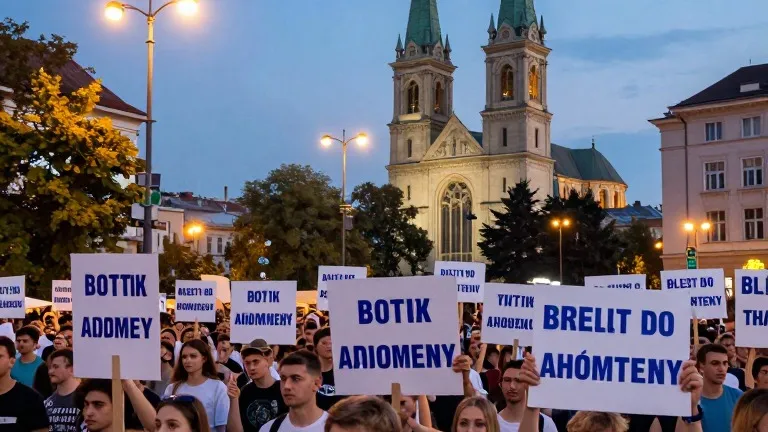
On Thursday evening, thousands gathered in Belgrade for the Student List's final rally. Many participants had walked to the capital from across the country to demonstrate solidarity. Biology student Arsa Stojanovic told the crowd that the walkers had crossed Serbia from end to end and learned they could count on public support. Aleksandar Cupic, a transport engineering professor and candidate, said the atmosphere "smells like freedom." The event concluded with a traditional circle dance.
Political scientist Dusan Spasojevic stated that polls suggest the student movement could secure more than 40% of the vote. He noted that this would be the first time since 2012 that the outcome is genuinely uncertain. In contrast, the SNS held its own closing rally nearby, messaging that a vote for the party ensures stability, continuity, and prosperity. Former President Aleksandar Vucic warned that a change in government risks chaos and accused opponents of serving foreign interests.
The campaign has been marked by financial and physical pressures on both sides. The independent monitoring group CRTA recorded 116 incidents of physical violence or verbal threats in the final week. These included attacks on campaigners and attempts to seize banners. CRTA also found that almost three-quarters of national television airtime went to government representatives, while over 80% of coverage of the Student List was negative.
Reports of vote buying have added to the scrutiny. Anonymous sources told Deutsche Welle that voters were offered between €30 and €150, or family holiday packages, to support the SNS. The Balkan Investigative Reporting Network published testimony from a former party member describing pressure on public-sector employees to deliver votes. These practices have raised questions about the fairness of the electoral process and the true strength of the opposition.
Authorities have warned that street violence is possible on election night, citing alleged plots by student supporters. Several people have been arrested on suspicion of planning disturbances. Spasojevic believes a decisive win for either camp is the best outcome, but current data points to a narrow margin. He added that a slim SNS victory would likely be contested, with the movement vowing to defend every vote.
The European Union has weighed in on the situation. An EU Commission spokesperson stated that key recommendations to improve Serbia's electoral framework remain unimplemented. The official stressed that democracy and the rule of law are central to the accession process. Serbia has held candidate country status since 2012, and the EU's response to the election results will be watched closely for signs of how the bloc intends to handle a potential political stalemate.
Source: Deutsche Welle
More Business · World news · Rip-Off Report · Report a business