Krakow shooting adds to tensions as Poland faces court showdown and nationalist march
A deadly attack in Krakow has intensified Poland's political divisions ahead of a disputed court meeting and Wednesday's Independence March.
By Amit Ricci ·
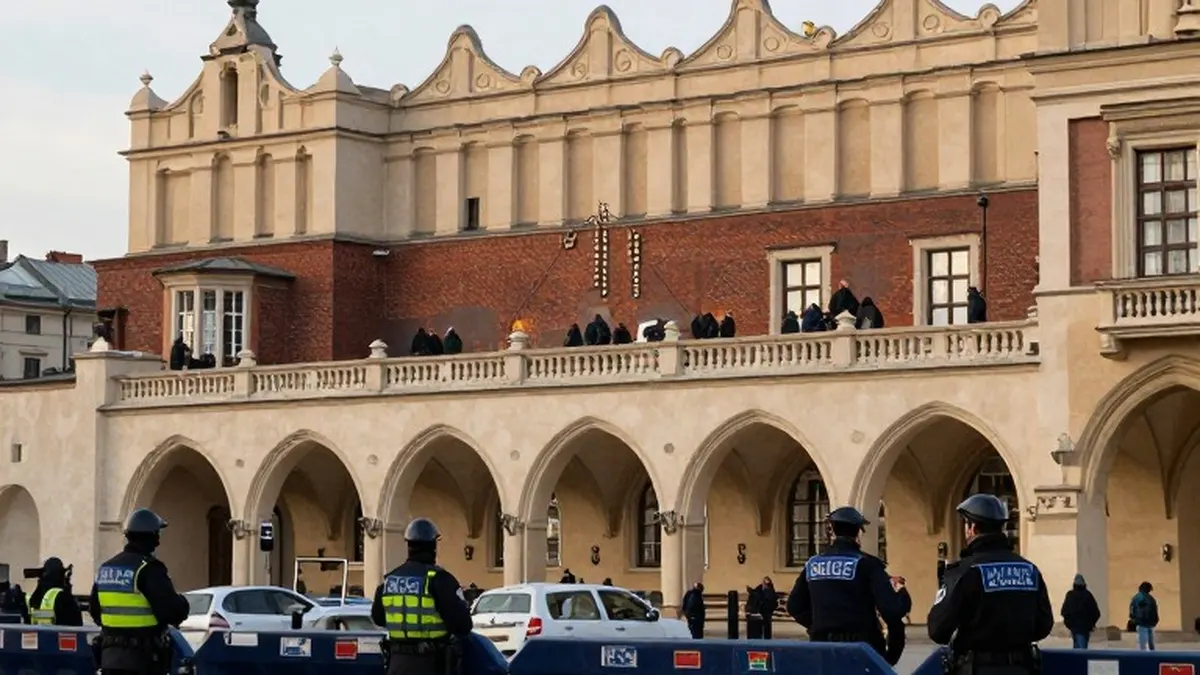
Poland is entering a tense political week after a gunman killed six people in Krakow on Saturday, with a confrontation over judicial appointments and a major nationalist march approaching. The shooting in the city's historic market square has shaken a country largely unaccustomed to such attacks and intensified concerns about far-right extremism.
Two foreigners were among those killed when the attacker fired at random in Poland's second-largest city. About 15 people were wounded. The attack was the country's deadliest shooting since communism ended in 1989. Investigators suspect the gunman killed nine people altogether, after his parents and sister were found dead at their home, roughly two hours' drive from Krakow. Police said on Monday that the suspect had died in hospital.
Prosecutors launched a terrorism investigation on Sunday. The interior minister said the suspect had a fascination with far-right ideologies, a statement that angered the conservative and nationalist opposition. The attack comes amid an increasingly bitter struggle between Prime Minister Donald Tusk's liberal, pro-European government and its political opponents.
A meeting of the Constitutional Tribunal scheduled for Tuesday will bring the dispute over judicial appointments into focus. The right-wing opposition says the government is undermining Poland's constitutional order. The governing coalition argues that it is addressing politically motivated court appointments and nationalist reforms that it considers incompatible with European democratic standards.
Nationalist demonstrators have spent weeks camped outside the tribunal. The confrontation escalated late last month when riot police blocked access and a judge appointed by the parliamentary majority announced she was assuming interim control. That move effectively suspended the incumbent, who is close to the right and nationalist President Karol Nawrocki. Following the shooting, the Law and Justice party, which governed from 2015 to 2023, cancelled protests planned for Monday and Tuesday, although demonstrations could return later in the week.
The greatest concern surrounds Wednesday's annual Independence March, which can attract hundreds of thousands of right-wing supporters. Participants range from Catholic conservatives to white-supremacist fringe groups and antisemitic, pro-Russian far-right elements. Nawrocki plans to attend. Some observers fear marchers could leave the agreed route and move toward the Constitutional Tribunal.
Tusk rejected speculation on Sunday that authorities might halt the march. Writing on X, he said: "No one intends to ban the Independence March." He also appealed for participants to avoid aggression and warned against joining counter-demonstrations. Writer Boguslaw Chrabota, commenting in Rzeczpospolita, argued that political polarisation was damaging state institutions while deepening emotional divisions across society.
Warsaw University political scientist Ewa Marciniak warned that the Krakow tragedy could become a tool for political advantage. She said shared mourning could give way to a search for blame in an atmosphere of mutual hostility among political leaders. With parliamentary elections due in autumn 2027, she suggested that both the shooting and the tribunal crisis were likely to be used to intensify conflict and draw the public into it.