Iran and US Remain Stuck in Fragile Standoff Amid Strait of Hormuz Tensions
Iran and the US remain in a fragile standoff as Tehran demands sanctions relief and the lifting of a naval blockade, while Washington maintains economic pressure and monitors tensions in the Strait of Hormuz.
By Olga Menon ·
Iran’s chief negotiator, Mohammad Bagher Ghalibaf, stated that Tehran is committed to moving beyond a state of neither war nor peace as diplomatic talks with the United States remain stalled. The parliament speaker emphasized that the initiative now rests with Washington, which has yet to respond to Iran’s specific terms for a ceasefire and the reopening of the Strait of Hormuz.
To increase economic pressure, the United States has tightened sanctions and maintained a naval blockade on Iranian ports. President Donald Trump also announced an operation designed to cut off overland routes that Iran uses to transport advanced weapons and technology. While full-scale combat is currently paused, experts describe the current situation as an inherently unstable equilibrium.
Ali Vaez, deputy programme director for the Middle East and North Africa at the International Crisis Group, noted that the two sides have different perceptions of the stalemate. Washington views the current balance as sustainable, whereas Tehran perceives it as a slow-motion strangulation. Both parties are betting that the other will reach its pain threshold first, a strategy Vaez described as a dangerous wager.
Tehran has outlined seven conditions for a ceasefire, including the lifting of the US naval blockade, sanctions relief, the release of frozen funds, and a formal declaration that the war is over. Ghalibaf argued that these conditions were already part of a memorandum of understanding reached in Islamabad in June and must be implemented before negotiations resume. Analysts suggest that the push for a deal reflects the growing economic strain caused by the ongoing blockade and sanctions.
Despite the tension, there are signs of diplomatic movement. Qatar, acting as a mediator, reported that both sides have made positive statements regarding diplomacy. Following a meeting with Qatari Prime Minister Sheikh Mohammed bin Abdulrahman bin Jassim Al Thani, Trump indicated there was momentum toward ending the conflict. However, US Secretary of State Marco Rubio characterized Iran’s demands as unacceptable, highlighting the divided stance within the US administration.
The Strait of Hormuz remains Iran’s primary source of leverage in the standoff. By controlling which vessels pass through and dictating their routes, Tehran aims to raise the cost of the stalemate for Washington and its Gulf partners. Ghalibaf stated that the waterway would never return to its pre-war status. This leverage was evident last weekend when shipping activity dropped sharply following attacks on tankers.
Shipping data from the trade intelligence firm Kpler showed that only five commodity vessels crossed the strait on Saturday, November 7, while none were recorded on Sunday, November 8. This is a significant decrease compared to the 31 crossings recorded over the previous weekend, according to data cited by Reuters. The disruption underscores the economic impact of the intermittent attacks on global trade.
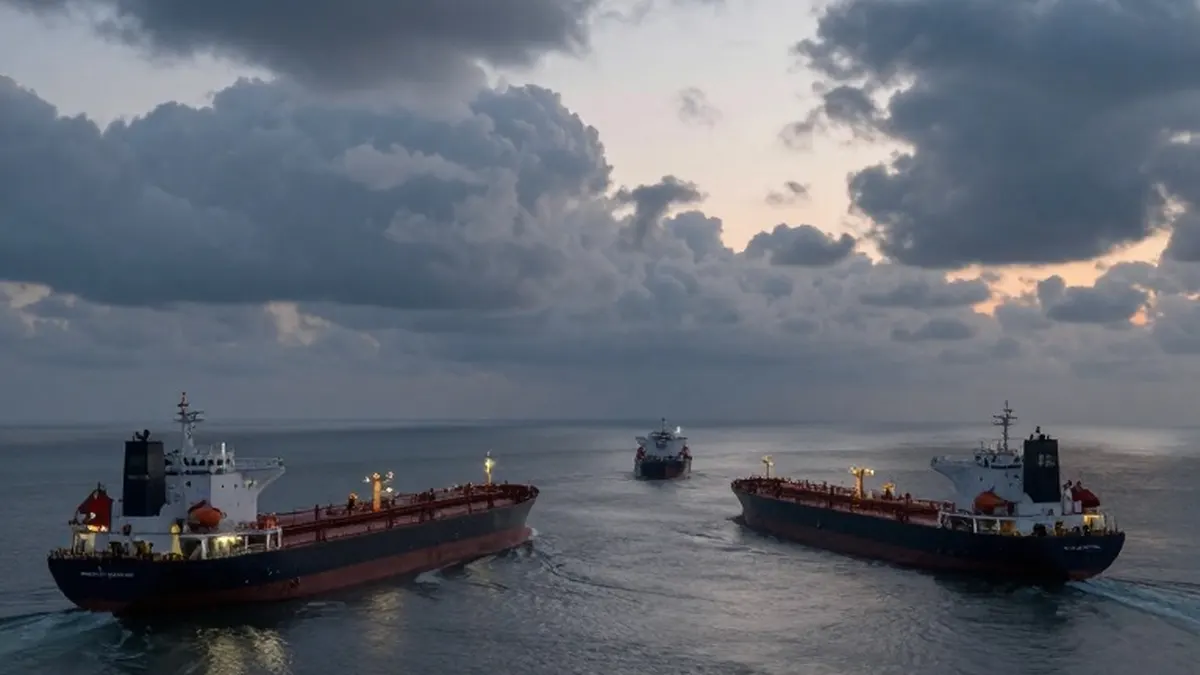
The Islamic Revolutionary Guard Corps announced on Wednesday night that a massive explosion had halted two supertankers traveling along an unauthorized route. The vessels were carrying a combined total of more than four million barrels of oil. Analysts believe these targeted attacks allow Iran to destabilize shipping and preserve its bargaining power over the United States.
US President Trump’s advisers are reportedly divided on the best path forward. While Rubio and other officials support maintaining economic pressure, Vice President JD Vance has pushed for a negotiated deal. The recent midterm elections could further influence Washington’s strategy, as a new Congress with Democratic control over spending may make it harder to sustain military operations in January.
Experts warn that the current impasse is difficult to control. Vaez observed that the more effective America’s pressure campaign becomes, the greater Iran’s incentive to break the deadlock by force. The tragedy, he said, is that both sides know how to start another round of hostilities, but neither is certain how to control or end it.